
President Trump has often been said to desire the powers of the President of the Russian Federation, Vladimir Vladimirovich Putin, and the President of the People’s Republic of China, Xi Jinping. Trump is outwardly jealous of their basically lifetime appointments, achieved in different ways. Trump would love presiding over large military parades like those held in China and Russia.
In 2018, China removed presidential term limits, meaning Xi can legally remain president indefinitely. He also holds the two roles that truly matter in China’s political system, General Secretary of the Communist Party, and Chairman of the Central Military Commission. Those positions have no term limits and are the real sources of power.
In 2020, Russia passed constitutional changes allowing Putin to reset his term limits. He can now legally remain president until 2036, when he would be 83. Russia’s political system has been reshaped to weaken or eliminate the opposition. Elections occur, but are not competitive. The presidency controls the security services, courts, and media. Putin hasn’t abolished term limits outright, but he has engineered the system to keep himself in power as long as he chooses.
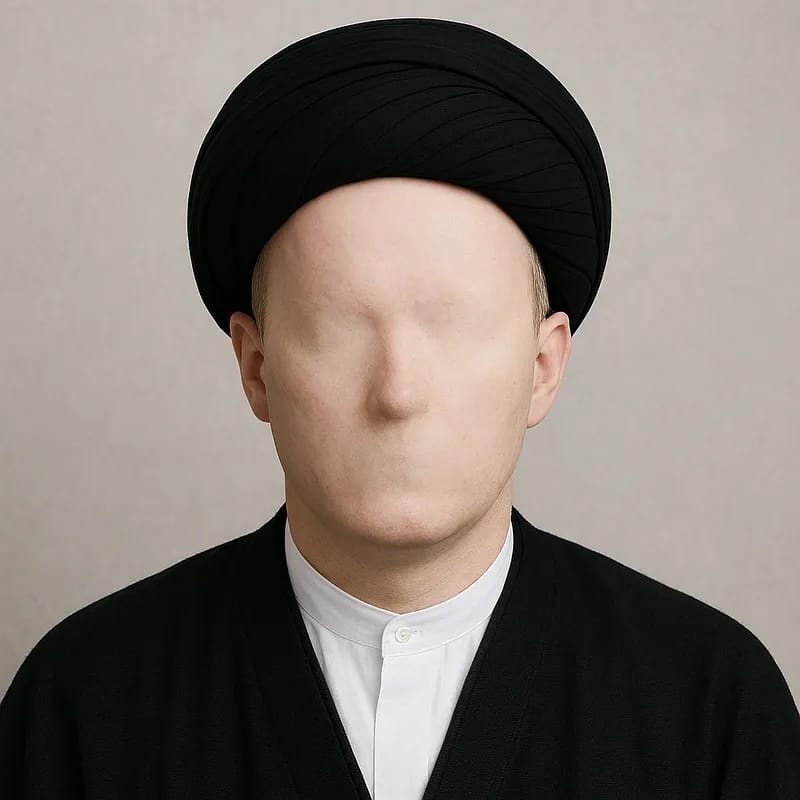
As much as Trump wants to be like Vlad or Xi, there’s another world leader Trump wishes he had the same kind of power: Grand Ayatollah Seyyed Imam Ali Khamenei. Trump is doing all he can to effect the removal of the Supreme Ayatollah, because he wields the power over Iran’s citizens that Trump dreams of. Trump is like the Queen in Snow White, asking Stephen Miller every morning who is the most powerful of all, and getting multiple answers besides himself.
Of course, America has the world’s most mighty military. But Trump doesn’t yet have absolute control of the U.S. Armed Forces, though he keeps testing the waters to see how far he can go. The Constitution dictates that only Congress can declare war, though many presidents, including Trump, have ignored that provision. The last time Congress formally declared war was in 1942, during World War II. Since then, the United States has fought many major conflicts — Korea, Vietnam, the Gulf War, Afghanistan, Iraq — without formal declarations of war. Instead, Congress has used Authorizations for Use of Military Force (AUMFs) or allowed presidents to act under other legal authorities.
Trump can’t avoid all those pesky Congressional hearings and investigations, though his stranglehold over Republicans in Congress has kept those tamped down, at least until the midterms. Trump could break his own record for impeachments, which isn’t a question of grounds but of political will. If Trump were only the Supreme Ayatollah, he could eliminate those headaches by decree. Wouldn’t he love that?
The Supreme Ayatollah is the head of state and the highest political and religious authority in Iran, above the president. Trump could effectively control everything without the burden of governing. He could play golf during the day and host parties at night.
The Ayatollah, also known as the Supreme Leader, controls the military, the Islamic Revolutionary Guard Corps (IRGC), the Quds Force, and the Basij militia.
Unlike America, with its three separate branches, Trump could control the Judiciary, the Legislature, and the Executive. According to Iran’s Constitution, the Leader supervises all three branches of government. He can intervene in any of them.
Article 110 of Iran’s Constitution gives him the power to delineate the general policies of the Islamic Republic, including the economy, foreign policy, education, national planning, and the environment. He has issued final decisions on all of these areas.
Article 110 Following are the duties and powers of the Leadership:
Delineation of the general policies of the Islamic Republic of Iran after consultation with the Nation’s Exigency Council.
Supervision over the proper execution of the general policies of the system.
Issuing decrees for national referenda.
Assuming supreme command of the armed forces.
Declaration of war and peace, and the mobilization of the armed forces.
Appointment, dismissal, and acceptance of resignation of: the fuqaha’ on the Guardian Council, the supreme judicial authority of the country, the head of the radio and television network of the Islamic Republic of Iran, the chief of the joint staff, the chief commander of the Islamic Revolution Guards Corps, the supreme commanders of the armed forces.
With these powers, Donald Trump could have already replaced Jerome Powell of the Fed and deported any immigrant (and some U.S. citizens) he desires.
7. Resolving differences between the three branches of government and regulating their relations.
8. Resolving the problems that cannot be solved by conventional methods through the Nation’s Exigency Council.
9. Signing the decree formalizing the election of the President of the Republic by the people.
10. Dismissal of the President of the Republic, with due regard for the interests of the country, after the Supreme Court holds him guilty of the violation of his constitutional duties, or after a vote of the Islamic Consultative Assembly testifying to his incompetence.
11. Pardoning or reducing the sentences of convicts, within the framework of Islamic criteria, on a recommendation from the head of the judiciary.
Can you imagine Donald Trump in charge of all of America’s religions and churches? All mosques would likely be shut down, and the churches remaining would be required to provide Trump Bibles to the congregants. We could have a single national religion, the one of Trump’s choice, not that he has a particular preference. He could parade religious leaders into the Oval Office to see who would offer him the most.
What Trump might envy most about the Supreme Leader is that nothing is reported about his personal life. We know that Khamenei married his one and only wife in 1964 and that they have six children, and that’s it. While Trump has to hear about his wife not sharing his bed, the sordid tales of his going bareback with a porn star, and the mushroom shape of his penis, Khamenei goes about his life, which might be a stable marriage, or he could be taking a different woman every night with nobody knowing.
Another reason Trump has to be jealous is that while his estimated net worth is between $5.1 billion and $7.3 billion, Ali Khamenei controls between $95 billion and $200 billion in assets. The Supreme Ayatollah is richer than Trump, his personal life is free from outside examination, and he can kill protesters, reporters, and political rivals without repercussion.
Hundreds of thousands of protesters have indeed taken to the Iranian streets to protest the regime. But up to 7 million people have protested Trump on a single day, and multiple cities hold protests against ICE daily. Iran has killed over 2,000 protesters so far, and its soldiers really do have “absolute immunity,” which in America is just something J.D. Vance made up.
Trump is trying to destroy Khamenei, not because he cares about protesters or thinks it will bring peace to the Middle East. Trump wants to take him out because he secretly wants to be him. A dictator for life with control over everything. Something Trump can only aspire to.
I’m not the only one to compare the United States under Trump to Iran by killing protesters, crushing dissent, kidnapping citizens, ignoring courts, threatening critics, and using federal force without accountability. DNC Chair Ken Martin wrote the following: that people in both Iran and the U.S. were rising against “systems that wield violence without accountability.” He described Iran as a “far‑right theocratic regime that crushes dissent and denies basic freedoms.”
He then linked this to protests in the U.S. after the ICE shooting of Renee Good, saying Americans were demanding “an end to an unchecked federal force that takes lives and tears families apart.” Martin later added:
“If comparing the U.S. to Iran makes you angry, ask why. Killing protesters. Crushing dissent. Kidnapping and disappearing legal citizens. Ignoring courts. Threatening critics. Terrorizing communities. That’s authoritarian behavior — anywhere.”
He argued that if people were offended by the comparison, they should examine the behavior rather than the analogy.
In the end, the question isn’t whether Donald Trump is literally America’s “Supreme Ayatollah.” The question is why the comparison feels less outlandish with each passing day. Democracies don’t collapse in a single moment; they erode through a series of choices that seem tolerable in isolation and catastrophic in hindsight. What we are witnessing is not the sudden arrival of authoritarianism but the normalization of a political culture that treats one man’s will as the organizing principle of national life. That is the danger — not the man himself, but the gravitational field he creates.
The United States was built on a constitutional architecture designed to prevent exactly this kind of concentration of power. Yet the past decade has shown how fragile those guardrails become when a leader discovers that millions of people prefer certainty over complexity, identity over pluralism, and loyalty over law. The Founders feared demagogues, but they feared something even more: a public willing to trade its own agency for the comfort of a single, unchallenged voice. That is the moment when a republic begins to resemble the very systems it once defined itself against.
Nations like Iran, Russia, and China did not wake up one morning under the rule of a supreme leader. They drifted there through crises, polarization, and the slow elevation of one figure above the institutions meant to constrain him. They drifted there because people convinced themselves that the Leader was indispensable, that the courts were obstacles, that the press was an enemy, that dissent was disloyalty. The parallels are not perfect — they never are — but they are instructive. They show how easily a society can slide from disagreement to division, from division to deference, and from deference to domination.
What makes this moment uniquely American is that the struggle is happening in full view, with every warning sign illuminated and every historical lesson available. We cannot claim ignorance. We cannot pretend we haven’t seen how this story unfolds elsewhere. The question is whether we will recognize the pattern in time to interrupt it. Democracies survive not because their leaders are virtuous but because their citizens are vigilant. When vigilance fades, personality fills the vacuum.
If there is a path forward, it lies not in demonizing one man but in refusing to surrender the habits of self‑government. It lies in insisting that no leader — no matter how charismatic, polarizing, or powerful — stands above the institutions that make freedom possible. It lies in remembering that the presidency is an office, not an identity; a role, not a throne.
America does not need a supreme leader. It requires a public willing to defend the idea that no one, not even a president, is the nation’s final authority. Whether we rise to that responsibility will determine whether this comparison remains a warning — or becomes a prophecy.