
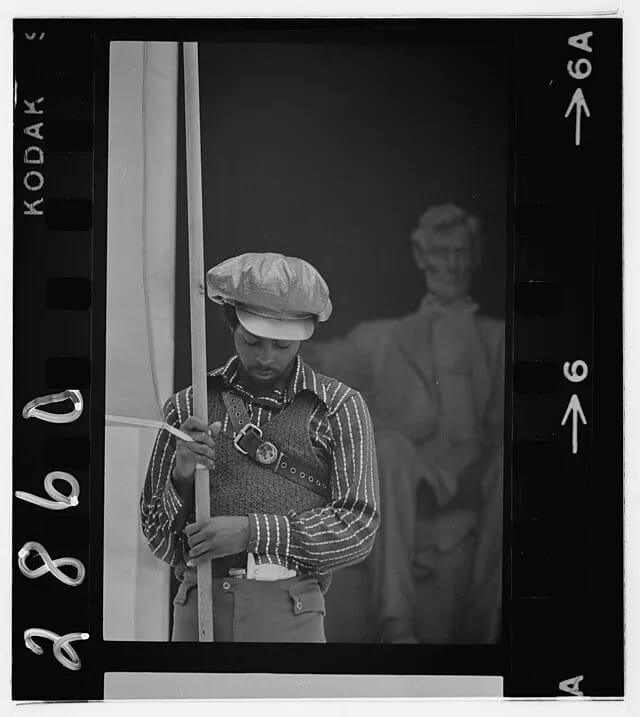
The black power movement blossomed out of necessity. As Kwame Ture said during a 1991 speech, "The people in the black community do not control the resources of that community, its political decisions, its law enforcement, its housing standards; and even the physical ownership of the land, houses, and stores lie outside the black community. It is white power that makes the laws, and it is violent white power in the form of armed white cops that enforces those laws with guns and nightsticks. The vast majority of blacks in this country live in these captive communities and must endure these conditions of oppression because, and only because, they are black and powerless." Deprived of social, economic, and political power, any group is subject to the will of tyrants. So it is only natural that Black people, a group who've endured centuries of racism in this country, would value self-empowerment. They weren't waiting for others to ride in on a white horse and save them, that's for sure. "The failure of American leaders to use American power to create equal opportunity in life as well as law…is the real problem and not the anguished cry for black power," according to Ture. Sadly, despite this context, the federal government set out to neutralize the country's Black leaders and the organizations they founded to deter membership and collaboration.
The Federal Bureau of Investigation (FBI) began targeting individuals it labeled "Black Extremists" in the 1960s, expanding a counterintelligence program initially launched to target communists. The term "Black Extremists" is loaded terminology, since Black people empowering one another, advocating for the advancement of Black people as a group, or, in the case of Dr. Martin Luther King Jr., using nonviolent direct action to challenge racial segregation and discrimination, are not interchangeable with White domestic extremist groups, such as the Ku Klux Klan, which frequently engaged in violent campaigns that included lynching, bombing, and other threats of violence against Black people. Yet this description provides a glimpse into the thinking of federal officers at the time. Cloaked under the veil of national security, COINTELPRO granted federal officers the authority to monitor and disrupt the lives of citizens. In a 1967 report, the FBI director wrote, "the purpose of this new counterintelligence endeavor is to expose, disrupt, misdirect, discredit, or otherwise neutralize the activities of black nationalists." Officers were directed to target their "groupings, their leadership, spokesmen, membership, and supporters, and to counter their" purported "propensity for violence and civil disorder."
This federally funded campaign, designed to disrupt the black power movement, wasn't entirely new but rather a continuation of tactics first used against enslaved Black people. For example, the 1685 Code Noir established governing principles in French colonies, such as Louisiana, and prohibited "slaves belonging to different masters from gathering during the day or night." This was an effort to prevent enslaved African people from planning a coordinated uprising to liberate themselves. Similar black codes were enacted throughout the South. An 1833 Alabama law prohibited "more than five male slaves, either with or without passes, to assemble together at any place off the proper plantation to which they belong." Even after chattel slavery was abolished, White people continued to restrict Black people from meeting and organizing with like-minded people. During Jim Crow, Louisiana made it illegal for more than three African Americans to gather in one place. "They also gave white people legal power over Black people when no police officer was present." White southerners wanted to prevent Black workers from forming unions, which they could use to demand better pay and working conditions. Anti-vagrancy laws, such as one passed in 1865 in Mississippi, prohibited "all freedmen, free Negroes, and mulattoes," who had "no lawful employment or business, or [to be] found unlawfully assembling themselves either in the day or nighttime." When Black people challenged the racial hierarchy, they were punished. For instance, after the 1887 labor strike in Thibodaux, Louisiana, in which 10,000 Black sugar laborers protested unfair working conditions and low pay, White locals responded with violence, killing approximately 60 people and threatening thousands of others.
What were conditions like for Black people during the 1960s, the period most often associated with the birth of the black power movement? "Discrimination and segregation have long permeated much of American life," the authors of the Kerner Commission (1967) noted. While tasked with determining the cause of numerous riots that took place the previous summer, researchers found systemic racism to be the factor most responsible for civil unrest. The rate of poverty among Black people was 3.5 times higher (41 percent) than among White people (12 percent). Similar to the modern day, "mortality rates for nonwhite mothers [were] four times as high as those of white mothers." They noted that racial discrimination was a major reason "why the Negro has been unable to escape poverty." They recommended "opening up opportunities to those who are restricted by racial segregation and discrimination, and eliminating all barriers to their choice of jobs, education, and housing," and "removing the frustration of powerlessness among the disadvantaged by providing them the means for them to deal with the problems that affect their own lives and by increasing the capacity of our public and private institutions to respond to these problems." The country would look very different today if the nation's leaders had implemented their suggestions. Sadly, their findings were largely ignored. The federal government seemed more committed to neutralizing the black power movement than to addressing the injustices Black people were subjected to.
Federal agents were especially concerned about figures like Kwame Ture, formerly Stokely Carmichael. He was an activist who popularized the term "black power" and sought to unite various Black groups to strengthen their collective social, economic, and political power. Realizing black unity could be kryptonite to the powers of white supremacy, officials targeted him. For instance, in February of 1968, Boston agents engaged in "counterintelligence activity designed to thwart Stokey Carmichael's plan to form a united front of civil rights and black nationalist groups." They planned to publish an article in the Globe that emphasized the differences between groups as insurmountable. By portraying Kwame Ture as an extremist, they hoped to deter older civil rights groups from joining with newer ones and forming a United Front. Similarly, the FBI director authorized agents to target the Nation of Islam by furnishing "derogatory information," such as sending a large, comic-book-style publication ridiculing the leaders and showing them enjoying 'the big life,' with nice suits, cars, and homes." Their plan was simple. Divide and conquer. The Federal government did not want Black civil rights leaders, Black nationalists, or even internationalist groups working together, so they used extensive resources to study, infiltrate, disrupt, and neutralize their efforts. This occurred at the individual level, through targeting charismatic leaders, and demeaning their character as well as through broader efforts to disrupt entire organizations. "Under COINTELPRO, the FBI "succeeded in driving a Black minister from the Jackson Human Rights Project in early 1969, causing him to leave the South altogether, by sending him a' spurious,' threatening letter,' and encouraging school and church officials to file complaints against him," which were "fabricated by the bureau," according to (Perkus, 1975).
The irony wasn't lost on the black community that White people frequently characterized them as "lazy," as a way of explaining away the racial wealth gap and the widespread poverty they endured, even though White federal officers engaged in a lengthy campaign to thwart their efforts at organizing, educating, and uplifting one another. The FBI wanted to "prevent the coalition of militant black nationalist groups. In unity there is strength," which is why they wanted to "prevent the rise of a messiah who could unify, and electrify, the militant black nationalist movement." This seemed to be their worst fear. They noted "Malcolm X might have been such a messiah," noting "Martin Luther King, Stokely Carmichael and Elijah Muhammad all aspire to this position." They added that "King could be a very real contender for this position should he abandon his supposed 'obedience' to 'white, liberal doctrines' and embrace black nationalism." They wanted to prevent militant black nationalist groups and leaders from gaining the respect and admiration of the public, "by discrediting them to three separate segments" — the Black community, the white community, and the fellow Black radicals. Initially, the primary targets of the FBI were the Student Nonviolent Coordinating Committee, the Southern Christian Leadership Conference, the Revolutionary Action Movement, and the Nation of Islam. But their campaign expanded over the coming years to include the Black Panther Party, and nearly any group attempting to organize Black people.
The film Judas and the Black Messiah (2021), directed by Shaka King, focuses on the real-life story of William O'Neal, a Black informant who infiltrated the Black Panther Party. He was helping the FBI undermine the group's operations by providing agents with information, including the whereabouts of Fred Hampton, the young, charismatic chairman of the Illinois chapter, and other party members. Hampton is best known for his work developing a Rainbow Coalition, a multiracial pact between the Black Panthers, the Young Lords (Latinos), and the Young Patriots (Whites), finding common ground in their effort to fight against systemic oppression reflected in poverty and police brutality. He believed that "everything would be alright if everything was put back in the hands of the people." Despite Hampton becoming a unifying force, and the Black Panthers in the Illinois chapter positively contributing to their communities, he was surveilled, targeted, and ultimately assassinated by state-sanctioned violence at the tender age of 21. Associate professor of history, Dwayne Mack, noted "during an early morning police raid of the BPP headquarters at 2337 W. Monroe Street on December 4, 1969, twelve officers opened fire, killing the 21-year-old Hampton and Peoria, Illinois, Panther leader Mark Clark." The informant provided the FBI with a "detailed floor plan of the Chicago apartment," less than two weeks before the assassination. Yet no police officers or federal agents were ever charged.
Sadly, the violence inflicted upon Fred Hampton, Mark Clark, those killed by police, and Akua Njera, Veronza Bowers, Belinda Austin, and Brenda Harris, those injured in this raid, were part of a broader attack on Black citizens. Oakland police officers killed Bobby Hutton, a 17-year-old Black Panther Party Treasurer, two days after Dr. Martin Luther King Jr.'s assassination, even as his hands were raised in the air as a sign of surrender. In 1970, Houston Police officers killed Carl Hampton, a 21-year-old Black man, as he stood on the roof of the People Party II headquarters on the 2800 Block of Dowling Street. A few years later, in 1972, Philadelphia police dropped a C-4 bomb from a helicopter on members of the Black liberation group, MOVE. Officers shot "thousands of rounds" into the property and blew holes in the wall "to fumigate with tear gas," in an effort to force residents, including children, out of the building. "The explosives [officers used] caused a fire, accelerated by the presence of gasoline in the home." The flames spread throughout the community. In all, "the bombing of the MOVE compound killed six adults and five children and destroyed more than sixty homes, leaving more than 250 Philadelphians homeless."
Assata Shakur's autobiography describes some of the problems she identified within the Black Panther Party. She wrote of the late 1960s and 70s, "police repression had come down so hard on the Black movement that it seemed as if the entire Black community was on the FBI's Most Wanted List. The repression had come down so fast that many people had no chance whatsoever to get organized." She noted the "Black Liberation Army was not a centralized, organized group with a common leadership and chain of command. Instead, there were various organizations and collectives working out of different cities, and in some of the larger cities, there were often several groups working independently of each other. Many members of various groups had been forced into hiding as a result of extreme police repression." Shakur ultimately left the Black Panther Party due to the purported arrogance of some members and the actions of infiltrators. "No one could have known that the FBI's COINTELPRO was attempting to destroy the Black Panther Party," she wrote. She discovered that some of the members were actually police officers, which explained their behavior within the organization: slowing down or halting its operations altogether.
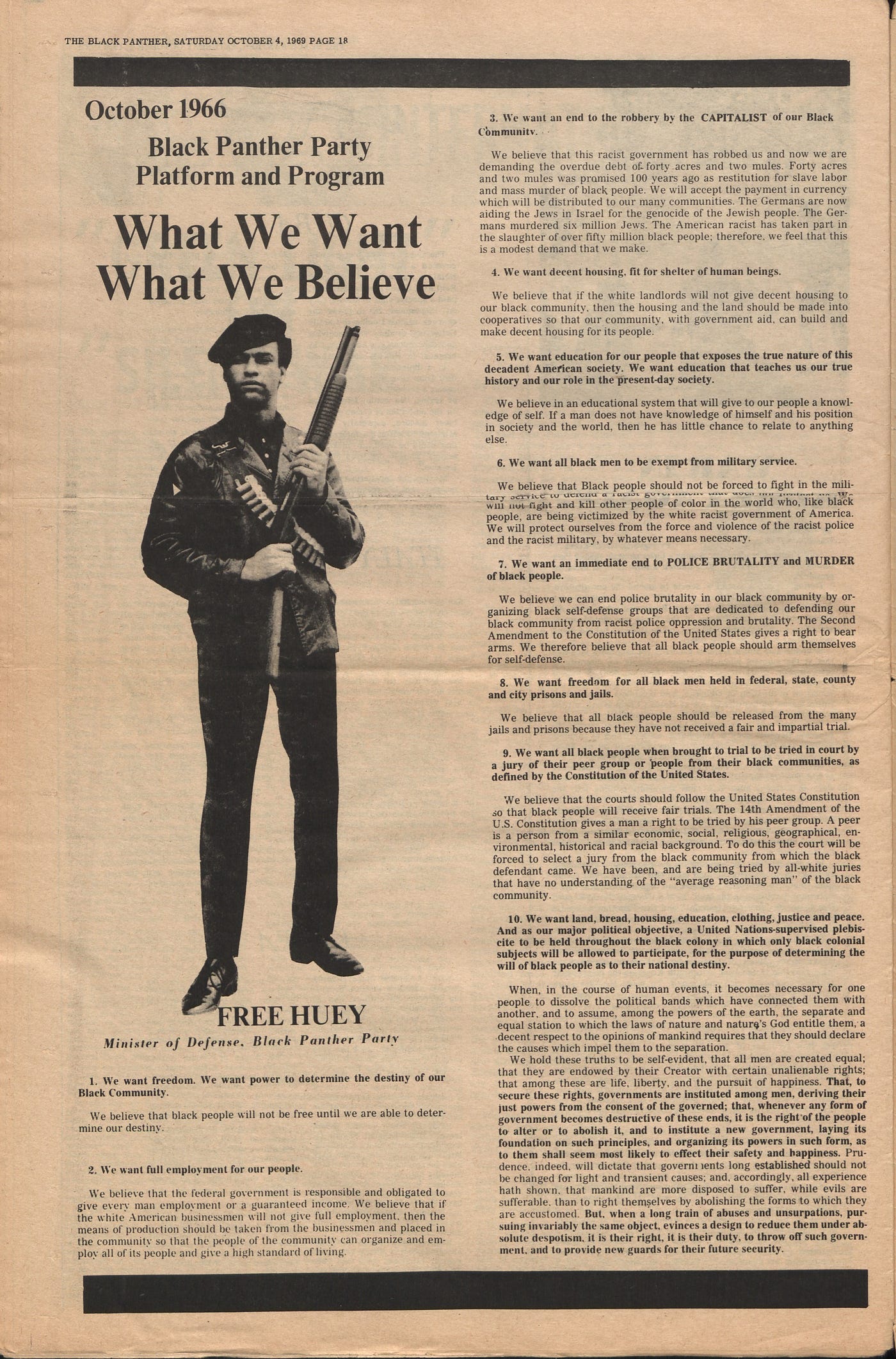
In his 1980 doctoral thesis, Huey Newton, the co-founder of the Black Panther Party, noted, "numerous Black political leaders were harassed by the government. Marcus Garvey, who founded the popular Universal Negro Improvement Association in 1919, was convicted of using the mails to defraud." And "Dr. W.E.B. DuBois and Paul Robeson were singled out for harassment for their association with the U.S. Communist Party. Harlem Congressman Adam Clayton Powell, a chairman of the powerful House Education Committee, was forced out of office because of his outspoken views on the oppression of American Blacks." Far too often, when Black people attempt to address the injustices inflicted upon them through political organization, they are undermined by federal, state, and local authorities. This is true even within the academic community. FBI director J. Edgar Hoover ordered officers to "locate and identify black extremist and/or African-type bookstores," as a part of their counterintelligence program. The government considered black-owned bookstores as a threat to the establishment. So, while many seem shocked at recent efforts to censor or limit black historical narratives in local libraries and classrooms, this is reminiscent of efforts made by the federal government decades earlier.
One of the most popular programs initiated by the Black Panther Party was the Free Breakfast for School Children Program. While they had other survival programs, such as free clinics and those that gave away shoes and other clothing to those in need, this initiative gained the most notoriety. Many Black children and others living in impoverished communities did not have enough food to eat, and frequently skipped meals. Due to malnutrition, some students struggled to stay awake in class, which in turn deprived them of the opportunities afforded to children from more affluent backgrounds. So, members of the Black Panther Party took it upon themselves to address the problem. They raised money, organized, and staffed the Free Breakfast for School Children programs in at least thirty-six cities. Sadly, law enforcement officers were determined to stymie their efforts. At times, they interfered indirectly, such as by going door to door and lying to Black parents, by telling them the BPP taught their children "racism." But when that didn't work, officials engaged in overt obstruction. For instance, "the night before [the first breakfast program in Chicago] was supposed to open,' a female Panther told historian Nik Heynan, 'the Chicago police broke into the church and mashed up all the food and urinated on it."
In a 1965 memo, a federal agent named F.J. Baumgardner attempted to disrupt a meeting between Dr. Martin Luther King Jr. and the Governor of Massachusetts, John A. Volpe. Along with other civil rights leaders, he planned to visit Boston that spring. They claimed there was a "known communist influence on King," and that "it would be in the interest of the Bureau to have SAC Handley personally meet with the Governor and brief him concerning King," in an effort to "minimize the affair." Not only did they try to weaken relationships Black leaders fostered to sow division, but they also tried to undermine their resolve. For instance, in a 1963 letter addressed to Dr. Martin Luther King Jr., a federal agent attempted to convince the reverend to kill himself. They also kept a close watch over Malcolm X and interfered in his advocacy, even leading up to his death. "The NYPD, coordinating with federal law enforcement, had arrested" his "security detail just days before the assassination," and "intentionally removed officers from inside the ballroom," according to a lawsuit filed by his family. "The methods included informant-driven disinformation campaigns designed to spark conflict within the movement, discourage donors and supporters, and even break up marriages. The overt investigative activity was also used, as "one stated goal of the COINTELPRO program was to inspire fear among activists by convincing them that an FBI agent lurked behind every mailbox (Perkus, 1975)." Many Black people became afraid of organizing with one another, for fear that the police or other federal officers would be involved.
Huey P. Newton, the co-founder of the Black Panther Party, stated, "Black Power is giving power to people who have not had power to determine their destiny." This is a noble goal: to empower people who have never collectively had the power to make decisions about their communities. There is nothing extreme about wanting to live in a society where being Black doesn't limit one's access to opportunities or fair treatment in the courts. And yet, the federal government has disrupted the work of the black power movement on numerous occasions. "FBI provocateurs repeatedly urged and initiated violent acts, including forcible disruption of meetings and demonstrations on and off university campuses, attacks on police, bombings, and so on." At the same time, "government agencies financed, helped organize, and supplied arms to right-wing terrorist groups that carried out fire-bombings, burglaries, and shootings, all with the knowledge of the government agencies responsible (Perkus, 1975)." To truly reckon with the history of Black people in America, we have to consider not just the clever inventions produced by Black people or those who became the "first" to fulfill key roles in our society, but also the role of the black power movement, including Black men, women, and even children who participated in the essential task of educating and organizing the masses. Everything they achieved was despite the federal government's efforts to disrupt and ultimately neutralize their efforts. And just like a rose growing out of a crack in the concrete, this movement was determined to survive.