
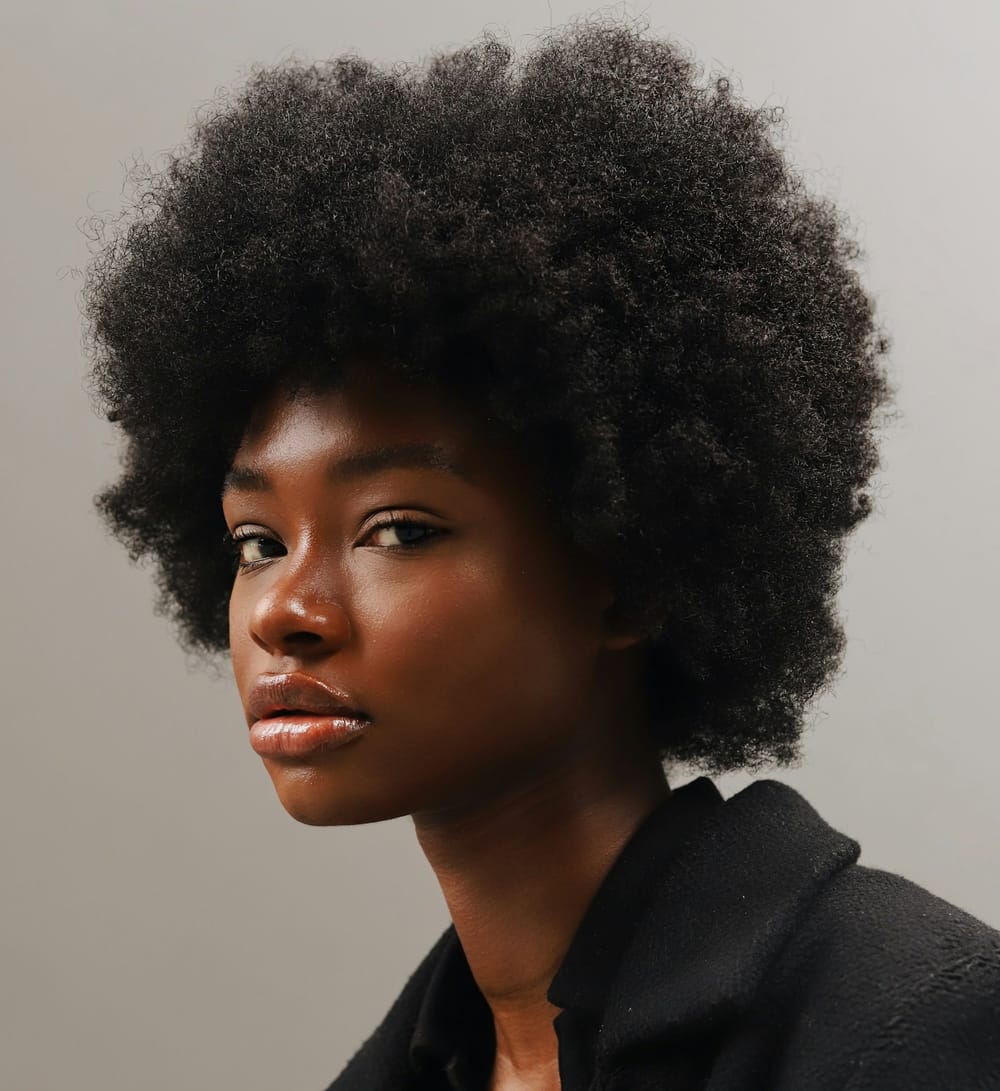
I can’t get out of my stubborn, dense head how light Damian Marley’s mother, Cindy Breakspeare, is and how much that functioned to advance and seal her beauty in the eyes of Jamaicans.
She was Miss World in 1976 and, when I say I was shocked to see her vaunted as the Jamaican beauty standard, I mean I’m perpetually disconnected from Jamaica’s history of colorism even though I know it.
I know it because my mother is a dark-skinned Jamaican woman and in the photos of her from the 70s and 80s, I see the ebony gloss over her skin that winters in New York eventually stole. I know it because my siblings, all wonderful human beings, are lighter, uptown Jamaicans who speak the refined patois of news broadcasters and primary school teachers. Their “L” sounds and “R” sounds are from an elocution manual, and they understand when to turn on and off the breathy “H,” the hyper-corrective signature of Jamaican English that makes an egg into an “hegg.”
Cindy Breakspeare looked like this when she won Miss World and I bet if I asked any survey respondent from the Western world where this person was from, Jamaica wouldn’t come up once in 100 answers.
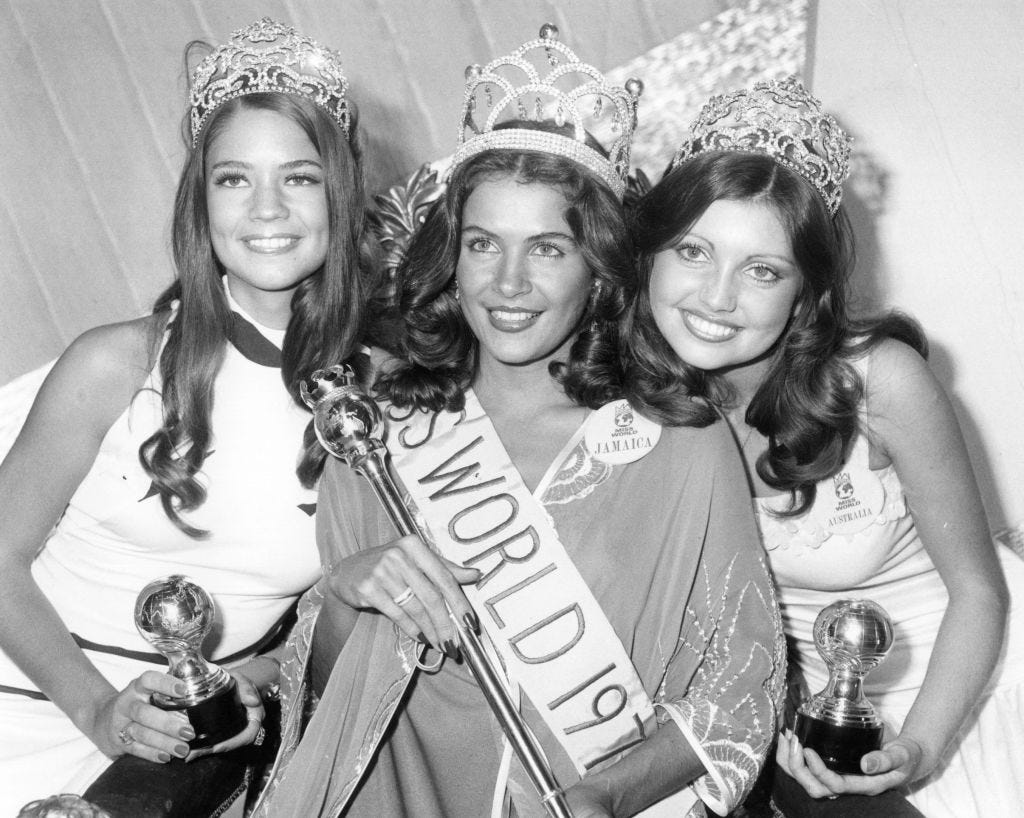
She is a phenomenal beauty, to be clear. Beauty in Black societies comes with a specific price tier list. Darker Black women pay a higher social cost (jobs are harder to get and keep, partners are harder to come by, respect is denied) and lighter Black women play a dangerous game of passing for anything-but-Black, hoping to gain favor in all those areas their ancestors were taxed.
The first little light-skinned girl I liked had a faint mustache on her upper lip that I didn’t think was body hair at all. I thought the shadow her nose cast onto her face was a product of her bright, yellow complexion. She wore our school’s uniform, an optional green and black plaid babydoll dress with two short straps and her hair in pigtails. She had crooked teeth and a wicked smile and her place in another class made her all the more desirable. I was into Joline in my class, but she didn’t like me, and had chosen a little reddish boy who ended up being my best friend. (Maybe the rules of desire had begun to impress upon me even then, wanting to be close to him to get closer to Joline.) There was a math to this dark-to-light pairing that I adopted at 10 years old. It went like this.
- Dark-skinned boys could like dark-skinned girls and trade notes and crushes with no outstanding (im)balance.
- Dark-skinned girls always/only liked light-skinned boys (especially if asked to choose between them and brown-skinned boys).
- Light-skinned girls sometimes like dark-skinned boys in private, but would not reveal that to dark-skinned boys unless at a party with the lights off during kissing games. Or in high school. By high school, dark-skinned boys were acceptable to date and have sex with.
- Light-skinned girls weren’t supposed to lust after light-skinned boys but they could date them and call them ‘boyfriend’ if their peer groups were all a similar color. Then they could wear cute matching outfits.
- Light-skinned boys could like brown-skinned girls in public and dark-skinned girls in private. They would mostly date the former and could snicker in private about having sex with the latter.
As an adult, I keep doing the math on who I can love in public, how that desire should look, what will be taken seriously, what may sabotage my career. This is further complicated by living in the United States, where every race, ethnicity, color palette comes with a new association. There are fetishes for everyone, and being the object of a fetish is a hard equation to equalize on each side.
When I’m with a new dark-skinned Black Woman, I lay out the truth in numbers like, “I’ve mainly dated Black women my whole life and I prefer not to have to explain race so I’ll keep doing that for the foreseeable future.” When I’m with a new light-skinned Black Woman, I lay out the truth as the result of a spectral theory like, “I tend to date women my complexion and darker, but I have dated women from the entire Caribbean diaspora, so of course that means Indo-Caribbean and Indigenous women, which, by the way, include some of the blackest skin tones and bone straight hair textures. Like in Guyana and Trinidad, for example. Did you know there are many Chinese Jamaicans too? It gets deep.” When I’m with a new white woman, I say things like, “I’ve dealt with my race issues and I used to be reluctant to date white or interracially because I was tired of explaining myself. Since falling in love with a few — and only a few — white women, I’ve allowed myself to hold their hands in public. And meet the family.”
There are ways numbers tell stories and math begins to lie. I’m solving for the equation that says I’m not colorstruck like my country of origin but still allows me to carry the one, name some outliers, and show the work. I haven’t found that one yet.