
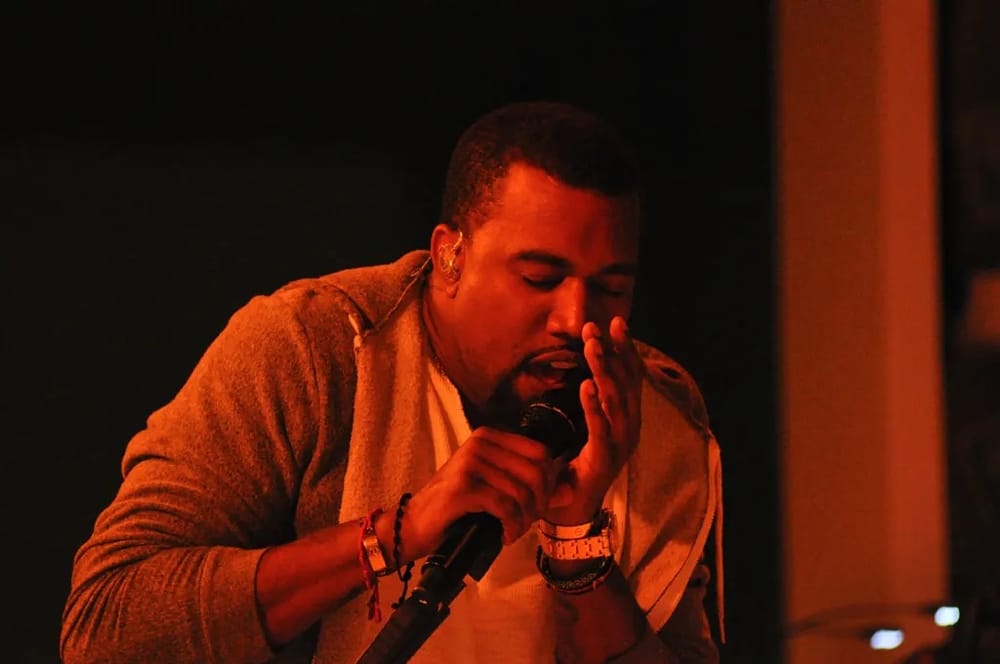
“I regret and am deeply mortified by my actions in that state, and am committed to accountability, treatment and meaningful change. It does not excuse what I did, though. I am not a Nazi or an antisemite. I love Jewish people.” -Kanye West
Kanye West was once one of my favorite musical artists. I considered his first three albums classics, but as his music changed, so did his personality. The man who once said George Bush didn’t care about Black people on national television was now taking shots at Harriet Tubman.
My relationship with musical artists from my youth has changed in recent years. I expect all of them to turn away from the social issues they once deemed important. Their meaningful music was nothing more than a persona they put on to obtain their financial goals.
I noticed Kanye doing this before anyone else, and he is still the most extreme example. He became a literal Nazi, swastika and all. He was beyond the “Hitler had some good ideas” level of hate. He even wore Ku Klux Klan robes. Yes, Kanye West, a Black man, was representing the Klan. By this time, it was hard to separate Kanye’s real beliefs from possible marketing ploys or his desire to be edgy even at his very grown age.
Although most people I know stopped checking for Kanye a long time ago, the people who hang on usually bring up his mental health struggles. “It isn’t him. He is bipolar.”
Kanye’s apology is interesting because he is almost apologizing for being bipolar more than apologizing for his actions.
Kanye’s apology
Kanye starts by addressing the people he hurt before describing a life-changing car wreck. This is a familiar story for most of his fans, but he explains how the wreck also impacted his brain.
He spends the next several passages describing the dangers of bipolar disorder and why it is so easy to avoid getting help.
This is a unique way to start his apology, but I admit he starts to lose me when he says:
“In that fractured state, I gravitated toward the most destructive symbol I could find, the swastika, and even sold T-shirts bearing it. One of the difficult aspects of having bipolar type-1 are the disconnected moments — many of which I still cannot recall — that led to poor judgment and reckless behavior that oftentimes feels like an out-of-body-experience. I regret and am deeply mortified by my actions in that state, and am committed to accountability, treatment, and meaningful change. It does not excuse what I did though. I am not a Nazi or an antisemite. I love Jewish people.”
“It does not excuse what I did” is the most important line here. We will come back to this.
Kanye then directly apologizes to the Black community for letting them down. He goes back into describing his experiences with bipolar disorder and finding comfort from his wife and Reddit forums.
He ends by saying:
“I’m not asking for sympathy, or a free pass, though I aspire to earn your forgiveness. I write today simply to ask for your patience and understanding as I find my way home.”
Is this the best apology? It is obviously dodging accountability, but I’ve never been a fan of measuring how “good” an apology is. There are a few more important questions I would like to answer.
Should we forgive people who support and promote hate?
If we don’t make space for people to change, we will never make progress. The Nazi types are always going to bring in more people, even Black men, if they can serve a purpose.
However, how much hate is unforgivable? There are voices out there who have actively caused harm and even death. I don’t want to place that on Kanye’s name, but he was attempting to fuel deadly movements. It is not hard to imagine the type of stuff he motivated some influential individuals to do.
Does he just get to come back?
I’m glad Kanye mentioned not wanting a free pass. If he can put that much energy into doing harm, he needs to bring twice as much energy to do good. Luckily, he has the means to do a lot of good. Let’s see what happens.
Is mental health an excuse?
My close family member is bipolar. She recently went into an extreme manic state with a psychotic break. It is still difficult to write about, but important to the discussion here.
I left work to pick her up when she called me crying. When I made it to her, she was extremely happy. Before we could leave, she was shaking with anger and paranoia. As I drove, I expected her to grab the wheel or throw her phone out of the car. The swing from joy to anger was unlike anything I had ever seen in reality. When I looked in her eyes, especially when she was angry, I didn’t recognize her.
Even though she asked me strange questions, her anger was never directed at me. I was especially struck by how she acted once we made it to the mental health center. Even though she didn’t want to be there, and she was still trembling with anger, she thanked the receptionist. When we had to go to the hospital, she was again kind to the receptionist. She even apologized for her anger and complimented the receptionist’s necklace.
Why am I telling this story?
Bipolar disorder does not make you hateful. It does not turn you into a Nazi. Kanye has been talking like this for years.
The second receptionist we spoke to was trans. My family member didn’t suddenly become transphobic while having a psychotic break. However, she did make some decisions she regretted or found embarrassing. However, these were desires that already existed within her, and she admits this.
I think about it almost like being drunk. Despite what my college associate would say, being drunk didn’t make him start talking about how much he loved Black guys and attempting to kiss me. It was a desire he already possessed, and the alcohol lowered his inhibitions. He stopped caring about the consequences until he was sober again.
Kanye, for whatever reason, likely already had hateful thoughts. If anything, his bipolar disorder only made him dismiss potential consequences.
I also think it is important to be as honest as possible about mental health. There is already such a negative stigma. I’m not saying put yourself in front of someone who is having a mental episode, but it is also important to remember people with mental illness are more likely to be victims of violence than offenders.
Is it even real?
Here is the thing about celebrities, especially someone like Kanye. It could all be part of the show. He is likely to drop an album next week, either leaning into the apology or, knowing him, doing the complete opposite. I could see his next album being called something like Mein Kampf 2 and going back on everything he said in his apology.
Forgiveness
Forgiveness is important to progress. I don’t know Kanye personally. I can’t fathom the amount of harm his words encouraged. I can never truly know what is going on in his mind and heart. I won’t be buying his music, but I will support his healing journey from afar if it's genuine. I hope to hear positive stories about him doing right.
I recently wrote a piece encouraging Trump supporters to change their minds (read it here). It is difficult to admit you were wrong, and even more difficult for some people to apologize. If we tear people down every time someone reaches out, we will continue to spin our wheels, or worse.
I’m never going to turn my back when dealing with someone who once supported Trump, but I’ll gladly welcome them to the fold and put them to work.
Kanye made the apology. The clock is ticking.