
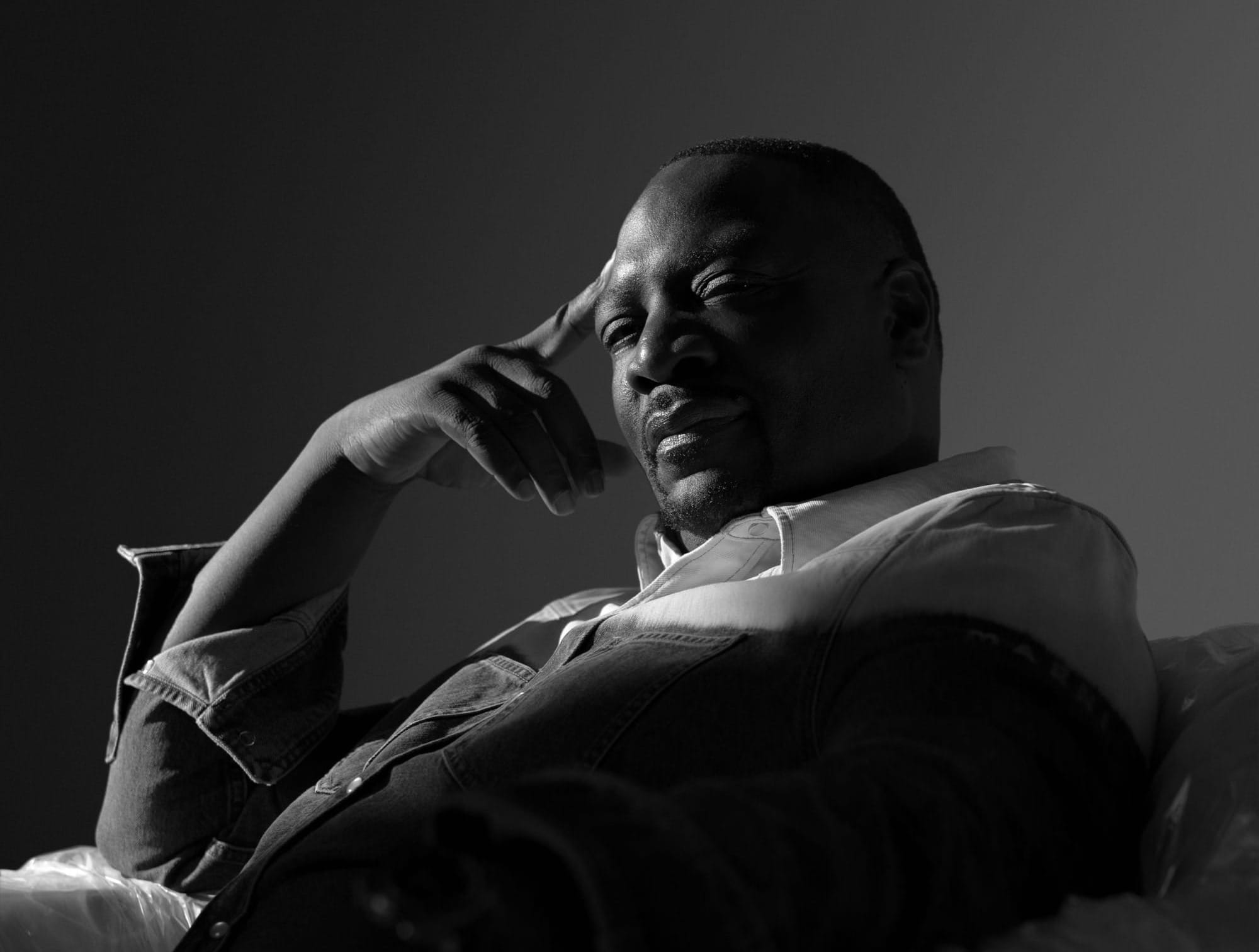
Say Hello To Euphoria’s New Bad Guy
Adewale Akinnuoye-Agbaje’s character, Alamo Brown, is an unapologetic capitalist with a gold revolver. Can the marksman save Rue from herself?
Adewale Akinnuoye-Agbaje intimidates when he scowls.
It’s not the raging fury of Oz’s Adebisi, the cult-classic character prison boss of Emerald City. This scowl is more slick and calculated: a thinking man’s intimidation with a pepper of physicality. Dressed in all black with a cowboy top hat and full-length fur draped over his broad shoulders, Akinnuoye-Agbaje is summoning the swagger of Alamo Brown, his latest villain in the third (and reportedly final season) of HBO’s Euphoria.
Brown is the season’s Big Bad; a Black cowboy with a pimp pedigree. He’s a sharp-shooter and a sartorialist, wielding a gold magnum 44. Alamo has rescued Rue fromLaurie’s (Martha Kelly) indentured servitude. In return, Rue will oversee the women at Alamo’s strip clubs. What could possibly go wrong with Rue on watch where gorgeous women and drugs are plentiful?
Akinnuoye-Agbaje has built a career on memorable villains. In addition to the aforementioned Adebisi, he also played Majestic in 50 Cent’s Get Rich or Die Trying and Mr. Ecko in JJ Abrams’ mystical classic, Lost.
His most impressive work, however, is Farming, a scripted sleeper about the adoption pipeline from Nigeria to Britain, where white families would adopt Black children while their biological parents built businesses to create a better life for their families. The biological parents would then spin the block to collect their children.
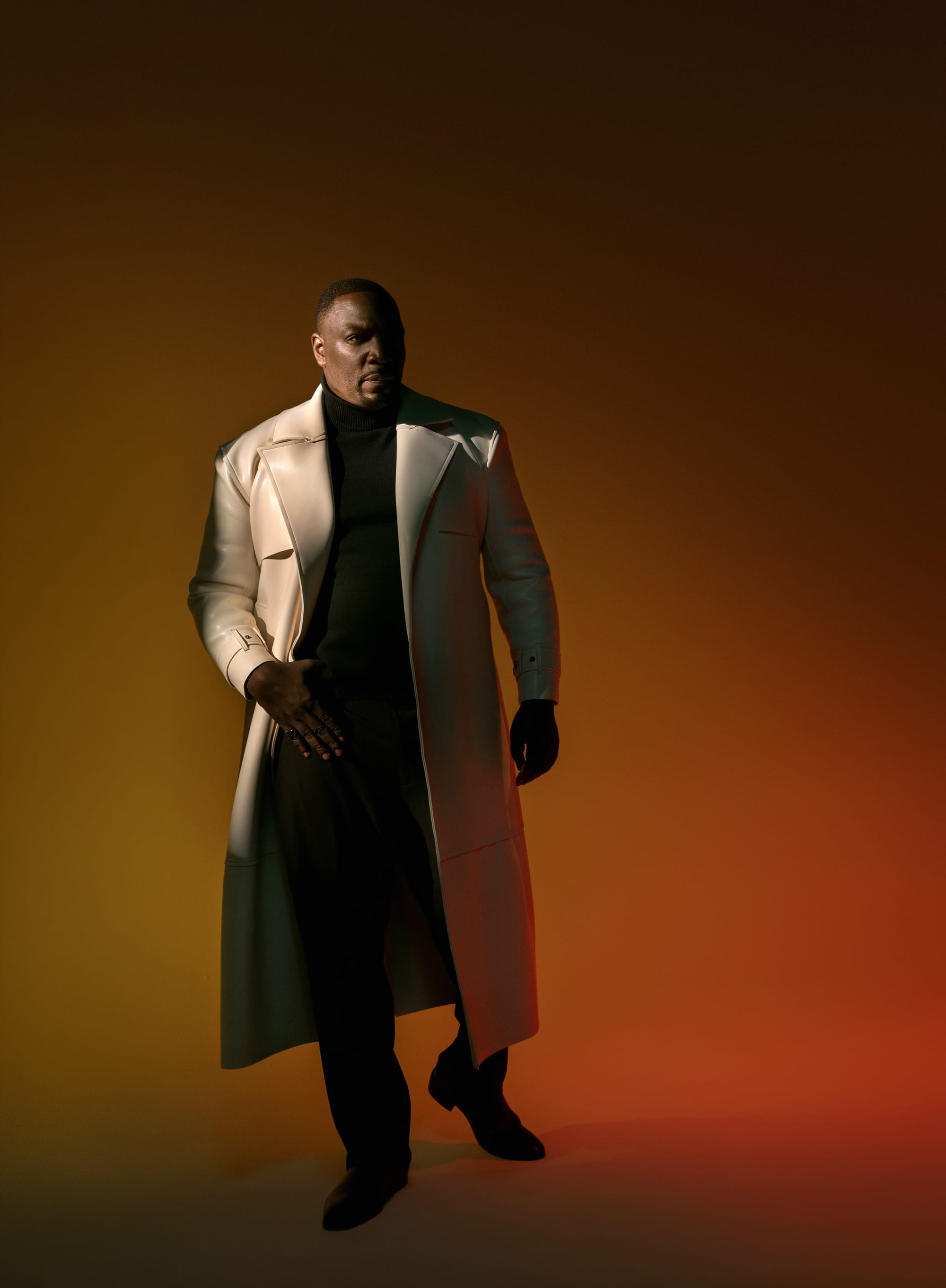
Wrapped on the menacing cover look, Akinnuoye-Agbaje returns to his usual self. He’s jovial when not in character. He returns to set wearing a long, cream leather trench that drapes. As Afro-Beats play in the background his scowl is no more
Say hello to the good guy.
LEVEL: What is the key to playing a memorable villain?
ADEWALE AKINNUOYE-AGBAJE: The key to playing a memorable villain is humanizing them — not perceiving them as a villain. You have to play him or her as a human trying to do their best given the circumstances they're in. That’s what I’ve done whether it be Adabisi or Majestic or Alamo Brown.
Will the audience put Alamo Brown in the hero or anti-hero box?
I don't even think Alamo perceives himself as a criminal. He perceives himself more as an entrepreneur who is perhaps a little ahead of the curve than other people who tow the line. He's using the cards he's been dealt. He knows the chips are stacked against him, so he's got to cut corners to feed his family and live the type of life that he feels he's deserved.
I love the character.
What makes you love him?
His ambition. He’s on a capitalistic quest and is willing to get there by any means necessary. He sees nothing immoral about strip clubs being the route to riches.
I'm glad you picked that up because that's exactly it. And also, he has what we call the ability to discern, read between the lines of life. Just because you got a suit and tie on, that doesn’t make you legit.
How do you personally feel about pigs?
it's not really something I would want to have in my vicinity [laughs]. There's a certain lack of hygiene and aroma that comes with them and they will eat anything, even their own feces, and that spreads disease. I'm not really a fan in that regard, but I respect them as animals.
I ask because Laurie calls Alamo a pig and he completely short circuits.
Because it's worse than calling Alamo the N-word and there's a reason for that. It goes back to what we just spoke about. He's a man who's pulled himself up by his bootstraps and built his own empire. And here's a woman who basically lives in squalor, like a pig, who he set up in the business now calling him that. It triggers his lack of self-worth. You'll see strands of that coming out through the season that make him quite paranoid.
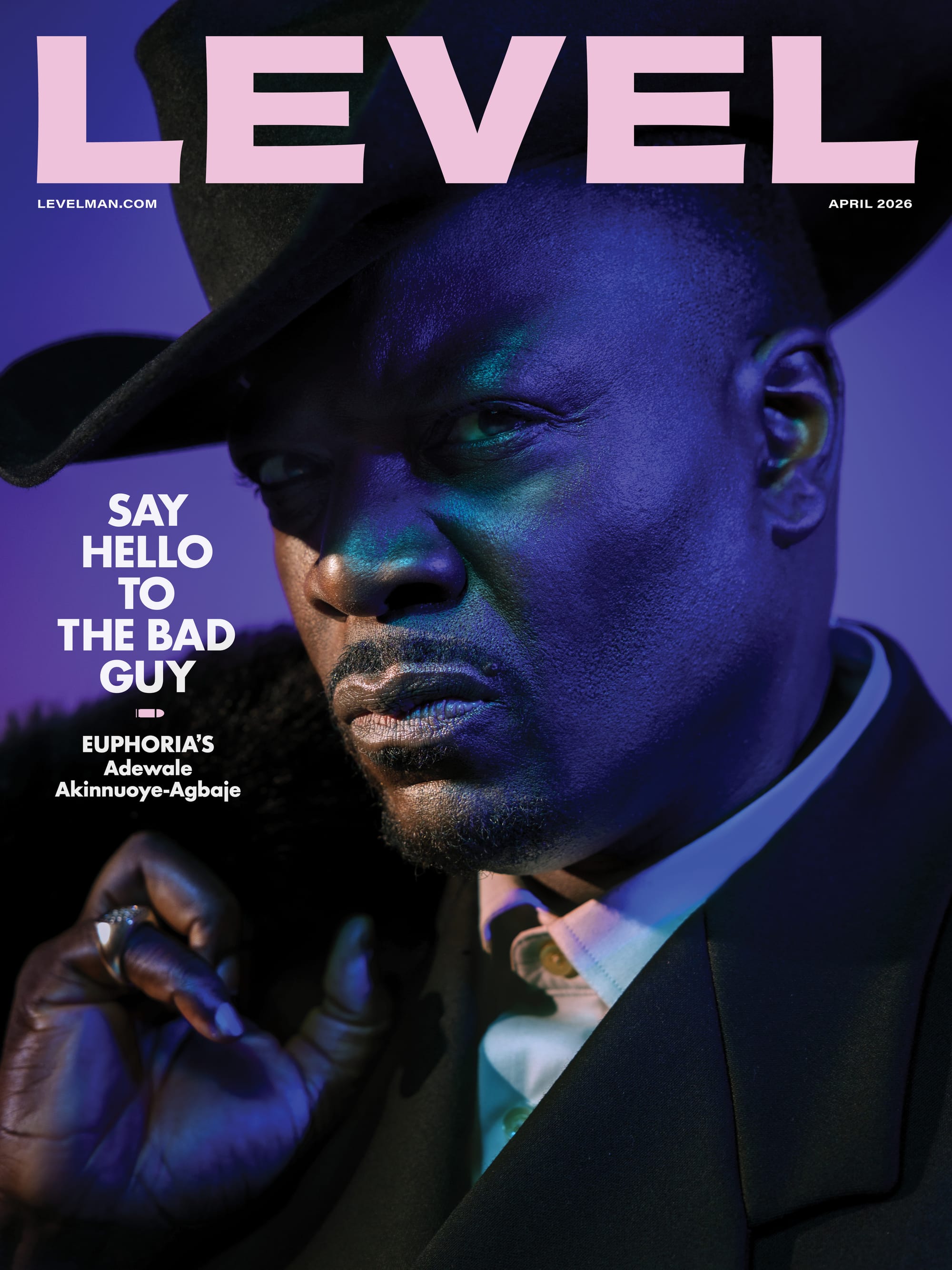
You’re sharing many scenes with Zendaya’s character Rue this season. What is she strong at as an actress?
Zendaya’s character, Rue, is in practically every other scene. Yes, we do delve into other characters' lives and backstories, but she's carrying the show to a large degree. One of the toughest things to do is pop up in every scene and still remain interesting. She's able to take you to the depths of emotion and then come out of that and be quite bubbly and then be absurd.
Director Sam Livinson’s writing is dark. How does his writing compare to the grit of Tom Fontanas’ who wrote Oz?
They're relentless in their pursuit of the truth of whatever subject matter they're telling. They don't sugarcoat it and they won't stop until they capture the essence of it.
Oz was pioneering in not only the subject matter basing a drama in a prison, but in how it was ruthless with the truth. It scared a lot of people straight because until that point, incarceration was glamorized. It was almost seen as a badge of honor on the street. We had to puncture that image and show the realities.
And I think it’s the same with Euphoria. Sometimes drug use and abuse is seen as a badge of rebellion and a code of coolness. Euphoria exposes the realities, not just for the primary users, but for the secondary people that are affected, the families, the friends, the community, and ultimately, the primary user, and it doesn't sugarcoat it. It shows it as an epidemic.
Both [Sam and Tom] put their magnifying glass of honesty and truth on these subject matters in a very raw, but also pioneeringly stylish way.
So their superpower is truth. What’s yours?
Resilience.
Say more about that.
Because of a rather rough and traumatic childhood, and then just being in society as a Black man with an African name who's dark and over six foot two, the chips were stacked against me, and yet I surmount my hurdles with a smile and never gave up.
You were farmed as a child. I hadn’t heard of the practice before watching Farming, a film that you wrote, directed, and starred in based on your life. Can you explain what farming is?
Farming was a term used by British social workers to depict and describe a phenomenon that occurred in England between the '60s and the '90s, whereby Nigerian immigrants coming to Britain would foster or farm out their children en masse all over the country in order so that they could work and study and build their lives. The idea being that once they'd accomplished what they'd set out to do, become professionals and own businesses, they would return to collect their children from these foster families and rebuild their lives with them.
That practice, which happened to tens of thousands of Nigerians all over Britain, was termed by social workers as farming. And I was farmed at the age of six weeks old to a white working class family in the southeast of England, a place called Tilbury. And at that time, there were no Black people there.
Literally the first Black folks to touch down in the town?
We were the first Black children in that town. And unfortunately for us, that town and neighborhood was known to be the base of the national front, right wing groups and Skinheads. And so it was probably the worst place you could have put Black children at the time, because of the resistance to the influx of immigrants, which took the form of these gangs and anti-racist, anti-immigrant rhetoric that was spouted in those days. It was very tough for a Black person to grow up in that kind of climate.
Your foster parents didn’t look like you. When did it sync in that you and your siblings were different?
When I went to primary school because before that we were in a cocoon within the house and around the neighborhood. [In school] kids would call us names and we'd go home to our parents and say, "Well, they called me the N word," or they said, "I don't belong here." My parents would say, "You're one of us, so just ignore them." And so even though they tried to treat us the same and regard us as equal and the same, outside, it became pretty apparent we were not.
That must have been terrifying.
It wasn't just children leaning into it. It was adults — the parents of the children. When they picked up their children, they would take them away from us so that they couldn't be contaminated. They didn't want their children playing with us.
How did your foster parents react?
This was a white couple who took on nine children in an all-white neighborhood that was very racist. They were used to the abuse and were very protective. My father was a truck driver, so he was away from home much of the time. The battles were left to my mother, who was a very tough woman. She would put hands on somebody if they did anything to me or my siblings. She was a formidable force but there was only so much she could do.
Tell me about the Skinhead gangs.
They ran the town, really. They're not the Skinheads that you know in America. They're not Nazi Skinheads, because the thing about the British skinners, they despised Germans because of the war. So Germany was the enemy. The last thing they would do was be espousing Nazi narratives. It was very much a British thing — being British born and bread. It was all things British from the shoes they wore which were called Churchills, to the shirts called Fred Perrys, who was a British tennis champion. It was about instilling pride in being British.
How did they treat you and your family?
So my first encounter — I must have been maybe five — my eldest sister came home with her face blooded. She had her face punched in and she was just crying. That was my first impression of what Skinheads do. It was the first time I ever saw my father, a very stoic man, have tears come out of his eyes. He felt helpless to protect her.
Adewale, this is tragic.
I think life was just showing me what it was going to be like for me as a Black man. And it was showing me early so that I was under no illusion as to how people regarded my skin and culture. So in one way, it was a benefit because it opened my eyes very quickly at a very young age, even though it was traumatic.
Why did you choose Damson Idris to play you in Farming?
We tested a lot of great actors. Many of them gravitated to the violent nature of the character and material. That's not what I was looking for because I knew I could make anybody look tough in the movie.
I wanted somebody who could capture my essence because I was an introverted, shy young man and very sensitive. It was important for me that I found somebody who could play those emotions. The character didn’t have more than half a dozen words in the whole movie, so he would have to emote a lot. Damson had that.
Before you started acting you were a successful model. Have you taken anything you’ve learned from that world and applied it to being a thespian?
Style. When Sam allowed me to choose my accessories, we played around with them. I put three rings on and put them on my last three fingers. And what that did, it made them click. They would make this sound naturally. When I would be in my trailer waiting for them to set up, I'd run my lines while clicking [the rings]. I liked the sound and thought I would use that somewhere in the scenes as part of this character. Sam liked it and he put it in.
Those things are what I picked up from fashion, knowing how to put things together, how to use them, and how to cultivate your own swagger.
Was Alamo’s gold .44 Magnum Revolver accessory your choice as well?
Sam [Livinson] wanted a gun that reflected a Dirty Harry kind of [feel] but I wanted it to look worn to indicate that, yes, this man has polished suits, but he's got a weapon that shows he's a killer and does it often. But Sam said he'd seen the images of the gold gun. I was hesitant because it seemed a bit of a cliche. But when I put the entire outfit on and I saw the image with the gold gun, he was a hundred percent right.
You, Zendaya, and the gun end episode one with a bang. What was the intensity like shooting that scene?
There was a lot of anticipation, a buildup to that scene. We were all keen to see how we were going to pull that off. It was all shot exteriorly. We were in Palmdale, [California] on a hill in 35 mile an hour winds, so I don't know how that apple stayed on Zendaya’s head, but it did. And it was freezing cold, man. So I was just glad I didn't have dialogue because my lips were frozen and I don't think I would've been able to get my lines out.
It was the coldest night to shoot, and I had Speedos on and cowboy boots. As cool and exotic as it looks, I felt like I was in Alaska shooting that. The guys had given us hand warmers to hold whilst they were turning around the camera, and those hand warmers were conveniently placed in my Speedos so that my balls were warm enough [laughs].
That scene is stunning; the cinematography is breathtaking.
We all knew that we had something special because of the way that Sam shot it. He was heavily influenced this season by the Sergio Leone type cinematography where we hold on characters for an extended period of time, tight closeups, detail. That took time. There were a lot of different setups, but we knew that when he pieced it together, it was going to look phenomenal. When that gun explodes, you really feel like somebody shot that gun, shot that apple and just missed her head.
At the end of that scene, Rue goes into uncontrollable laughter. It’s bizarre and very Euphoria-coded. Was that on page or improvised?
We tried various takes — that was one of them. Somebody asked me, “did Alamo miss her [on purpose]?” Because when you look at that scene, it's obvious that this is not the first time Alamo has done this. His henchman says, "You better keep really still." He's done this plenty of times before, and you'll see throughout the series that he's a very astute marksman.
I think this is really a test, not only of Rue’s faith, but of her core. And I do believe that had she flinched or tried to flee, he would've shot her. But the fact that she passed the test and got off on it intrigued him as much as it did her. It’s a wonderful kind of beginning to their bizarre relationship,
Who do you enjoy playing more: Alamo Brown or Adabesi?
I really enjoy playing Alamo. There's a maturity to him, which I obviously have inhabited because it's 30 years after playing Adebisi. But one of the things about Adebisi is I was fearless. I was a young actor, and I think it's some of the better work I've done in my career. It's responsible for many of the roles that I've gotten. People have hired me because of that. Lost wrote [the character] Mr. Echo based on [Adabesi and Oz]. I did The Mummy Returns and The Born Identity, all because of that performance.
Alamo is the right guy to be playing now. And I love the fact that he's American because it took me many years to convince the industry that I could play American roles. So to play a Texas cowboy with that same kind of fearless swag as Adabisi is full circle. And that it happened to be Sam Levinson — I worked with his dad Barry Levinson on Oz — is a mystical full circle. The apple didn't fall far from the tree. They have the same fearless sensibilities and creative pioneering spirit.