
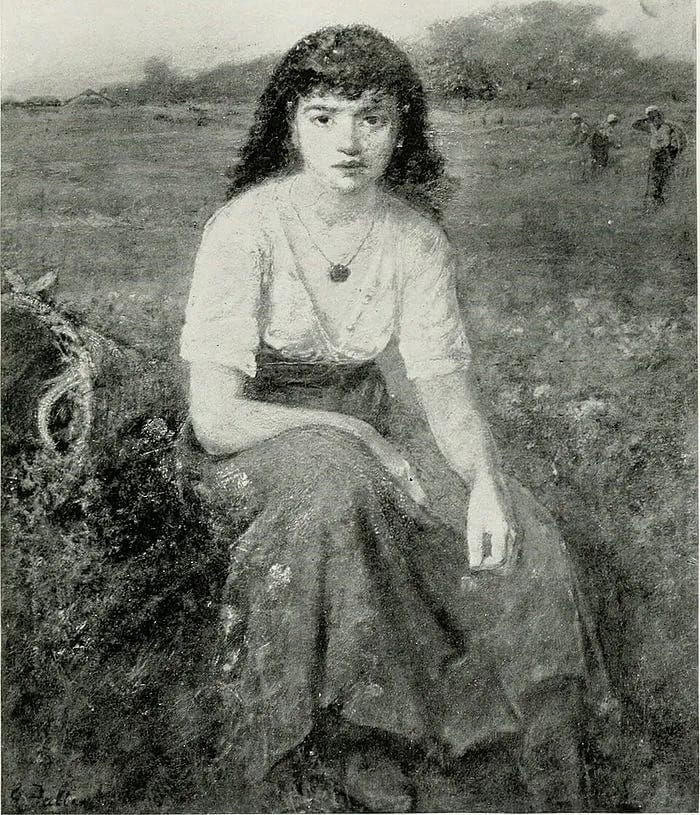
Artist George Fuller created this painting in 1857, after witnessing a young Black girl being sold at auction in Augusta, GA, during his tour of the South. He never knew her name, and no historical documents identify her. He did write about her in a letter:
“Who is this girl with eyes large and black? … She is under thy feet, white man. … Is she not your sister?” — George Fuller
In the background are three dark-skinned enslaved people working in the fields. In American cinema and television, slavery is misrepresented and never shows us realistic percentages of half-breeds, quadroons, octaroons, and so on. Hollywood avoided historical accuracy and these terms after the 1930s because they were tied to slavery‑era racial caste systems. They were associated with sexual exploitation of mixed‑race women, and the Hollywood Production Code discouraged explicit discussions of “miscegenation.”
Miscegenation is a term coined in the United States in the 19th century to describe interracial sexual relationships, marriage, or reproduction, especially between Black and white people. The word itself was invented in 1863 during the Civil War by two journalists who opposed abolition; they created it as part of a political hoax meant to stir racist fears and undermine support for Abraham Lincoln.
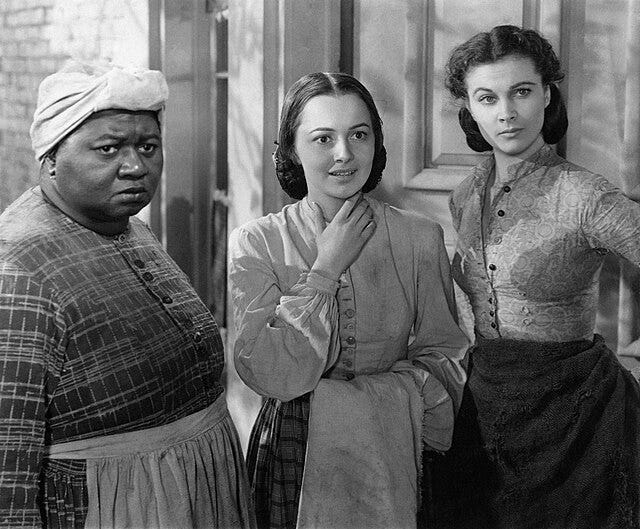
Hattie McDaniel won an Academy Award for Best Supporting Actress for her portrayal of Mammy in Gone with the Wind.
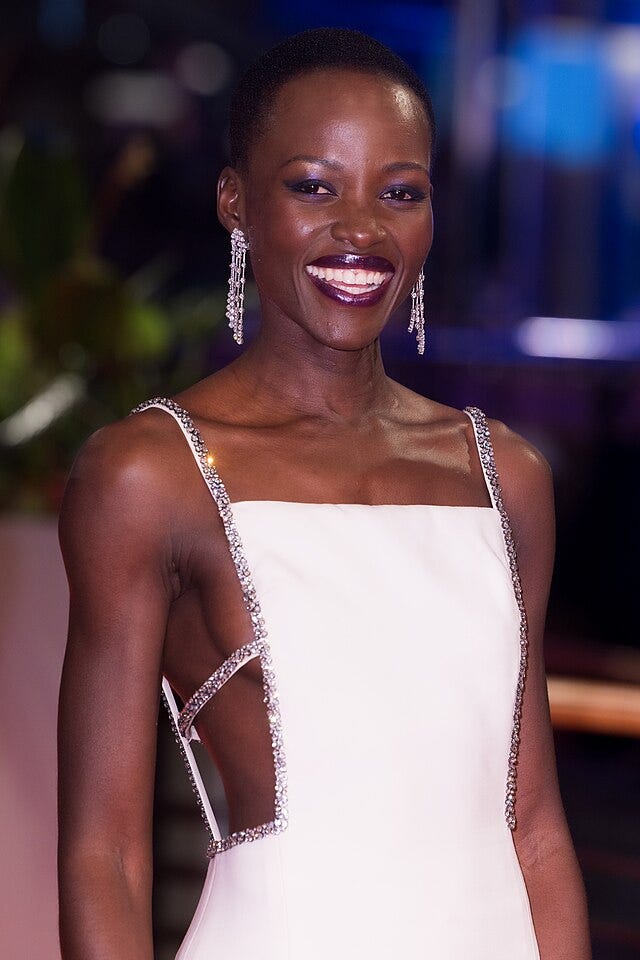
Lupita Nyong’o won Best Supporting Actress as Patsey in Twelve Years a Slave.
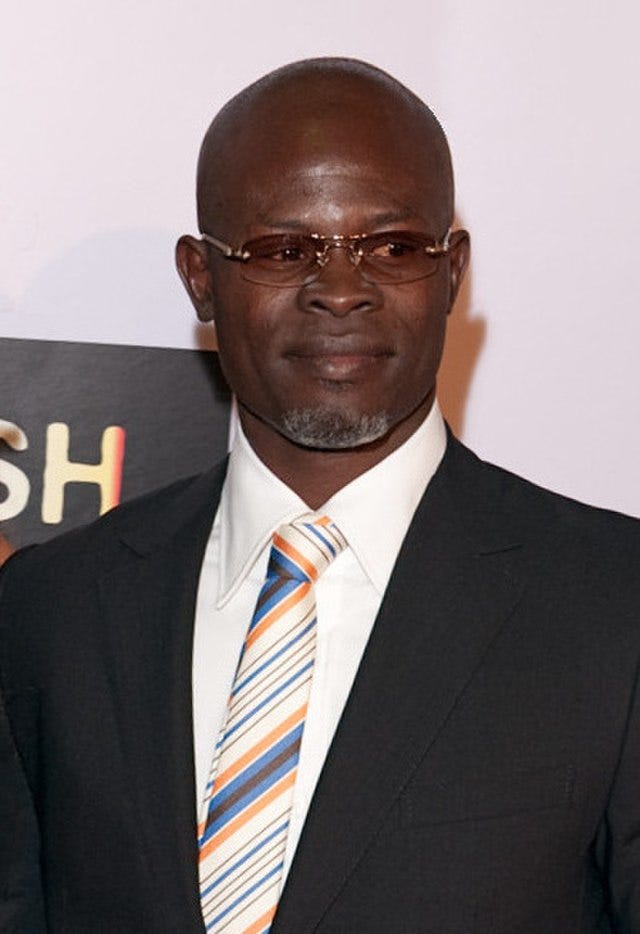
Djimon Hounsou was nominated for Best Supporting Actor in Amistad.
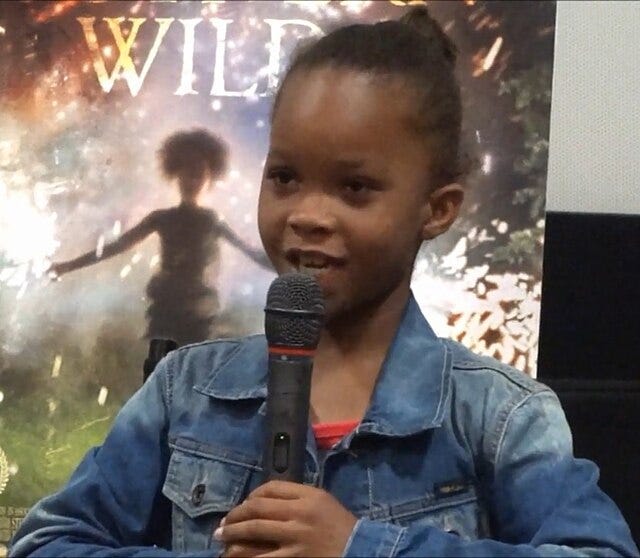
Quvenzhane Wallis was in Twelve Years a Slave.
American movies have generally perpetuated an image of slavery where enslaved people were dark-skinned and not far removed from their African roots. There have certainly been exceptions; Thandiwe Newton portrayed Sally Hemings in Jefferson in Paris (1995). Yet, the light-skinned Newton is far darker than the real Sally Hemings.

Sally Hemings provides a perfect example of the reality of American plantation life. There are no photographs of Hemings. Isaac Jefferson, an enslaved blacksmith at Monticello, described her as follows:
“mighty near white… very handsome, long straight hair down her back.” — Isaac Jefferson
Other contemporaneous descriptions state that she had an “extremely light complexion” and long, straight hair. Sally was no genetic fluke. What portrayals of slaves in film and television don’t want to be understood is the whitening of the slave pool through what was later called miscegenation. Sally was three-quarters white. Her half-Black mother, Elizabeth (Betty) Hemings, was impregnated by the white Virginia planter John Wayles, who was the father of Thomas Jefferson’s wife, Martha Wayles Jefferson. Betty’s mother was impregnated by a white English sea captain, John Hemings.
I earlier used the term “impregnated.” To be clear, John Hemings owned Betty Hemings' mother, possibly named Parthenia, and John Wayles owned Betty Hemings in the same way that Thomas Jefferson owned Hemings. The power differential in these relationships precludes consent. Sally was an immature 14-year-old when Thomas Jefferson started having sex with her. Impregnated means the same as rape in these cases and others all across the South. We never see a bunch of light-skinned Black people running around plantations.
The historic television miniseries Roots (1977) traced the history of a single family from the arrival of Kunta Kinte in 1750, ending after the Civil War, with Chicken George relocating his family to Henning, Tennessee. The drama gave us instances of that pesky miscegenation. Tom Moore (Chuck Connors) is shown to have sexually assaulted Kizzy (Leslie Uggams), and we later learn that Moore is the father of Chicken George (Ben Vereen). It’s suggested through dialogue that Moore routinely asserts his rights to access his female slaves sexually. But we aren’t flooded with Chicken George’s half-brothers and half-sisters as was really happening on plantations.
And what happened to those light-skinned children once born? Contrary to the assumption that the highest value is given to the bigger and stronger children of “bucks” and “breeders,” light-skinned children often went higher at auction. The men were trained to work in staff positions at the big house. Women were the same, but some were culled to be fancies, often to work in brothels as prostitutes. The first generation of Pullman porters was almost exclusively composed of light-skinned former slaves. The exact hierarchy that shaped domestic service long after slavery continues to shape it today, along with roles in the film and television industries.
A complete history of how rape was legalized and institutionalized would include the Partus Sequitur Ventrem laws beginning in Virginia in 1662. Not only did these laws break with British custom and have enslaved children follow the mother’s bloodline, making all children of enslaved women slaves for life themselves. These laws voided any responsibility for white fathers who once would have been responsible for taking care of the children, ensuring they didn’t become the responsibility of the state. Rape was essentially legalized.
A complete history would recognize that ending the Transatlantic Slave Trade in 1808 was not the beginning of a gradual end of enslavement, but committing to full implementation of forced breeding and rape as the engine supporting domestic breeding. The number of enslaved people increased substantially after the end of the Transatlantic Slave Trade.
Jefferson was president when the Constitution permitted him to end the importation of enslaved people, and he did so on the first date possible, January 1, 1808. The immediate impact was to enrich himself and other plantation owners in Virginia, Maryland, and Delaware, who benefited most from the loss of competition from foreign imports.
What the film and television industries have done makes them complicit in telling a narrative that makes white people feel less bad. Even when they address topics that might evoke strong feelings, the material is never presented in a way that prompts difficult questions. How often have you seen a young woman in a major film like the one in the cover photo?
Enslaved girls in America were typically deemed “suitable for breeding” as soon as they reached puberty — often between ages 12 and 14. We understand how disgusting it would be if it were Jeffrey Epstein simply having sex with girls that age. Isn’t it even worse if the goal was procreation for profit?
We’ve spent generations watching slavery through a keyhole — a narrow, curated view shaped by what studios thought audiences could handle, or what they believed America was willing to admit. But the truth has always been larger, heavier, and far more human than anything Hollywood has ever put on a screen.
The parts we never see are the parts that explain everything: how a nation built its wealth, how families were broken and remade, how laws were written to turn people into capital, and how those same laws echo through the present. These aren’t side notes. They are the story.
And that’s why telling the fuller truth matters. Not to shock. Not to sensationalize. But to restore what was taken — the context, the complexity, and the humanity that popular culture has flattened.
If America is ever going to understand itself, it has to stop looking away from the chapters that make it uncomfortable. It has to confront the systems that shaped us, not just the scenes that fit neatly into a script. Because the side of slavery we’ve never seen on television isn’t missing by accident, it’s missing because it forces us to reckon with who we were — and who we still are. And reckoning is the first step toward something better.