
In a 1985 profile in People Magazine, the late Rick James called Teena Marie “the most important White female singer since Barbara Streisand; and her own race forgot her.” James’ comments came on the heels of Marie’s only taste of crossover success, with the top-ten pop hit “Lover Boy.” More than 40 years later, and 15-plus years after her death at the age of 54, Marie is remembered as an important contributor to R&B and Soul music, who against all logic sustained a 30-year-plus singing career with an overwhelmingly Black audience base.
Though there have been many have been described as “sounding Black” — many fans have recalled finding out for the first time that Marie was not Black — what was always clear in Marie’s music is that she was not only influenced by Black culture but had a legitimate passion and respect for it. That Marie never sought to find a broader audience for her music, even though she had the talent to sing anything she wanted, speaks volumes about the integrity of the woman simply known as “Lady T.”
Born Mary Christine Brockert in Venice Beach, Calif. in 1956, Marie joined Motown Records in 1976. The label had previously signed White acts such as the band Rare Earth, Chris Clark (Berry Gordy’s one-time lover) and even comedian Soupy Sales, but most were thought of as little more than novelty acts. Marie represented something altogether different; a White woman whose vocal gifts were reminiscent of soulful belters like Gladys Knight, Aretha Franklin and Linda Jones, whose “Hypnotized” Marie covered in 1994.
Marie recalled growing up in a household where she heard classical music alongside Black artists like Sarah Vaughn and Aretha Franklin — she specifically cites Al Green’s “Tired of Being Alone” as the song that turned her on to Soul Music. When she signed to Motown, Marie presented a challenge for the label to find the right material for her. Additionally, Motown wasn’t inclined to cede Marie more creative control — few women artists did in that era — and Motown also wasn’t sure how to present Marie to Black audiences.
In stepped Rick James, who in the late 1970s was one of Motown’s most important artists. James was actively involved in the writing and production of Marie’s first album Wild and Peaceful (1979), while also providing the cultural cover to introduce Marie to Black audiences. Motown concocted a story that she was discovered by James to make her more palatable to Black radio and audiences. Not surprisingly, Marie’s photo was nowhere to be found on her debut, inverting historical practices where the photos of Black artists were often removed from album covers to market them to White audiences. Wild and Peaceful featured the hit “I’m a Sucker for Your Love,” with James on vocals. More than the lead single, Black audiences were drawn to the deep cut, “Deja Vu (I’ve Been Here Before)”, written by James, and the likely origin of Marie’s love affair with Black listeners
Marie followed up with Lady T (1980), produced by Minnie Riperton’s husband and Rotary Connection founder Richard Rudolph, which included the Funk-driven “Behind the Groove” (co-written with Rudolph), and the Marie penned ballad “Aladdin’s Lamp.” Marie’s breakthrough came later in 1980, with her second album release of the year Irons in the Fire, in which she served as the sole producer. The lead single “I Need Your Loving” was the first of Marie’s singles to enter the Pop Top-40 chart. Irons in the Fire also highlighted Marie’s willingness to push beyond the boundaries of R&B, as evidenced by the track “Tune in Tomorrow” one of the many Jazz inflected tracks she recorded through the course of her career.
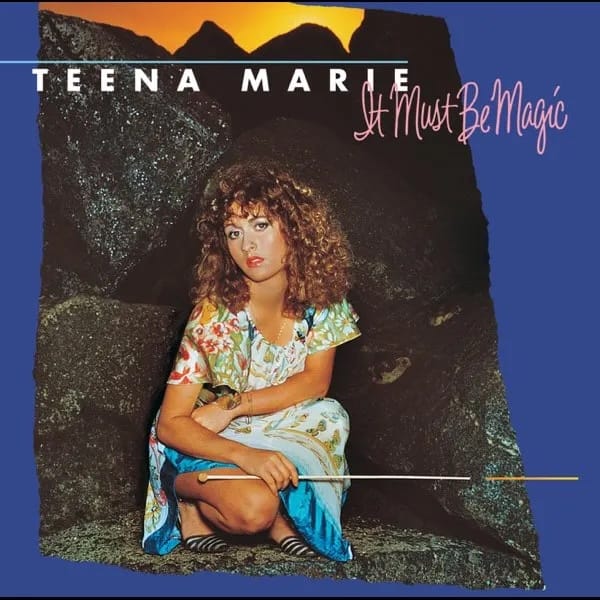
Marie released what is arguably her finest album It Must Be Magic — her third in less than 18 months — in the Spring of 1981. The lead single was the now legendary “Square Biz,” which peaked at #3 on the R&B charts, and featured Marie dropping bars on several verses, including the memorable lyrics “You know I love spirituals and rock, Sarah Vaughn, Johann Sebastian Bach, Shakespeare, Maya Angelou, and Nikki Giovanni just to name a few…” The single was released on the heels of Blondie’s “Rapture” which also featured a rap by lead singer Deborah Harry. While Harry’s performance caught the eyes of mainstream critics, quick to dub the song the first “White” rap song, Marie’s track was largely ignored by those same critics. “Square Biz” was the perfect metaphor for the arc of Marie’s career, as the track has legendary status among fans of R&B from the period, and didn’t even break into the Top-Pop 40.
In addition to “Square Biz”, It Must Be Magic” featured other classics including “Revolution” and the Quiet Storm Staple, “Portuguese Lover”. Both songs, though, might have been overshadowed by “Fire & Desire,” a stellar duet between Marie and James, that appeared on his definitive album Street Songs (1981). A year later the duo rekindled their studio affair with “Happy” from James’ Throwin’ Down (1982)
It Must Be Magic was Marie’s last for Motown as she became embroiled in a contract dispute with the label. Marie’s decision to hold the line on her career, led to the creation of the Brockert Initiative, which curtailed record labels from refusing to release artists from their contracts while simultaneously refusing to release their music. Marie signed with Epic records, joining a roster that included both Michael Jackson and Luther Vandross.
Though Marie never received the kind of promotional support that her aforementioned male peers did at Epic, she recorded several solid recordings throughout the 1980s including Robbery (1983), which featured the singular “Cassanova Brown” and Starchild (1984) which included her first and only crossover hit, “Loverboy” which peaked at #4 on the pop charts. Marie recorded six albums for Epic, a period that included her most successful R&B single — the only one stand atop the R&B charts, “Ooh La La La”, which garnered legendary status as the backbone to ‘Fu-Gee-La’, the first — and highest-selling — single from the Fugees blockbuster album The Score (1996)
Though few remember Marie’s self-released 1994 recording Passion Play — she once joked that she had thousands of copies of the project in her garage — the recording, both in the quality of the music and the independent spirit behind its recording, was one of the highlights of her career. As Teena Marie retreated to the quiet life of raising her daughter Alia Rose, young Hip-Hop artists discovered her work. Indeed, it was New Orleans based Hip-hop label Cash Money that helped resurrect Marie’s recording career releasing La Dona (2004), her first gold album since Starchild.
Teena Marie’s death was no doubt a shock to her many fans — the volume of responses to her death on Twitter from so-called #BlackTwitter perfectly captured her importance to her Black fans and highlighted the dual universes that many Black and White Americans live in with regards to Black arts and culture. As Reuters’ Frank Paul, Jr. reflected at the time of Marie’s death in 2010, “Hers is a story that is still in many ways unsung, since quite frankly, too much of her public legacy will focus on the color of her skin.” Thankfully her Black fans know better.
Mark Anthony Neal is the James B. Duke Distinguished Professor of African American Studies and Professor of English and Gender, Sexuality and Feminist Studies at Duke University. The author of several books including Looking for Leroy: Illegible Black Masculinities and Black Ephemera: The Crisis and Challenge of the Musical Archive, both from NYU Press. Neal’s next book Save a Seat for Me: Notes on American Fatherhood will be published by Simon & Schuster in August of 2026.