
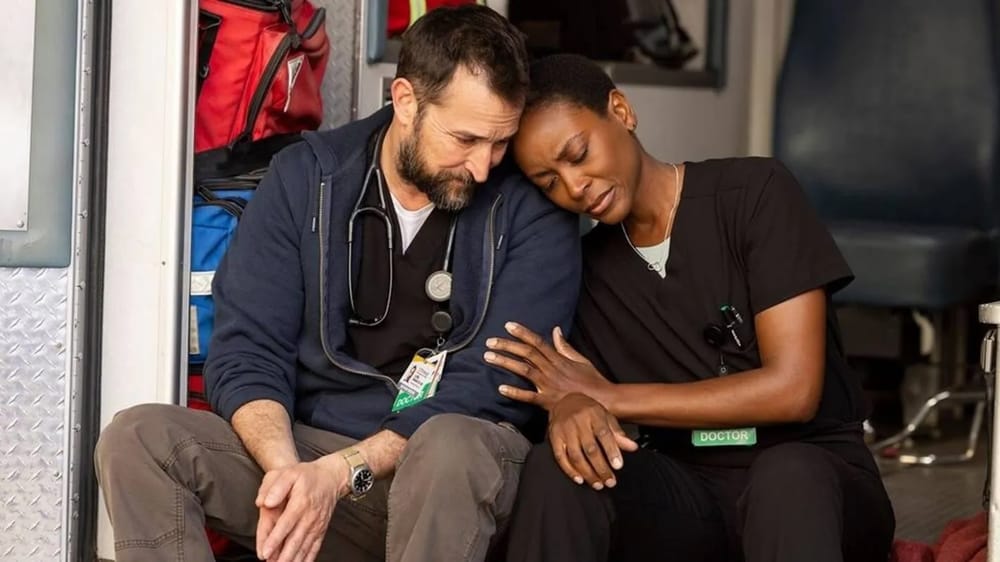
I’ve loved The Pitt, HBO’s reimagined take on the hospital drama since it made it’s heavy-handed debut last summer. The medical professionals I know, mostly nurses because I’m a Caribbean man with aunties of a certain age, also love the show. They loved it so much they couldn’t always watch it. Between its stark depictions of death, gore, violence, tragedy and addiction, and its commitment to the frenzied pace of an emergency room, the hour often hit too close to home.
That’s what good art has to do. Critics who shrug off protest art huff about its earnest qualities, yet there’s nothing more earnest than dying in an emergency room because you didn’t have healthcare. In the most recent episode of the Pittsburgh-set drama, charge nurse Dana Evans lies about an admitted patient losing oxygen capacity so he’ll receive the care he wouldn’t have inside of the prison where he’s housed.
The previous episode shows an unemployed father skipping his insulin treatments because he can no longer afford them. His daughter valiantly launches a GoFundMe for his six-figure medical tab and he reflexively refuses to accept outside help. A proud man wouldn’t become a charity case, he argues, and the hospital’s quick thinking residents jump in with a lower-cost way for him to extend his care. The moment feels doughy and saccharine like a marzipan pastry and it’s also exactly what would happen to a working family if faced with an instant 100,000-dollar tab for life-preserving care. Friends and family would need to chip in so a Millennial or Gen Zer would set up the crowd-funding. Then, the hospital would lay off 60% of its staff, the nurses would go on strike, and dad would die but there would be a very nice Facebook post thanking everyone who contributed. And a promise the donated money would go to a memorial service. Dad’s death didn’t happen in vain: a lot more people became outraged at the system’s inability to restore dignity through timely medical intervention.
Well before this week’s episode aired, I forecasted the death of a major character. He was too endearing, too respectful, and too Black to last. The show also had a point to make about “frequent flyers.” Those are patients who deal with chronic illness, who can’t just flip the switch on their comorbidities, and who seem not to have a family. The character’s death hit hard because his jovial arc connected the other major figures in the Emergency Room. When shit hit the fan, he smiled and laughed because he knew this crew could handle it. They’d handled him and his vices for years at a time.
Except he died with not much to show for his loyalty to the crew. They tried their mightiest to compress him back into magical emergency room sage status, but he just perished. He couldn’t be saved. That’s the fate many of us or our elders have to look forward to because almost no doctors are like The Pitt’s Dr. Robbie. No patient billing staffers are trying to figure out ways to help you pay more. This is the cold reality of American healthcare: tragedy in a split gown and death in a room alone.