
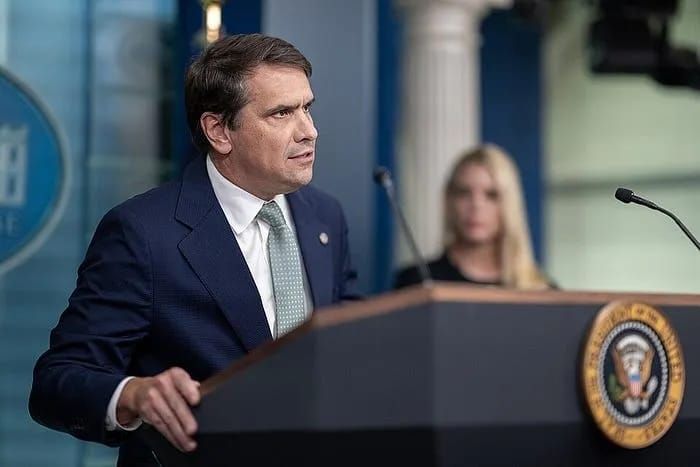
The Senate Judiciary Committee has formally set July 15 as the opening day of Todd Blanche’s confirmation hearing for Attorney General, with outside witnesses scheduled for July 16. Blanche has been serving as the acting Attorney General of the United States since April 2, 2026. Before becoming acting AG, Blanche served as the Deputy Attorney General since early 2025.
According to multiple sources, Blanche became acting Attorney General on April 2, 2026. Given today’s date (June 26, 2026), he has been in the role for just under three months. Todd Blanche was widely described as “unconfirmable” when Trump formally put him forward for Attorney General because of three major controversies tied directly to his actions as acting AG and deputy AG.
1. The IRS immunity deal for Trump and his family
Blanche authorized a Justice Department action granting immunity from prosecution or IRS enforcement to:
- Donald Trump
- Trump’s family members
- The Trump Organization
This immunity was tied to the settlement of Trump’s $10 billion lawsuit against the IRS. Senators in both parties saw this as an abuse of DOJ authority and a direct conflict of interest.
2. Creation of the “Anti‑Weaponization Fund”
Blanche approved a $1.8 billion DOJ fund intended to compensate people who claimed they were victims of “prosecutorial overreach” during the Biden administration. Critics — including Republican senators — warned that the fund could:
- Pay individuals convicted of Jan. 6 violence
- Function as a political slush fund
- Undermine the legitimacy of federal prosecutions
This decision was cited repeatedly as evidence that Blanche could not be trusted to run the DOJ impartially.
3. His role in the Epstein files compliance dispute
Pam Bondi testified to Congress that Blanche was responsible for determining DOJ’s compliance with the law requiring the release of Jeffrey Epstein–related files. His handling of the issue drew scrutiny, especially from senators who believed he was slow‑walking or manipulating compliance.
When Todd Blanche was still Deputy Attorney General, he made an unusual and controversial trip to FCI Tallahassee to meet personally with Ghislaine Maxwell, who was serving a 20‑year federal sentence for sex trafficking minors. The visit was not announced in advance, was not part of any standard DOJ oversight protocol, and was not accompanied by the Bureau of Prisons’ usual documentation for high‑level official visits.
Blanche later told Senate staff that he went to the prison to “review conditions” and to “ensure compliance” with new Bureau of Prisons directives. But senators, including Republicans, noted that:
- No other facilities received such a visit
- No written report was produced
- No policy review followed
- No other DOJ official accompanied him
The visit stood out because it was singularly focused on Maxwell, not on prison conditions generally.
Within days of Blanche’s visit, Maxwell was quietly transferred out of FCI Tallahassee. Senators learned of the transfer only because it appeared in internal BOP movement logs. The Bureau of Prisons confirmed Maxwell’s move to the Federal Prison Camp in Bryan, Texas, but did not provide operational details about the transfer or the approval chain. They described it only as a “BOP placement decision.” Deputy Attorney General Todd Blanche publicly stated that Maxwell faced “numerous threats against her life” and that the transfer reflected security concerns and BOP discretion.
No one has identified who approved the transfer. BOP policy requires a waiver for placing a sex‑offender–designated inmate in a minimum‑security camp. A BOP administrator must approve such a waiver, but no official has confirmed who signed it. No documentation of the decision process has been released. Congressional inquiries have asked for the waiver, the classification review, internal communications, Maxwell’s visitor logs, and any DOJ directives. None of these has been produced publicly. The transfer remains unexplained and irregular.
Several Republican Senators, on and off the record, voiced their opposition to Blanche’s nomination.
1. Sen. Susan Collins (R‑ME) — on the record
“We had an extensive discussion on the Anti‑Weaponization Fund, which he has assured me with no equivocation at all that he is not for it, will not pursue it, that it will not exist.”
2. Sen. John Cornyn (R‑TX) — on the record
“There’s still some unanswered questions about the tax audits and the scope of any immunity from future audits.”
3. Sen. John Cornyn (R‑TX) — on the record
“He provided some clarity… but promised to have a more in‑depth briefing over the details.”
4. Sen. John Thune (R‑SD) — on the record
“We’ll see.He does not currently have the votes.”
5. GOP Judiciary Committee members (collective characterization) — on the record via reporting
“Republicans are making clear that acting Attorney General Todd Blanche won’t have a cakewalk to Senate confirmation…”
6. GOP senators in private meeting (collective) — reported paraphrase
“More than 20 GOP lawmakers vented their frustrations… and panned the proposal he rolled out to establish a $1.8 billion ‘anti‑weaponization’ fund.”
7. GOP Senate source (off‑record characterization)
Blanche “will have to clear several hurdles.” (Translation: He is not currently confirmable.)
8. GOP senators (collective characterization)
Blanche “is certain to be grilled” over the fund and his handling of Trump‑related matters.
9. GOP swing votes (collective characterization)
Blanche is “privately addressing concerns” but still faces “lingering concerns” among Republicans.
In the weeks since his nomination, the odds have changed from definitely confirmable to likely confirmation, and Republican Senators are changing their tune.
1. Blanche “assured GOP senators… the fund is dead.”
In at least two private meetings, Blanche assured Republican Senators that the fund is dead and he won’t support it if Trump tries to revive the idea in the future.”
2. Sen. John Cornyn called a meeting “positive.”
“It was a positive meeting.”
3. John Cornyn acknowledged that Blanche provided clarity.
“He provided some clarity about the scope [of the IRS deal].” (Signals Blanche is addressing GOP concerns successfully.)
4. Blanche promised deeper cooperation with GOP skeptics.
“Promised to have a more in‑depth briefing over the details.”
5. GOP senators privately say Blanche has “addressed concerns.”
“Blanche… assured GOP senators… [and] addressed concerns about the fund.” (Private assurances are often the real signal of confirmation momentum.)
6. Republicans are accepting Blanche’s reversal on the fund.
“Blanche says DOJ is ‘not moving forward’ with the $1.776B anti‑weaponization fund: ‘Period.’”
7. GOP frustration has shifted from Blanche personally to the administration.
“More than 20 GOP lawmakers vented their frustrations with the administration…”
8. Blanche is now seen as responsive and cooperative.
“Blanche… assured GOP senators… he won’t support [the fund] if Trump tries to revive it.”
9. Blanche’s critics (Cornyn, Tillis) are no longer signaling a hard ‘no.’
The two Republicans whose votes matter most are now in “wait and see” mode rather than opposition.
Cornyn: “I would not make a decision… until he testifies.”
10. Senate Majority Leader John Thune’s framing signals Blanche is viable.
“[Thune] isn’t predicting the outcome… noting Blanche will have to clear several hurdles.”
Republican Senators have framed confirmation discussions on two of the three major hurdles Blanche faces, the IRS deal and the slush fund. Except for vague references, none of them are addressing the pedophile in the room. Did they forget about Epstein and Blanche’s personal role in the cover-up?
Todd Blanche has repeatedly acted in ways that appear to shield Donald Trump from scrutiny in the Epstein files investigation. As Deputy Attorney General, Blanche was the official responsible for determining how the Justice Department complied with the law requiring the release of Epstein‑related documents, and lawmakers say his office slow‑walked disclosures, withheld key materials, and provided inconsistent explanations for missing pages.
His unannounced visit to Ghislaine Maxwell, followed days later by her unexplained transfer to a minimum‑security camp that normally bars sex‑offender‑designated inmates, intensified suspicions that Blanche was managing sensitive witnesses rather than overseeing neutral prison operations. Senators have also questioned whether Blanche’s sweeping IRS‑audit immunity deal for Trump and his family, and his role as Trump’s former criminal defense attorney, created conflicts of interest that shaped DOJ decisions about Epstein‑related evidence.
These actions have fueled a bipartisan perception that Blanche has used his position to protect Trump from potential exposure in the Epstein files rather than to ensure transparent compliance with federal law.
The Senate Judiciary Committee, chaired by top Trump flunky Sen. Lindsey Graham, will oversee the confirmation hearings on Blanche. The chairman controls the witness list and determines, for example, if we will hear from Epstein survivors and how many. When Clarence Thomas was confirmed as a Supreme Court Justice, then chairman Joe Biden kept three witnesses backing up Anita Hill’s testimony from testifying.
During her congressional testimony, former Attorney General Pam Bondi repeatedly stated that Todd Blanche was the Justice Department official responsible for overseeing compliance with the Epstein Files Transparency Act. She emphasized that decisions about what was released, what was withheld, and how the department interpreted the law were “handled by Deputy Attorney General Blanche’s office.” Bondi told lawmakers that she “did not personally review” the disputed redactions or missing documents and that Blanche’s team controlled the process for determining which Epstein‑related materials were responsive. She also testified that Blanche was the DOJ official who communicated with the Bureau of Prisons regarding issues related to Epstein‑connected inmates, including Ghislaine Maxwell.
Roughly 3 million Epstein‑related documents have not been released by the Department of Justice. According to Bondi, Todd Blanche is responsible for the unreleased documents, and Senate Republicans are ready to ignore Blanche’s role in all things Epstein if we let them.
The media is complicit in allowing Republican Senators to frame the confirmation on assurances Blanche makes about IRS immunity and his disagreement with the slush fund. They need to get Senators on the record about Epstein. Stop them in the hallways and ask, “Have you forgotten about Epstein?” No discussion about Blanche should take place that doesn’t mention Epstein, and private assurances are meaningless.
Before joining the Justice Department, Todd Blanche was Trump’s personal criminal defense lawyer, representing him in three of the most serious prosecutions Trump faced:
1. The New York “hush‑money” criminal case
Blanche was Trump’s lead trial attorney in the Manhattan prosecution involving falsified business records related to payments to Stormy Daniels.
2. The federal classified‑documents case (Mar‑a‑Lago)
Blanche represented Trump in the federal indictment alleging unlawful retention of national‑security documents and obstruction of justice.
3. The federal election‑obstruction case (January 6 / 2020 election)
He also served as Trump’s defense counsel in the federal case alleging efforts to overturn the 2020 election results.
Now he is acting as Trump’s personal lawyer to protect him from all matters related to Epstein. Making him Attorney General will ensure that the Department of Justice will never prosecute Donald Trump and his friends for their sex crimes committed against children and young women. The public needs to show up at town halls, call their senators’ offices, and write letters to them. Their preference is to forget about Epstein, and we cannot let them.