
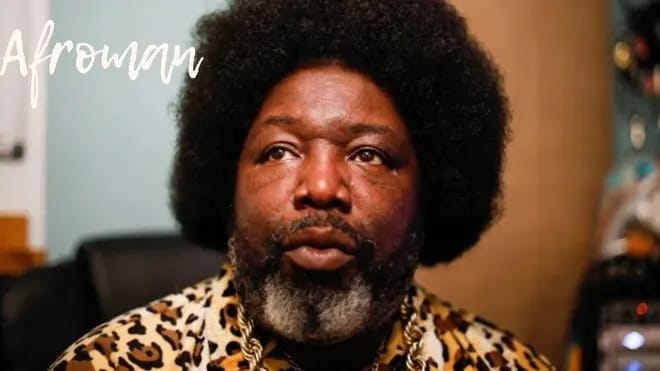
Seven Ohio sheriff’s deputies sued Joseph Foreman, a Grammy-nominated comedic rapper widely known as “Afroman,” for defamation over a viral music video, “Lemon Pound Cake,” which used footage from the 2022 botched home raid. Authorities claimed they needed to search his home as part of a kidnapping and drug investigation, but they didn’t find any evidence to justify the charges against him. In the process, deputies broke down his door and reportedly traumatized his children, a 10-year-old and a 12-year-old, who witnessed them searching the house with weapons drawn. While authorities returned $5,000, Afroman stated this was $400 less than what they had confiscated. In court, officers claimed they endured “mental distress” because of the music video, but the defense argued the comedic social commentary was free speech, protected by the First Amendment. The Adams County jury ruled in favor of Afroman on all counts on March 18th.
In the first verse of the now-infamous song, Afroman says, “The Adams County Sheriff kicked down my door / Then I heard the glass break / They found no kidnapping victims / Just some Lemon Pound Cake.” One of the most memorable moments of the video shows a deputy eyeing a slice. Although he didn’t eat a piece, his brief, distracted look presented an opportunity to take a humorous poke at the raid. Afroman, best known for his 2000 hit “Because I Got High,” noted that while the authorities were searching for drugs, the only thing they did smell was his cake, and implied the deputy might have had a case of the munchies. In the video, he nicknamed Deputy Lisa Phillips — a white woman who wept on the stand — “Licc’em Low Lisa,” humorously suggesting she had sexual relationships with multiple women. When another deputy, Randolph L. Waters Jr., took the stand, he claimed to be in “tremendous pain” because Afroman said he had a sexual relationship with Waters’s wife. But the jury didn’t believe the song was meant to be taken seriously.
While Afroman addressed police corruption using a comedic premise, he was not the first to tackle this topic in a rap song. In 1988, N.W.A’s “F*ck the Police” was a prime example. In the hit song, Ice Cube says, “police think they have the authority to kill a minority,” claiming he’d be prepared to “go toe-to-toe in the middle of a cell,” before accepting abuse. In Tupac Shakur’s 1998 song Changes he says, “Cops give a damn about a negro / Pull the trigger, kill a n*gga, he’s a hero,” criticizing the common trend in American society where police officers who kill Black citizens are considered heroic, rather than held accountable. In Kendrick Lamar’s 2015 song, “Alright,” he suggests police “wanna kill us dead in the streets fo’sho,” creating an anthem against the brutality Black people and others endure in their communities. When Doechii released a remix of Anxiety last year, one verse said, “Negro run from po-po / That blue light and that rojo,” hinting at the systemic racism inherent in American policing that causes some Black people to run from the police in an effort to protect themselves from brutality. While each artist has their own perspective they bring to the discussion, there is a long tradition of Black artists calling out the cruelty and even the absurdity of our criminal justice system.
Because of the racism embedded in American society, many Black people who face racial profiling don’t always speak out about their negative encounters with law enforcement, let alone make a music video mocking officers involved. There’s widespread fear that speaking out could lead to retaliation. Even if a Black person hasn’t broken any laws, merely angering them can be dangerous. That’s what makes Afroman’s choice to create his video — even with its humor and vulgarity — so powerful. He challenged the system instead of accepting mistreatment as normal. If not for qualified immunity blocking a counter-lawsuit, he’d likely continue to pursue justice. By asserting his right to free speech while wearing an American-flag-themed suit, Afroman has become an unlikely symbol of free speech. But it’s important to remember what started this conflict: an unfair raid. The 4th Amendment states, “the right of the people to be secure in their persons, houses, and effects, against unreasonable searches and seizures,” yet, in practice, police and law enforcement search Black Americans at much higher rates than others. They are more likely to endure violence as well.
To put Afroman’s bravery into perspective, consider a lesser-known story. A Black Louisiana state trooper, Carl Cavalier, spoke out about the injustice he witnessed in the 2019 death of Ronald Greene in custody. Although Greene died a year before Minneapolis officers killed George Floyd, his case did not receive national media attention, despite extensive footage available to the public. Brace yourself, as some of these details may be upsetting. According to a U.S. Department of Justice Civil Rights Division report, officers “tased Mr. Greene repeatedly and pulled him out of his car. They punched him, dragged him by his ankle shackles, and left him face down on the road.” He told officers, “I’m scared. I’m your brother,” but their abuse continued. They didn’t help him and seemed more concerned about getting blood on themselves than saving him. Greene died before reaching the hospital. While the state police initially claimed his death was caused by a car accident, Cavalier, a fellow officer, called the others “murderers,” based on what he witnessed. First, they placed Cavalier on paid leave, then fired him, citing “violations for public statements, loyalty to the department, dissemination of information, seeking publicity, and conduct unbecoming of an officer.” When officers are willing to stand up for what’s right, they often face retaliation. According to Mapping Police Violence, “Black people are 2.8x more likely to be killed by police than white people in the United States,” from 2013 to 2026. Yet, not enough Americans are willing to acknowledge this systemic problem.
One reason the story of Afroman resonates with many Americans is that it involves a Black man, subjected to a wrongful raid, making fun of the officers involved. “After they run around my house with guns and kick down my door, I got the right to kick a can in my backyard, use my freedom of speech, turn my bad times into a good time,” Afroman said in his defense. Of course, everyone wasn’t happy with him taking lemons and turning them into lemonade, or in this case, lemon pound cake. Deputies tried to sue him for a combined $4 million in damages but lost. In a society embedded with racism, many Black people who face racial profiling don’t speak out about their negative encounters with law enforcement, let alone make a music video mocking the officers involved. In fact, many Black parents have to talk to, and essentially warn their children about, racial profiling. Still, despite the disparate treatment Black people endure, Afroman, after winning, stated, “We did it, America! Yeah, we did it! Freedom of speech! Right on! Right on!” In doing so, he recognized this case not just as a personal victory but as a national one, reminding us that our freedoms only exist as long as we’re willing to assert them.