
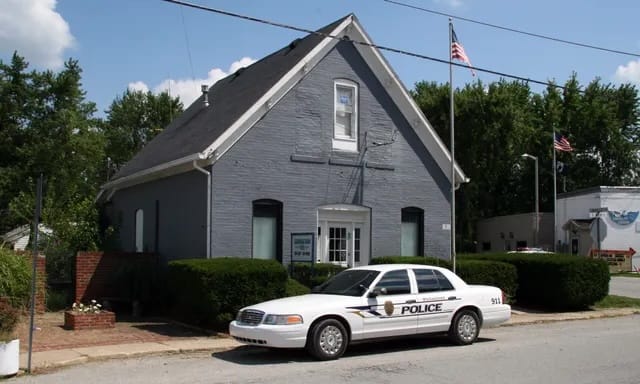
On November 5, 2025, a cleaning woman and her husband arrived at the address provided by the cleaning company they worked for, just before 7 a.m. The woman, Maria Florinda Rios Perez de Velasquez, a 32-year-old mother of four, tried to use the key given by her employer. Someone inside the Whitestown, Indiana, home shot through the locked wooden door that separated them, striking Maria in the head and killing her almost instantly. She fell back into her husband's arms, where he held her until the police arrived.
You might be thinking you've heard this story before. On June 2, 2023, a Black mother of four, Ajike “AJ” Owens, was shot through a wooden door in Ocala, Florida, by Susan Louise Lorincz. It took several days before Lorincz was charged—only after significant public pressure. That shooting is now the subject of the Netflix documentary The Perfect Neighbor. Lorincz was ultimately convicted of first-degree felony manslaughter and sentenced to 25 years in prison.
No one has been charged in the Whitestown case; in fact, the shooter has yet to be identified. Whitestown police have submitted the case to the Boone County Prosecutor’s Office, led by Kent Eastwood, who is reviewing extensive evidence, including recorded statements and digital data. Police have denied rumors that the shooter is a law enforcement officer and emphasize that no officers are connected to the residence.
This withholding of the shooter’s identity—despite confirmation that they are known—has drawn scrutiny, especially given the nature of the shooting and the lack of an immediate arrest. In some cases, police have known the identity of a killer and simply have not released their name, often due to legal, procedural, or political reasons. These cases typically involve claims of self-defense, police use of force, or prosecutorial discretion.
In Ohio, a 2023 investigation revealed that officers involved in fatal shootings are increasingly shielded from public identification—even when their names are known to internal investigators. The officer who shot Ta’Kiya Young, a 21-year-old pregnant woman in Blendon Township, was never publicly named, despite body-camera footage and an internal review.
What Maria Florinda Rios Perez de Velasquez and Ta’Kiya Young have in common is that they were both women of color—so was Ajike “AJ” Owens. Could race be influencing whether a killer is charged or even publicly identified? Would the outcome be different if the victim had been a white mother selling Girl Scout cookies?
In states like Indiana, Texas, and Florida, homeowners who shoot intruders or perceived threats may be known to police but not publicly identified if no charges are filed. Many point to Indiana’s “Stand Your Ground” laws as justification. Here are some key provisions:
- Justification for Use of Force:
A person is justified in using reasonable force to protect themselves or others from what they reasonably believe is imminent unlawful force. Deadly force is permitted if they reasonably believe it necessary to prevent serious bodily injury or the commission of a forcible felony. - No Duty to Retreat:
Indiana law states explicitly that there is no duty to retreat if you are in a place where you have a legal right to be—home, vehicle, workplace, or public space. - Defense of Property:
Force can also be used to prevent or end unlawful entry or attack on one’s home, the area immediately surrounding it, or an occupied vehicle. - Immunity from Prosecution:
If the use of force is deemed justified under this law, the person is immune from criminal prosecution and civil liability.
Indiana adopted its “Stand Your Ground” law in 2006, expanding on the Castle Doctrine from 1977. The move followed Florida’s landmark 2005 law and broader national support for self-defense rights. Many civil rights and legal advocacy groups raised concerns about racial disparities and potential misuse, which gained more traction after high-profile cases in other states—concerns that proved, unfortunately, well-founded.
The killer of Maria Florinda Ríos Pérez de Velásquez must be identified and prosecuted. Whitestown, Indiana, was renamed from Germantown in 1851. It was once an all-white, sundown town, where minority residents had to be out of town by sunset. Today, Whitestown has a 4% Black and 4% Hispanic population, mainly living in designated areas. The neighborhood where the shooting occurred—the Heritage subdivision—is the whitest part of town. The police force is nearly all white, and the Boone County District Attorney’s Office’s handling of the case remains questionable.
The policy that masks the identity of some killers is often designed to protect police officers or those whom officials choose not to prosecute—sometimes for political reasons. The perception is already growing that the killer won’t be charged or even named, because the Hispanic woman’s life isn’t valued in the community.
The entire community likely knows the home where Maria was shot. The address on Maize Lane has probably been identified, and a simple records search could reveal the owners. Neighbors know as much as reporters do. Sometimes names are withheld to avoid compromising investigations, but what new information could be gained that would justify hiding the identity of the shooter?
Releasing the name of the shooter isn’t just about public curiosity—it’s about accountability. When a woman is killed in broad daylight, through a locked door, while doing her job, the community deserves transparency. Shielding the shooter’s identity erodes trust in law enforcement and sets a dangerous precedent: proximity to whiteness or wealth can delay justice. Survivors, families, and advocates can’t challenge systemic bias if the identities of the offenders remain hidden. Silence is not neutrality—it’s complicity. The name must be released.
This post originally appeared on Medium and is edited and republished with author's permission. Read more of William Spivey's work on Medium. And if you dig his words, buy the man a coffee.