

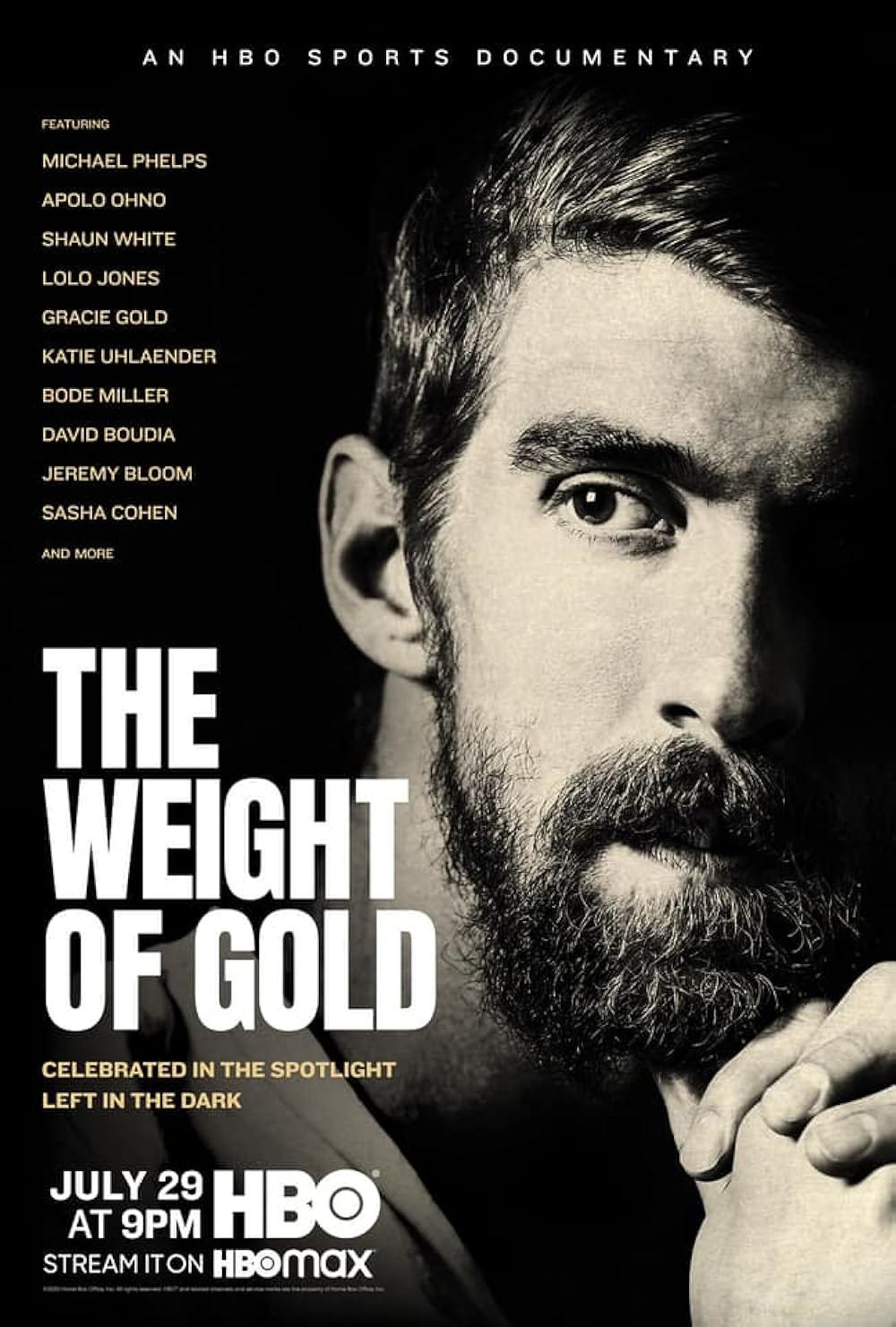
I recently watched a documentary called “The Weight of Gold,” featuring and narrated by Michael Phelps. Th doc pulls back the curtain on the psychological cost of elite performance.
The documentary shows raw interviews with Olympic athletes, exposing what happens after the moment on the podium fades.
We grow up believing success is the cure-all. Win the medal. Get the promotion. Hit the number. Reach the summit. The Weight of Gold dismantles that myth.
The documentary follows Olympic athletes — people we are conditioned to admire as mentally indestructible — and reveals a truth most high performers avoid confronting: achievement does not protect you from suffering. In many cases, it intensifies it.
These athletes weren’t weak. They were disciplined, focused, and relentless. They did exactly what high performers are told to do: sacrifice everything for the goal. And when the goal was finally achieved, many found themselves depressed, anxious, lost, or empty.
Not because they failed — but because they succeeded.
When Winning Becomes a Trap
Olympic athletes are often developed in a single direction from childhood. Their schedules, identities, social circles, and sense of worth are all shaped around performance. Over time, the message becomes clear:
You are valuable because you win.
So what happens when the event ends?
What happens when the cameras shut off, the applause fades, and the world moves on to the next story?
For many athletes in The Weight of Gold, the answer was brutal: identity collapse. They weren’t prepared for life after the peak. No roadmap. No decompression. No transition plan. Just silence.
This is where the documentary becomes less about sports — and more about all high performers. Because entrepreneurs, executives, tradespeople, creatives, and leaders do the same thing every day. We tie our self-worth to output. We equate value with productivity. We postpone rest, reflection, and emotional processing until “after the goal.”
But “after the goal” always moves.
Lesson One: Achievement Is a Terrible Source of Identity
One of the most powerful insights from the film is this: results make unstable foundations for identity. Medals expire. Titles change. Bodies age. Markets shift. When your sense of self is built solely on what you produce or accomplish, you become emotionally fragile — even if you look strong from the outside.
High performers often say things like: “Once I hit this milestone, I’ll feel fulfilled.” But fulfillment doesn’t arrive with the result. It arrives with alignment.
Athletes in the documentary struggled not because they lacked purpose — but because their purpose was outsourced to outcomes. When those outcomes disappeared, so did their sense of self.
For high performers, the real work is learning to anchor identity in: values, character, process, and contribution beyond metrics. You don’t stop being valuable when the scoreboard resets.
Another hard truth from The Weight of Gold is this: elite systems obsess over performance — but neglect recovery. Athletes had coaches for everything: strength, conditioning, nutrition, technique. But few had support systems for emotional decompression, identity transitions, mental health after the peak, and redefining purpose post-competition.
The result? Burnout disguised as toughness.
High performers outside of sports repeat this mistake constantly. Hustle culture praises exhaustion. Overwork is framed as commitment. Rest is seen as weakness. But biology doesn’t care about your ambition. Without recovery, discipline turns against you. It erodes creativity. It damages relationships. It numbs joy. And eventually, it forces a reckoning — often through illness, breakdown, or disengagement.
Sustainable excellence requires systems for: rest without guilt, reflection between seasons, emotional processing, intentional transitions. The strongest performers aren’t the ones who push the hardest — they’re the ones who know when to stop and recalibrate.
The documentary’s title is perfect. Gold is heavy — not because of its mass, but because of what we attach to it. Expectations. Identity. Validation. Worth. The lesson isn’t to avoid success. It’s to approach it consciously.
High performance without self-awareness is dangerous. Winning without inner grounding is unstable. And ambition without reflection is a fast track to emptiness.
The quiet message of The Weight of Gold is this: Success doesn’t break people. Unexamined success does. The question every high performer should ask isn’t, “How do I win?”
It’s: “Who am I when the winning stops — and have I built a life that can hold me then?”
That answer determines whether success becomes a foundation or a burden.