
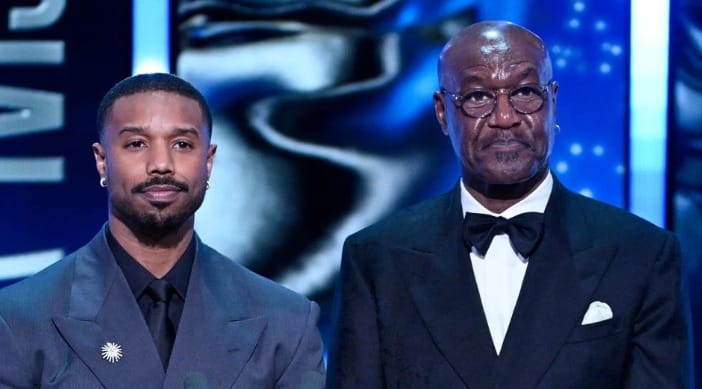
Too often, Black people are asked to grin and bear it, to accept racism. So when John Davidson, a Tourette’s syndrome activist, shouted the n-word several times while Michael B. Jordan and Delroy Lindo were on stage at the BAFTA Film Awards Show, reportedly due to a “tic outburst,” it felt like salt rubbed in the wound. These actors, who starred in the award-winning film Sinners, were treated disrespected on a stage in front of their peers. But as with any case, context matters. While most people with this neurological disorder do not blurt out profanities, approximately 10 percent of those with Tourette’s are affected by coprolalia, or the “involuntary and repetitive use of obscene language.” Given what’s been publicly shared, this could explain his outburst. Regardless of intentionality, hearing someone repeat the n-word caused harm. Sadly, some people seem unwilling to acknowledge this nuance. Alan Cummings, another advocate present at the event, thanked the audience for “understanding and helping create a respectful space for everyone.” But such a statement exposes the expectation that Black people endure racism for the comfort of white people. What about our respectful space?
The n-word has an ugly history, particularly in America, a country where people have used that term to dehumanize and “other” Black people. It’s been used by those who enslaved, segregated, and discriminated against Black people. So, it’s untrue to claim that most Black people would feel safe whenever people use that term, or that we all agree that civility is only Black folks' burden to bear. Whether a racist expression is said intentionally, by someone too young to understand its significance, someone who’s lost much of their memory, or even by those with neurological disorders that cause involuntary tics or a lack of impulse control, racism has a harmful impact. Yet many have responded to this incident by focusing only on the anguish a white man experienced after inadvertently uttering a racist slur in public, while overlooking the harm caused by hurling a racist slur at two Black men during Black History Month. Two things can be true at once. Someone can suffer from a disorder that causes them to say things involuntarily, and there should be grace for those who genuinely struggle with impulse control. But grace must also be extended to Black people who are subjected to racist slurs.
The editors of Essence magazine posted online, “To be Black is to know that grace will be demanded of you before accountability ever is,” arguing that Michael B. Jordan and Delroy Lindo deserved better. “The controlled pause, the tightened jaw, the professional decision to swallow your pride. Because within moments, the focus drifted away from the men who had to absorb the slur and toward protecting the person who said it. Explaining it. Contextualizing it. Cushioning it.” And it’s true. It’s a feeling that’s all too familiar for Black people. Journalist Jemele Hill called out the irony of “asking for grace for the person who shouted a racist slur instead of for Michael B. Jordan and Delroy Lindo, who had to push through being embarrassed in front of their peers.” She added, “That’s often the expectation — that Black people are just supposed to be ok with being disrespected and dehumanized so that other people don’t feel bad.” Others weren’t convinced that uttering the n-word at that moment was an accident. Jamie Fox initially suggested Davidson “meant” to say that. Rather than understanding the pain caused by the racist outburst, given all the racism Black people have endured, which makes it hard for some to accept this as a simple accident, some doubled down by attacking Black people. For instance, when Deidree H. Golbourne, a Black historian and financial planner, posted, “Tourette’s syndrome doesn’t make you just call Black actors winning awards the N word. This is just overt racism, call it what it is,” a white person responded, “get a grip, victim hunting baboon.” The response to calling out racism was another dose of the same, this time very intentional.
Lindo, the actor on stage during the incident, told Vanity Fair that he and Jordan “did what we had to do,” but also expressed a desire that “someone from BAFTA spoke to us afterward.” While there were swift apologies to the audience, a personal apology to the Black men affected would be appropriate. Some argue that seeking an apology or trying to protect Black people from exposure to racist outbursts, such as asking those prone to racist slurs to temporarily leave the area to avoid this incident, is ableist. But for a Black person to hear that term shouted into the crowd and consider their discomfort, as well as the impact on Black people watching from home, I don’t think that’s too much to ask. We should strive to balance protecting the rights of people with disabilities and protecting Black people from enduring racist abuse.
The BBC has apologized for airing the segment that contained the racial slur, but many aren’t satisfied with its response. For one, since the program was pre-recorded, producers could have edited or bleeped out the slur, but opted not to. The irony wasn’t lost on Black people that the show’s producers removed a portion of another Black man’s winning speech while leaving the n-word in. Akinola Davies Jr. said, “Archive your loved ones. Archive your stories yesterday, today, and forever. For Nigeria, for London, the Congo, Sudan, free Palestine.”
Those with cognitive disorders may not always have full control over what they say. Nevertheless, the racism Black people endure causes harm. According to an article published in the Journal of Advanced Nursing, “racism from patients towards nurses causes emotional trauma and enhances job-related stress among nurses, leading to their turnover.” So, you see, two things can be true at once — that racism is not always intentional, but every time it’s expressed, harm is caused.