
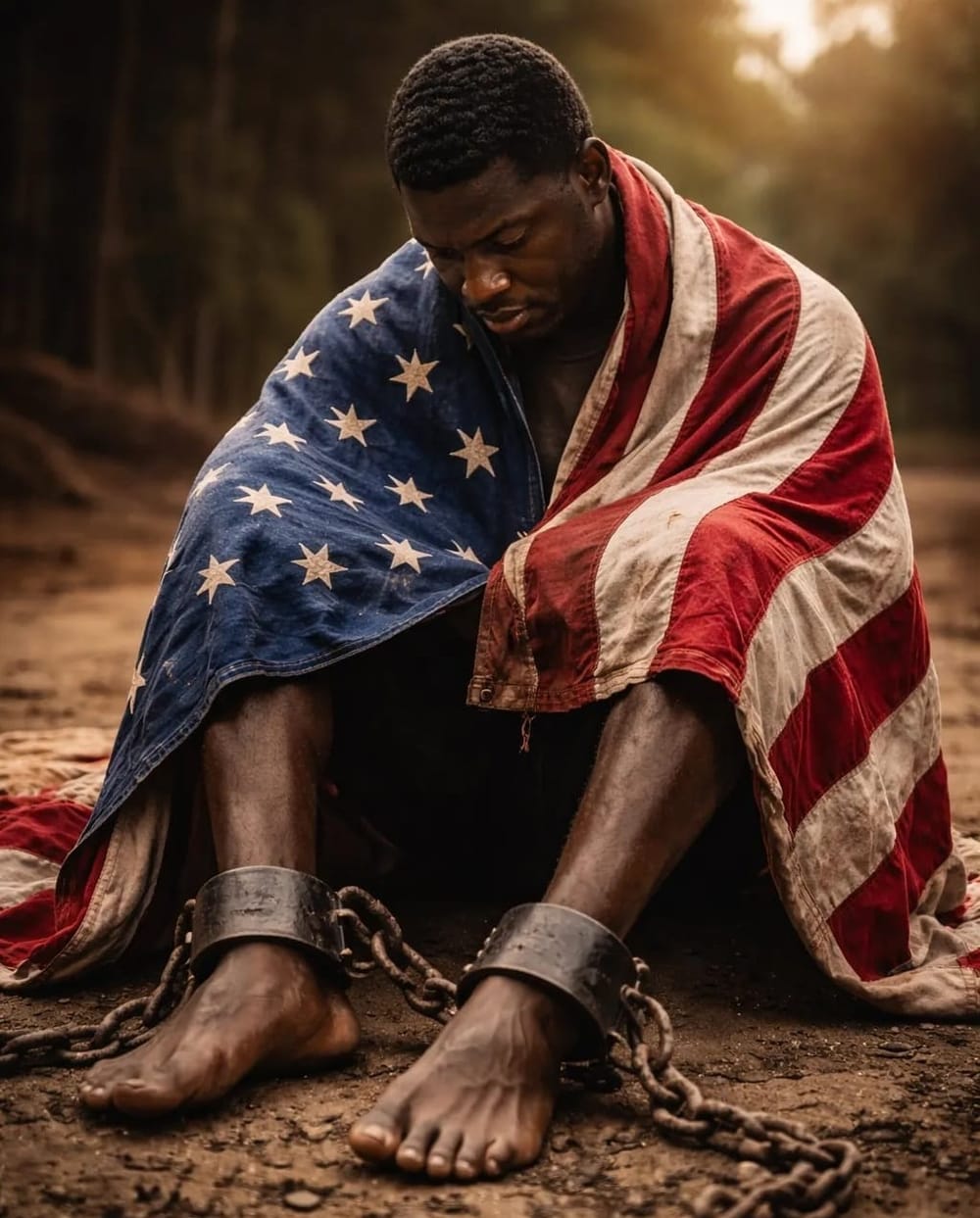
As a child, it was pounded into my head how great America is.
We were taught that Americans essentially invented everything. From the telephone to the car to electricity to the computer.
We were taught that America was the shining voice of human dignity and peace. We were told we have the most freedoms. That our democracy is the best for everyone. Our people are the kindest. Our athletes and sports are the best.
The World Series. The World Champions of the Super Bowl. Even sports language assumed global supremacy.
Sports announcer Gus Johnson typically introduces my own alma mater Ohio State as “The World Famous Ohio State Buckeyes.”
There was this imprinted idea that the United States is uniquely virtuous and morally superior to all other nations.
I bought all of it as a kid.
That was until I began to travel and realized that while America and Americans do many things extraordinarily well, other nations are far ahead of us in critical areas.
Japan and Spain have high-speed rail systems that make large parts of the United States feel underdeveloped. Rwanda was the cleanest country I’d ever seen, not to mention a majority of its parliament is female. The kindness of everyday people in Jordan was unparalleled as I was invited into random homes for mint tea there just for being human.
There’s far less homelessness in places like Ghana and Ethiopia than L.A., Denver, Miami or New York. Finland consistently ranks ahead of us in education outcomes. Everywhere from Pakistan to Israel to Mexico has elected women presidents while we still struggle. And, don’t get me started on food.
These realities don’t diminish America’s achievements. They simply complicate the story.
But the deeper problem with American mythology isn’t merely failing to recognize that other nations have something to teach us. It’s how that mythology prevents our own growth.
The America-is-best-at-everything narrative shapes how history is taught. It contributes to the sanitizing or minimizing of slavery, Indigenous dispossession, segregation, racial violence, and systemic discrimination.
Many students learn about the Civil War as a tragic conflict between American brothers rather than as a war rooted in the defense of human bondage. Reconstruction is often reduced to a brief and chaotic footnote instead of a bold experiment in multiracial democracy that was violently overthrown.
The Tulsa Race Massacre went unmentioned in many textbooks for decades. Redlining, which locked Black families out of homeownership and wealth accumulation throughout the twentieth century, is rarely explained with the clarity it deserves.
When we’re raised on a steady diet of exceptionalism, who’s prepared to hear deep critiques of America?
Our obsession with American superiority functions as a protective shield.
If the nation’s past is primarily viewed as a steady march of progress and freedom, then honest discussions of racism can feel like attacks on national identity. This defensiveness fuels resistance to teaching Black history in full context, or to examining how race continues to shape housing, policing, health care, and wealth.
We see this play out in school board battles over curriculum, in legislative efforts to restrict how race can be discussed in classrooms, and in the labeling of inclusive historical frameworks as anti-American. The controversy surrounding the 1619 Project revealed how fragile the national narrative can be when confronted with a fuller explanation of history that centers slavery’s role in building the American economy.
Even corporate diversity initiatives and university programs focused on racial equity have been recast by critics as threats to national cohesion. The reaction is often disproportionate to the content itself. What’s being defended isn’t just policy but identity.
People frequently portray inclusive history as anti-American, when in reality confronting injustice has the capacity to strengthen, not weaken, democratic integrity.
Germany teaches the horrors of the Holocaust not to undermine German identity but to fortify it against repetition. South Africa’s Truth and Reconciliation Commission publicly documented the brutalities of apartheid in order to move forward as a nation. Democracies that are willing to face their failures aren’t weaker. They’re more resilient.
You see, Black history isn’t a supplemental subject to understanding America. It’s foundational.
The wealth of the nation, its political structures, its cultural identity, and even its global power are inseparable from slavery, Reconstruction, Jim Crow, migration, civil rights struggles, and ongoing racial inequality. Wall Street was built in part on profits derived from slave labor and slave-produced commodities like cotton.
The GI Bill helped create the modern American middle class, but discriminatory implementation excluded numerous Black veterans. Interstate highways facilitated suburban growth while often cutting through and destroying Black neighborhoods.
The racial wealth gap today isn’t a random accident. It’s the cumulative effect of policy.
Avoiding these realities in order to preserve a narrative of superiority ultimately weakens civic education. It leaves citizens ill-equipped to understand contemporary debates about policing, voting rights, health disparities, or mass incarceration. When we refuse to examine how the past shapes the present, we turn complex social problems into culture wars.
Our national fixation on American exceptionalism creates fragility and the intense anger we’re witnessing in real time.
If your identity is anchored to the belief that your nation is morally unrivaled, any evidence to the contrary feels like humiliation. That humiliation can quickly morph into resentment, backlash, and attempts to silence dissent.
But a mature democracy doesn’t require mythologizing itself. It requires honesty.
It requires the confidence to say that we’ve achieved extraordinary things while also acknowledging that we’ve inflicted extraordinary harm. Patriotism need not mean denial. In fact, the deepest form of patriotism may be the willingness to confront uncomfortable truths in order to build a more just future.
Racial healing cannot occur inside a myth. It can only occur inside the truth.