
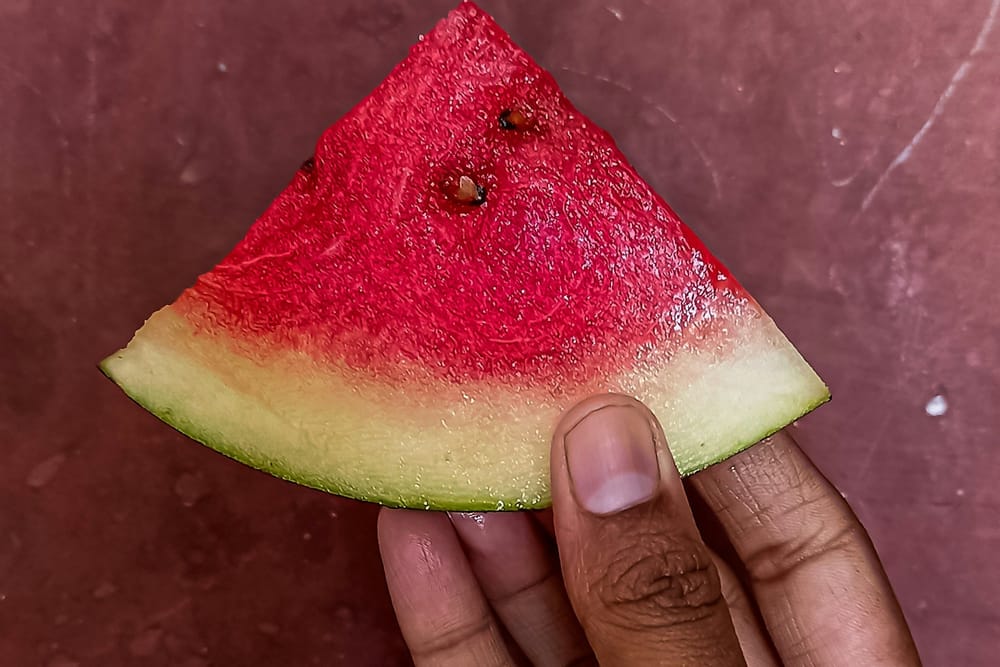
The watermelon stereotype is a work of fiction created for political reasons.
After slaves were freed, many of them grew and sold watermelons. It was a profitable endeavor and watermelon actually became a sign of freedom.
Although the exact moment can’t be pinpointed, white Southerners needed to take that away from freed black people. Any step forward for the black community was a step in the wrong direction for their ops. They took a watermelon and made it synonymous with the animal-like black person trope. Black characters were depicted as eating the fruit desperately and messily. They were unclean, lazy, and childish.
This was the idea that pop culture latched onto. It was in minstrel shows, movies, and even cartoons; The Birth of a Nation, one of America’s earliest films, maybe most guilty for solidifying the trope. The fictional film glorifies the Ku Klux Klan and in one scene the North lures away the slaves with a watermelon feast.
No matter what started it, the stereotype stuck. Even today people will bring up the watermelon when searching for harmful black stereotypes.
Watermelon is still used as a weapon against black people today.
Whenever someone needs a weapon to attempt to make black people feel inferior, they reach for the watermelon. They have been used in racially sensitive protests or just as warnings that neighborhoods are not friendly.
If we are being honest, it is silly to place so much power in a fruit. They portray black people as desperate to eat watermelon, but to any outside observer, these people are just desperate to feel powerful.
Seeds of hate

In recent years there have also been incidents that were possibly more accidental. Multiple schools apologized for serving watermelon alongside other stereotypically black foods during Black History Month. Although the schools apologize and usually claim ignorance or accidental timing, the food service Aramark is often behind it. They are responsible for at least three separate incidents that involved serving watermelon during the early days of February or black-centric events.
Aramark either refuses to learn from their mistakes, or this is an intentional insult they attempt every few years.
The racist implications of watermelon are still very much in the front of America’s mind. Even when it isn’t obvious, the racist ghosts of the trope reverberate through everything. The popular ice cream truck song most people think of actually comes from a song titled N*gger love a Watermelon Ha! Ha! Ha! You can listen to the song here.
As much as I want to believe that the racist stereotype is dissipating with time, the world around me says otherwise. And so, I still refuse to eat watermelon in public. I enjoy the fruit, but not enough to be the cause of silent entertainment as someone relives racist imagery. I can’t help but imagine hidden smirks excited to talk to their friends they found definitive proof that black people love watermelon.
Silly. I know.
To be clear, this is not a call for black people to stop eating watermelon. I actually want the opposite. The watermelon should be a symbol of power and freedom. The narrative was changed, and I would love the truth to permeate America just like the negative stereotype did decades ago.
Racists already look desperate chanting with an unwieldy fruit hefted over their heads. It only gets better when everyone else knows that the fruit is a symbol of black freedom, black growth, and black pride.