
Independence Day has always made me a little queasy. The slight ache in my tummy has less to do with the greasy comfort food on traditional July 4 menus than it does with the document that Independence Day commemorates: the Declaration of Independence, best known for its author Thomas Jefferson’s disingenuous but often-quoted line “All men are created equal.”
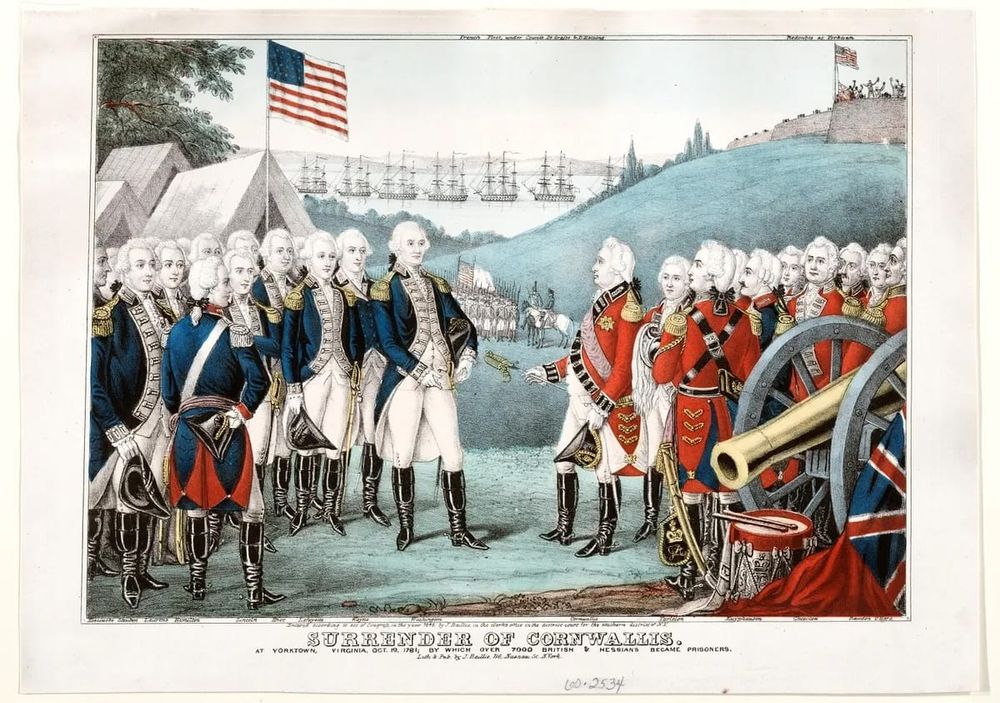
The Declaration of Independence was signed on July 4, 1776, which was actually more than seven years before the Treaty of Paris formally freed the 13 original colonies from British rule on September 3, 1783. Some of those years were spent on battlefields actively fighting for the independence the patriots had prematurely declared to be theirs. The British didn’t surrender at Yorktown until October 19, 1781, so by claiming independence in 1776, the 13 original colonies were essentially printing new business cards before landing the new role.
Whether one considers July 4 or September 3 or October 19 to be the true Independence Day, as a Black American, I have a hard time celebrating the birth of a nation that was largely built on the forced, unpaid labor of people who looked like me, people who, on July 4, 1776, were not considered to have been “endowed by their Creator with certain unalienable Rights, that among these are Life, Liberty and the pursuit of Happiness.”
It’s just as hard to celebrate the birth of a nation in which people who looked like me had minimal to no voice in the new government. Twelve years later, in 1788, the newly ratified U.S. Constitution deemed that for the purpose of determining representation in the House of Representatives, only three-fifths of the entire enslaved population in a state would be counted toward its population. This decision has long been widely misinterpreted as being tantamount to considering enslaved Blacks to be only three-fifths human, but the subtext is actually more complicated than simple math suggests.
Depending on how you look at it, the three-fifths compromise either gave Southern slave-holding states undeserved legislative power they’d never wield in the best interests of their enslaved populations, or it curbed their legislative power by reducing the population that determined their representation in Congress by two-fifths of their enslaved populations. Regardless of how you look at it, to much of the slave-holding South — and likely to much of the North as well — the humanity of Black people was debatable. And according to Thomas Jefferson’s own racist musings in Notes on the State of Virginia, Black people were hardly created equal to white people.
The Fourth of July has become more glaringly problematic to me since the emergence of Juneteenth as a national holiday in recent years. Coming a mere fortnight before July 4, Juneteenth puts into high relief the original sin that the United States has never quite been able to wash away by looking away.
Unlike White Americans, Black Americans don’t even get the honor of being seen as responsible for our own independence. The White version of U.S. history that’s taught in American public schools erases Black participation in the Civil War in much the same way that George Washington, the man most credited with securing American independence, initially wanted to erase Black participation in the American Revolution.
George Washington has long been highly regarded as the father of his country. It’s hard to imagine that the 13 original colonies that became the United States would have won their independence from Britain in the Revolutionary War without Washington as their fearless military leader.
But when it came to pulling out all stops to win the war, Washington is said to have had his limits.
According to Ken Burns’ sprawling six-episode documentary The American Revolution, which was released last November, Washington, who led the Continental Army for eight years, from 1775 to 1783, objected to allowing Black soldiers to fight on the side of the patriots. His reasoning, the documentary claims, wasn’t about military strategy or whether Black manpower could actually help win the war.
“Washington was also shocked to see Black soldiers encamped alongside their White neighbors,” actor Peter Coyote says in his narration. “Unconvinced they could ever make good soldiers, Washington persuaded the Massachusetts provincial Congress to enlist no more of them.”
“I think that Washington was concerned about what it might mean for slavery and slaveholders,” historian Christopher Brown says in the docuseries. “I think he was alert to the ways that it could end up eroding the institution.”
As Coyote explains, at the time of the American Revolution, 40% of the population of Virginia, the colony Washington called home, were enslaved Blacks, while only 2% of the New England population were enslaved. Owners like Washington lived in constant fear of uprisings like the unsuccessful ones that had risen up on the then-British colony of Jamaica three times in 15 years.
Virginia’s royal governor Lord Dunmore issued a proclamation in November of 1775 that any enslaved person owned by a rebel who escaped captivity and fought on the side of Britain would gain their freedom.
“Britain is the biggest slave-trading nation on Earth,” writer Rick Atkinson explains in episode 2, “An Asylum for Mankind,” which focuses largely on how the American Revolution affected the enslaved population in the colonies. “Nevertheless, the British believe that if they can convince enough slaves to abandon their masters in the South to take up arms against the American rebels, that this is a manpower pool that can also derange the economies of the Southern states.”
Dunmore’s proclamation resulted in the Southern colonies becoming more dedicated to the revolution’s cause and deepened the divide between the colonies and Britain, as some 800 enslaved Black men and an equal number of women and children escaped to Dunmore’s Ethiopian Regiment. The men, for the first time in their lives, received a paid salary. One of them, Harry Washington, who was enslaved by Washington at Mount Vernon, managed to escape captivity after an unsuccessful attempt in 1771 and fight on the side of the British.
To be clear, historian Vincent Brown explains, the British were not anti-slavery. “They are firmly committed to slavery,” he says. “But, opportunistically, when they think they can encourage slaves to rise up against rebelling colonists, they’ll do so.”
“For enslaved people, this seemed a way to get out of a situation that was intractable,” historian Annette-Gordon Reed adds. “And it gave them an impetus to get involved in all of this. In the sort of chaos of war, they found an opportunity, a way to escape their situation.”
Washington, according the the documentary, “called Lord Dunmore a monster and an arch traitor to the rights of humanity.”
Said Washington (voiced by actor Josh Brolin): “If that man is not crushed before spring, he will become the most formidable enemy America has. His strength will increase as a snowball by rolling and faster. Nothing less than depriving him of life or liberty will secure peace to Virginia.”
The American Revolution takes a detailed look at the war and painstakingly uncovers the various layers of the conflict, including the dark irony of a war for independence being launched by White men who owned enslaved Black people.
In recent years, the reputations of founding fathers like Washington and Thomas Jefferson have suffered because of their contradictory views about slavery and race. While they preached independence, enslaved Black people toiled for free on their plantations.
The docuseries underscores this shift by presenting an alleged encounter between Washington and Darby Vassall, a 6-year-old boy the general found swinging on the gate of a house the Continental Army had taken possession of in Cambridge, Mass. “Washington urged him to come inside and get something to eat,” Coyote says. “He had plenty of chores for him to do. When Darby asked what sort of wages he could expect, Washington thought the question impertinent and unreasonable.”
“Darby Vassall lived to be a very old man,” the narration continues, “and when asked, he liked to say that, in his experience, George Washington was no gentleman, since he’d expected the boy to work for free.”
Watching Ken Burns’ The American Revolution, wasn’t an experience that kept me on the edge of my seat. We all know how the story ended. But for the first time in my life, I wasn’t squarely on the side of the Patriots. I wasn’t exactly Team Loyalists either, but I did find myself wondering what would have happened if the outcome had been different.
More surprisingly, I found myself cheering on the inside every time the British scored a decisive victory. Their defeat at Yorktown didn’t fill me with the pride my teachers had force fed me in history class while growing up. I realize that enslaved Blacks were just pawns to the British, a way to hobble the Southern states and secure a win, but had the British been triumphant, how might that have changed the course of history for Black people on the American continent?
Slavery was abolished across the British Empire in 1834, more than 30 years before it ended in the U.S., through Parliament’s 1833 passage of the Act on the Abolition of Slavery in the British Empire. Had the United States remained part of the British Empire, what difference would those 30-plus years of emancipation have made for Black Americans? Would slavery have been phased out even earlier than the 1830s?
Would there have been a Civil War, or nearly a century of segregation and Jim Crow, or thousands of Black lives lost to lynching between the end of the Civil War in 1865 and the 1960s, or the Rosewood massacre, or the Tuskegee experiment? Would Martin Luther King Jr. have lived to a ripe old age? Would Emmett Till have made it to adulthood? Would Black Americans feel our generational trauma less intensely today because we’d be more than a mere 60 years removed from the source of it?
Perhaps nothing would have changed. Anti-Black racism is not an exclusively American scourge. It’s a global phenomenon I’ve experienced in many places outside the U.S. That said, it’s neither as aggressive nor as overt in any of the other countries I’ve lived in across five continents (South America, Australia, Asia, Africa, and Europe) — with the exception of South Africa, which is less than 40 years removed from its Apartheid era. Anti-Black racism there is perhaps even more complicated and insidious than in the U.S.
The profitability of slavery to the Southern states and therefore, by extension, to a victorious Great Britain may very well have delayed emancipation in the British Empire for years or even decades. One thing is for certain, though: The outcome of the American Revolution did not benefit Black Americans (it was even more devastating for Native Americans, but that’s a rant for another post), and we were less than afterthoughts in the Declaration of Independence. For those reasons, I will always feel some kind of way about celebrating Independence Day.
Happy Juneteenth!