
In the past few days, the Wall Street Journal reported that, just days before Donald Trump’s second inauguration, a member of the United Arab Emirates’ ruling family secretly invested $500 million into the Trump family’s cryptocurrency company, World Liberty Financial. The deal gave the Emirati investor a 49% stake in the firm and has raised conflict‑of‑interest questions. Eric Trump reportedly signed the agreement. Roughly $187 million flowed to Trump‑family entities, and $31 million to entities linked to co‑founder Steve Witkoff’s family.
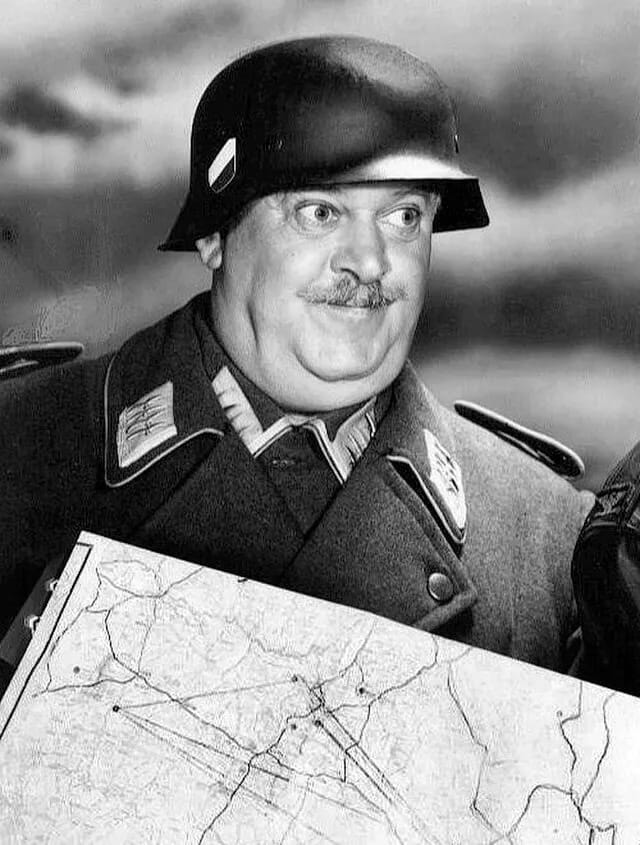
When reporters asked Trump about the transaction, he did his best imitation of Sergeant Shultz, the dimwitted character from Hogan's Heroes whose trademark line in any situation was, “I know nothing!”
“I don’t know about it," Trump said of the money. "My sons are handling that — my family is handling it. I guess they get investments from different people, but I’m not.”
This week, a special election was held in Texas to fill a Texas State Senate seat. Trump had gone all in supporting the Republican candidate, Leigh Wambsganss, who lost in a district Trump had won by 17 points in 2024. Trump had formally endorsed Wambsganss, supporting her on social media and allowing the use of his name and image on campaign material. When asked about her loss, you guessed it. Trump knew nothing.
“I don’t know," said Trump regarding the loss. "I didn’t hear about it… Somebody ran? Where?” “I’m not involved in that. That’s a local Texas race.”
Trump has been asked multiple times about his “best friend for over ten years”, Jeffrey Epstein. He at least acknowledges having met Epstein, but says his relationship was the same as with anyone else in Palm Beach, where they both had estates.
“I knew him like everybody in Palm Beach knew him," said the commander-in-chief. "He was a fixture in Palm Beach. He was a club guy. He went to clubs. He was around.”
It isn’t new that Trump claims ignorance, despite his reputation as a micromanager who tracks the details of all his interests. When Trump University was sued for fraud, Trump publicly insisted he had little to do with the program’s operations: “I didn’t run it. I had very little to do with it.”
This was despite extensive marketing materials featuring Trump personally, including videos where he said, “I handpicked the instructors.” The contradiction between promotional claims and later distancing is a hallmark of the pattern.
When the New York Attorney General forced the Trump Foundation to dissolve for “a shocking pattern of illegality,” Trump responded by claiming: “I had nothing to do with the foundation except giving money.”
Court filings, however, showed that Trump personally directed foundation spending, including using charitable funds to settle legal disputes and purchase a portrait of himself. The public stance was non‑involvement; the documented reality showed active participation.
When the hush‑money payment to Stormy Daniels first became public, Trump said: “I didn’t know anything about it.”
Later, his attorney, Rudy Giuliani, stated on television that Trump had reimbursed Michael Cohen for the payment. Trump then acknowledged the reimbursement but maintained he had no prior knowledge of the arrangement. This sequence — initial denial, later partial acknowledgment, continued distancing — is consistent with the broader pattern
During the 2016 campaign, Trump repeatedly said: “I have nothing to do with Russia. I have no deals in Russia.”
Later reporting and testimony revealed that negotiations for Trump Tower Moscow continued well into the campaign, with Michael Cohen coordinating with Russian officials. Trump maintained he was unaware of the details, despite being briefed.
When asked about the actions of individuals who stormed the Capitol, Trump has often said: “I didn’t know who they were. I had nothing to do with that.”
He has distanced himself from organizers, funders, and participants, even though many cited his speech and messaging as a source of motivation. Despite not knowing any of them, he pardoned them all on his first day in office in 2025. When the FBI recovered classified documents from Mar‑a‑Lago, Trump said: “I don’t know what they took. I didn’t pack the boxes.”
He attributed responsibility to staff, aides, and the General Services Administration, despite evidence that he personally directed the movement of certain documents.
When the Trump Organization was found liable for tax fraud, Trump said: “I knew nothing about it. I wasn’t involved in the company’s operations.”
This distancing came despite his long‑standing role as the company’s public face and decision‑maker.
Donald Trump evades taking responsibility because he has never been truly held accountable. He is convicted of 34 felonies, but doesn’t go to jail. When caught in lies, he moves on to the next lie. When impeached, his political allies refuse to convict him. When his Justice Department refuses to release all of the Epstein Files and won’t name predators, there has yet to be serious recourse.
Sergeant Shultz was a caricature and a joke. Unfortunately, Donald Trump is in the most powerful position in the world, and the checks and balances supposed to rein him in are AWOL. When Sergeant Shultz knew nothing, we were all in on the joke and laughed along. When Trump claims to know nothing, everyone knows better, but his responses go unchallenged. So-called tough reporters think their responsibility ends once they have asked the tough question and don’t bother to challenge the answer.
Either Donald Trump is the most ignorant man alive or he knows he can get away with anything, not even pretending to care about public opinion, Congress, or the courts. For decades, Trump has treated those who question him as if they are stupid. If America continues to allow itself to be treated with contempt, we are.