
President Lyndon B. Johnson is credited with saying Democrats lost the South for a generation, but he didn’t say exactly that. When Johnson signed the Civil Rights Act of 1964 into law on July 2, 1964, he reportedly told his aide, Bill Moyers, “I think we just delivered the South to the Republican Party for a long time to come.” Johnson, a Texan and a lifelong Democrat, understood that by using his presidential power to dismantle legal segregation, he was helping break the Democratic Party’s historic hold on the South, where white voters had supported Democrats for generations. The remark is often paraphrased as “We have lost the South for a generation,” but the version attributed to Moyers suggests Johnson anticipated a much longer estrangement.
In the decades that followed, his prediction proved remarkably prescient, if anything, an understatement. Barry Goldwater’s 1964 presidential campaign had already shown Republicans could win Deep South states by opposing the Civil Rights Act, and Richard Nixon’s Southern Strategy later helped consolidate white Southern support for the Republican Party. Every Republican nominee afterward copied that strategy, including Donald Trump, twice.
Ronald Reagan’s 1980 election accelerated the realignment, and by the late twentieth and early twenty-first centuries, the South had become a central pillar of Republican presidential politics. The transformation extended beyond presidential elections to Congress, state legislatures, governorships, and local government. What Johnson reportedly feared would cost Democrats the South for a generation instead became a political realignment that endured for decades, fundamentally reshaping both parties and the American electoral map.
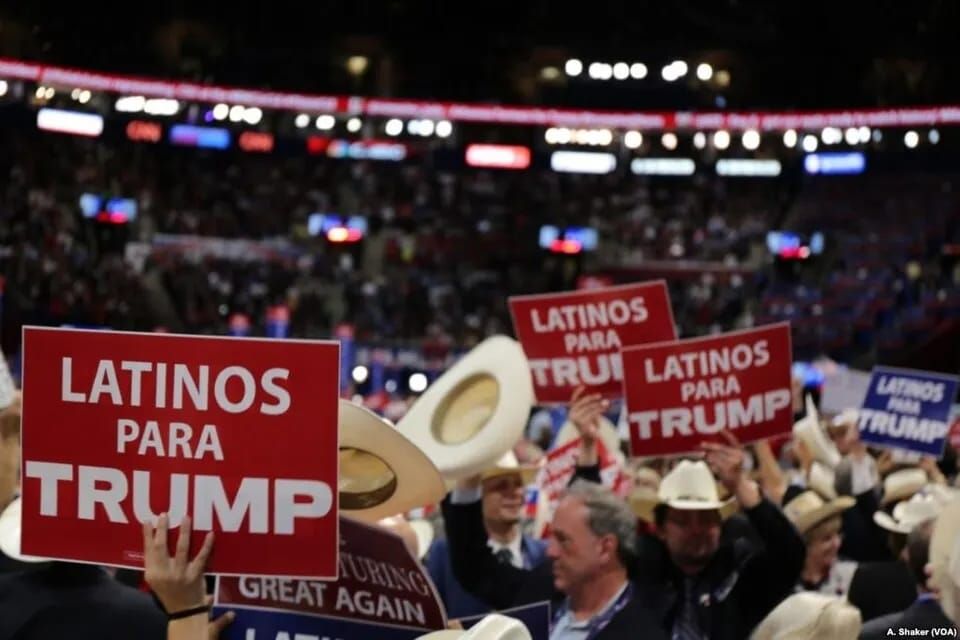
The South voted mostly Republican since the Civil Rights Era because of a change of heart among white people. Recent elections have been decided because Republicans have dramatically increased their share of minority voters. In 1996, both Black and Hispanic voters made up 2% each of registered voters. A 2024 Pew Research Center analysis estimated that Donald Trump received 48% of the Hispanic vote, compared with 36% in 2020. He also received 15% of the Black vote, up from 8% in 2020. These findings indicate a significant change in the 2024 electorate.
One could argue whether the shift was due to disillusionment with the Democratic Party or something Republicans were doing that many minorities (not a majority) found attractive. But enough minority voters, added to Republican-leaning white voters, made the difference.
On August 22, 2016, at a campaign rally in Akron, Ohio, Trump addressed both groups, saying:
“And I ask you this — crime, all of the problems — to the African Americans, who I employ so many, so many people, to the Hispanics, tremendous people: What the hell do you have to lose? Give me a chance. I’ll straighten it out.
Donald Trump did substantially better with both Black and Hispanic voters in 2024 than he had in 2016, but the change was much more pronounced among Hispanic voters. By 2024, he had brought Hispanic voters close to an even split between the two major parties, while Black voters continued to support the Democratic candidate overwhelmingly, despite a measurable increase in Trump’s share.
Trump’s share of Black voters rose from about 6% in 2016 to 15% in 2024 — an increase of 9 percentage points. The change was especially notable among Black men. Pew estimated that 21% of Black men voted for Trump in 2024, compared with 10% of Black women. Younger Black men were an important part of his expanded support.
Trump’s support among Hispanic voters rose from about 28% in 2016 to 48% in 2024, a 20-point gain. Republicans were generally gleeful, feeling they’d made inroads with minority voters and had discovered the path to a permanent Republican majority. If Trump and Republicans had fulfilled their promises to Hispanic and Black voters, that might have become true. Instead, Hispanic citizens and non-citizens need to be careful walking the streets. Black people who might be seen as having Samali or Haitian ancestry need to be even more careful than Black people who previously worried about stop-and-frisk and contests between police officers as to who could arrest the most Blacks. Mass incarceration and disproportionate sentencing affected both communities. Hispanic people saw the equivalent of concentration camps being established, while Republicans sold merchandise.

Donald Trump’s 2024 campaign made a series of direct appeals to Black and Hispanic voters, promising economic relief, better-paying jobs, safer communities, and — in the case of Black Americans in particular — new opportunities to build wealth. He also argued that his immigration policies would protect American workers and that the Biden-Harris administration had made everyday life more expensive.
Promise: More jobs and higher wages for Black and Hispanic Americans
Trump argued that immigration was taking jobs from American-born Black and Hispanic workers. He promised stronger border enforcement, mass deportations, and a revival of manufacturing.
What happened: The administration sharply expanded immigration enforcement, but that is not the same as demonstrating that Black or Hispanic American workers replaced displaced immigrant workers. The available evidence does not establish that this promised employment benefit materialized. By April 2026, the Black unemployment rate had risen to 7.3%, according to an analysis by the Center on Budget and Policy Priorities.
Promise: Lower taxes and more money in workers’ pockets
Trump pledged to extend his earlier tax cuts and eliminate federal income taxes on tips and overtime pay. These proposals were especially relevant to service workers, including many Hispanic workers, and to lower- and middle-income households.
What happened: Congress enacted a major tax and spending law in July 2025 that included deductions for qualifying tip and overtime income, along with tax cuts and other provisions. These are real policy changes, but they are not universal tax exemptions, and the savings vary by income, occupation, and eligibility. They also do not guarantee lower prices or higher wages.
Promise: Economic opportunity and business ownership
Trump appealed to Black voters by highlighting his earlier criminal justice reform, Opportunity Zones, and support for historically Black colleges and universities. He argued that his economic agenda would create greater opportunities for Black Americans.
What happened: The administration continued an approach emphasizing tax cuts, deregulation, and private investment, but no evidence shows it delivered a comparable, targeted new economic program that substantially closed racial wealth or business-ownership gaps. The federal government’s retreat from some diversity, equity, and inclusion initiatives and cuts to federal employment also created risks for Black workers and minority-owned businesses.
Promise: Secure the border and prioritize American workers
Trump promised the largest deportation operation in U.S. history, arguing that stricter immigration enforcement would protect jobs, wages, and public resources for American citizens.
What happened: Deportations increased substantially. A Migration Policy Institute estimate reported by the Associated Press in October 2026 put deportations at about 660,000 over the preceding fiscal year — an increase over the Biden-era annual average, but below Trump’s campaign goal of one million annually. The report also found that most deportees during the period it examined had initially been intercepted at the southern border, rather than being people arrested inside the country.
Trump’s political appeal in 2024 rested partly on the proposition that traditional Democratic support among Black and Hispanic voters was not delivering sufficient economic results. His campaign offered a different bargain: stronger border enforcement, tax relief, domestic manufacturing, and a more business-oriented economy.
Some of those promises became policy. Congress enacted tax deductions for qualifying tips and overtime, and immigration enforcement expanded. But the evidence does not establish that these measures produced broad, measurable improvements in living standards for Black and Hispanic Americans as groups. Meanwhile, rising Black unemployment, tariffs, and reductions in food and health assistance raised concerns about the consequences for lower-income households.
Unfulfilled campaign promises mark every elected official, Democrat or Republican. Nobody gets everything they want, so people focus on what they value most. Trump promised not to jump into foreign wars and broke that promise. Not in response to a terror attack, but as a result of ending an agreement with Iran, he wishes he could have it back, between the higher energy costs associated with the war and inflation caused by Trump’s tariffs. It costs more for all Americans to live, especially minorities who are generally hit harder. The war and the tariffs will eventually end, and people might forget the temporary hardships. Still, minorities will never forget how they were treated, which is why Republicans may have lost their hopes for a permanent majority, for at least a generation, if not much longer.
The treatment of racial and ethnic minorities under Donald Trump’s administration can be understood as part of a broader effort to roll back the civil rights protections that, over decades, helped make American institutions more accessible to people who had long been excluded from them. The administration’s approach to voting rights, diversity initiatives, immigration enforcement, and civil rights law has raised profound questions about whether the federal government still sees the protection of historically marginalized Americans as a central responsibility. Supporters of these policies describe them as efforts to restore colorblindness, eliminate discrimination against white Americans, enforce immigration law, and return public institutions to merit-based standards. Critics argue, however, that the practical effect is to weaken safeguards against discrimination while portraying efforts to correct longstanding inequalities as discriminatory in themselves. For Black and Hispanic Americans, the concern is not simply that particular programs are disappearing, but that their achievements, qualifications, and claims to equal treatment are increasingly being questioned through a political narrative that treats racial inclusion as a threat rather than an expression of equal opportunity.
The administration’s campaign against diversity, equity, and inclusion (DEI) has become one of the clearest expressions of this shift. Through executive orders, federal policy changes, and pressure on universities, businesses, and public institutions, the administration has sought to dismantle programs intended to broaden access to education, employment, and leadership for historically underrepresented groups. The underlying implication, whether stated explicitly or conveyed through repeated political rhetoric, is that the presence of Black and Hispanic Americans in positions of influence may reflect preferential treatment rather than individual ability, hard work, and achievement. This is a damaging assumption because it casts doubt on the accomplishments of minority professionals, students, and public servants without evidence that their success was undeserved. It also obscures the historical reality that racial exclusion, discriminatory hiring, unequal educational opportunities, and barriers to advancement prevented generations of qualified Americans from competing on equal terms. Critics argue that eliminating programs designed to address those barriers does not create a genuinely merit-based society; it risks restoring older patterns of exclusion while presenting the result as fairness. The administration’s approach has also coincided with a retreat from federal enforcement of certain discrimination cases and legal principles used to identify policies that disproportionately harm minority communities.
Voting rights present another major concern. The Voting Rights Act of 1965 was enacted to confront practices that had systematically denied Black Americans the ballot, particularly in the South, and subsequent enforcement helped challenge racial discrimination in electoral systems. Although the Supreme Court weakened important provisions of the law in 2013, federal enforcement has remained a critical means of challenging discriminatory voting rules and district maps. Under Trump, voting-rights advocates have expressed concern that the administration’s priorities, its treatment of civil rights enforcement, and its broader hostility toward race-conscious remedies threaten to weaken protections for minority voters further. Voting restrictions are not necessarily discriminatory simply because they change election procedures. Still, requirements that appear neutral can disproportionately burden voters who face greater obstacles to obtaining identification, traveling to polling places, or navigating registration systems. When enforcement agencies become less willing to investigate those effects, the practical burden falls heavily on communities whose voting rights were historically denied. The concern is especially serious when racial representation in legislatures and local government can determine how public resources are distributed, how political districts are drawn, and whether civil rights laws will be enforced in the future.
Immigration enforcement has created another front in the conflict over equal treatment. ICE and Customs and Border Protection, including Border Patrol personnel deployed far from the southern border, have conducted increasingly aggressive operations in American communities. At the same time, the administration has expanded cooperation with state and local police. Civil rights organizations have warned that these practices create conditions in which Hispanic and other minority residents can be singled out because of their appearance, language, occupation, or perceived national origin rather than individualized evidence of an immigration violation. Black immigrants have also raised concerns about racial profiling and unequal treatment. The consequences extend beyond people who lack legal immigration status: U.S. citizens, lawful permanent residents, visa holders, and people with pending immigration claims can also be caught up in enforcement actions or face uncertainty about their rights. The expansion of local police participation in federal immigration enforcement has intensified these fears, particularly in places where routine traffic stops or other ordinary encounters can lead to immigration inquiries. The administration maintains that its actions are necessary to enforce immigration law and protect public safety. Yet immigration enforcement does not excuse racial discrimination, and the constitutional protections against unreasonable searches and seizures and unlawful detention do not disappear because an officer suspects someone of being an immigrant. Reports of aggressive tactics and concerns about racial profiling deserve independent scrutiny, transparent investigations, and meaningful accountability.
Perhaps the most consequential institutional change has occurred within the Department of Justice’s Civil Rights Division, which was historically charged with enforcing federal laws against discrimination in voting, employment, education, housing, policing, and other areas of American life. Under the second Trump administration, the division has undergone a significant change in priorities, with greater emphasis on alleged discrimination against white Americans and opposition to DEI programs. The Washington Post reported changes to the division’s mission statements, the reassignment of experienced career attorneys, and departures among staff who had worked on voting rights, police misconduct, and other civil rights matters. A subsequent CBS News investigation described a broader shift toward pursuing claims of so-called reverse discrimination.
There is nothing inherently improper about protecting white Americans from discrimination: civil rights laws protect individuals of every race. The problem arises when protecting white people from alleged discrimination becomes a dominant political priority. At the same time, the government reduces its commitment to addressing longstanding and documented discrimination against Black, Hispanic, and other minority communities. When the same institution that once challenged discriminatory voting maps, unequal educational treatment, and racial bias in housing turns away from those responsibilities, the question is not whether white Americans deserve civil rights protections. They do. The question is whether the federal government is still equally committed to enforcing the law when the people alleging discrimination belong to historically marginalized groups.
Taken together, these developments suggest a fundamental redefinition of civil rights under the Trump administration. Rather than treating the legacy of racial discrimination as a continuing problem requiring vigilance, the administration has increasingly portrayed race-conscious remedies as a source of discrimination in their own right. Rather than reassuring minority Americans that their achievements will be judged on their merits and that their constitutional rights will be vigorously defended, its rhetoric and policies risk reinforcing the suspicion that their accomplishments are somehow less legitimate and their claims to equal treatment less deserving of federal attention. For Hispanic Americans, aggressive immigration enforcement can create the additional burden of having citizenship or legal status questioned based on appearance or language. For Black Americans, the weakening of voting protections and the retreat from certain forms of discrimination enforcement threaten safeguards won through decades of struggle, litigation, protest, and sacrifice. None of this means that every administration policy is unlawful or that every immigration officer engages in racial profiling. Those conclusions require evidence specific to the conduct in question. But the cumulative direction of policy raises a serious question about whether a government that increasingly treats efforts to remedy racial inequality as suspect can adequately protect the equality of the people those efforts were designed to serve. Civil rights are not a special privilege granted to minorities; they are a promise that the government will protect every American’s rights without regard to race or ethnicity. The danger is that, under an administration committed to dismantling many of the mechanisms built to fulfill that promise, formal equality may remain in the law. At the same time, meaningful protection becomes increasingly unequal in practice.
I’ve used many words to describe what voters will reduce to far fewer. People of African, Caribbean, and Latin American descent are deemed to have come from “shithole countries.” Not that it ever was, but it isn’t safe for Black and brown people to walk the streets of any American city. The government doesn’t respect minorities (or women) and is ridding the government and the military of minorities and women in leadership positions and the officer corps. Brown families are being separated. Black people are being hanged, and ICE and Border Patrol are shooting people in the streets. Gas and groceries are too high, and while the economy is usually not tied to a president’s or political party’s actions, this time it’s Trump and the Republicans who never said no to him.
The 2026 midterm elections will provide the documentation, but Republicans' gains among minority voters over the last twenty years are likely gone. And they aren’t for reasons voters will soon forget. How soon will Hispanic voters forget that a family member was detained or deported, often without due process? How quickly will voters forget that the country their parents hailed from is deemed a shithole country, and that people who look like them were accused of stealing and eating pets? Will people forget America opening the doors to white South Africans while blocking immigration from places experiencing war or famine if the people are brown or Black?
The Republican Party came close to winning a majority of Hispanic voters. I suspect it will be a while before they come this close again. They made inroads among Black voters, who voted 97% Republican immediately after the Civil War. There were reasons Black voters left the Republican Party beginning in the 1940s and reasons those who found out what they had to lose will leave them again for a generation.