
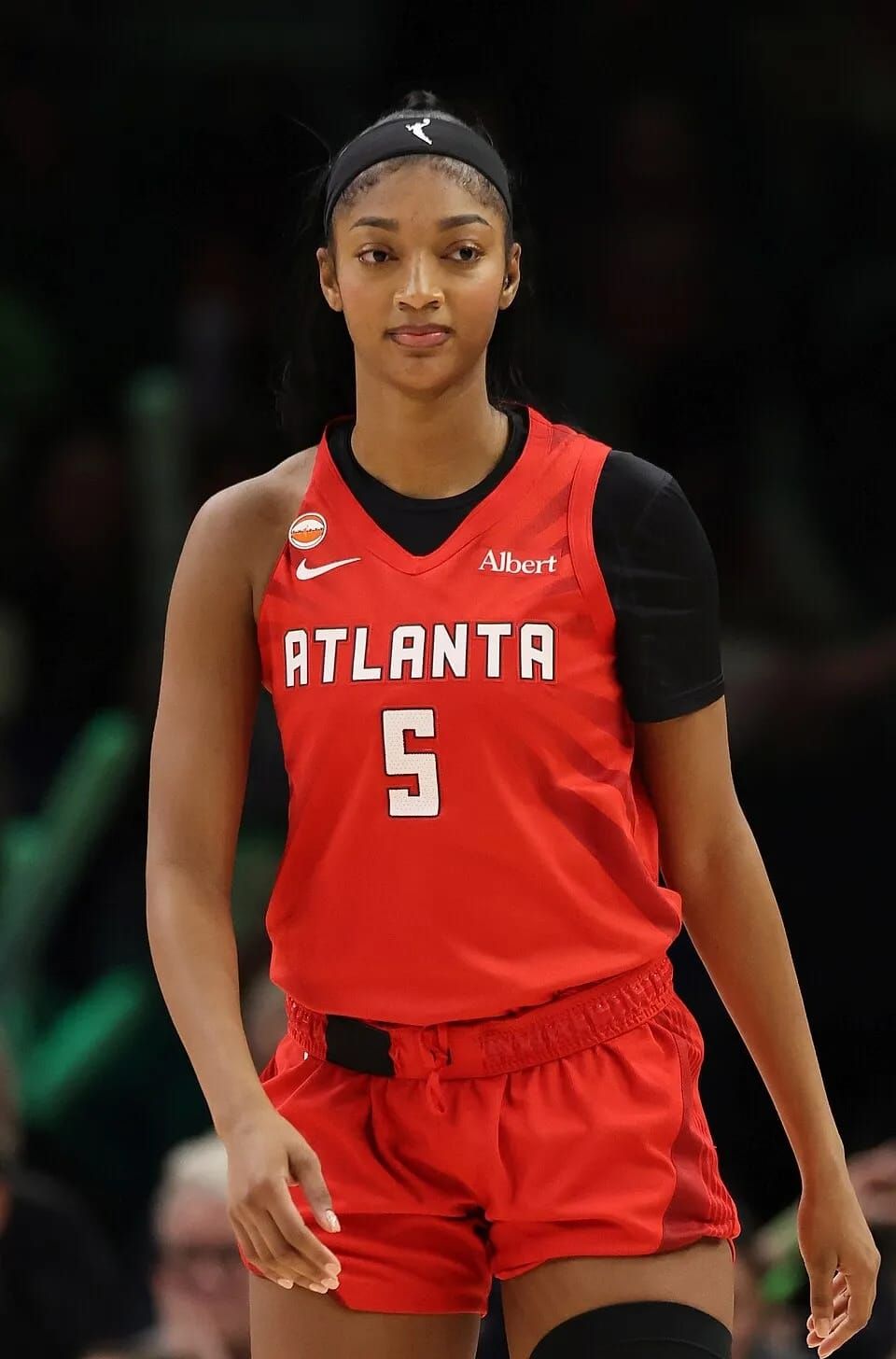
As of this writing, the Atlanta Dream lead the Golden State Valkyries 2–1 in a best-of-seven series. Angel Reese has recorded a double-double in all three games, and it’s easy to see that if Atlanta wins the Finals, Angel Reese is the likely MVP. Imagine if Indiana Fever star Caitlin Clark won both the title and the MVP? Clark would be feted, Fox News would play highlights on the hour, and every player on her teal would be asked how wonderful
it was to play with Caitlin Clark. Her image would become the WNBA logo, and her face would soon be on currency.

The problem with Caitlin Clark being the face of the league isn’t that she isn’t a great player. Caitlin Clark’s early WNBA career has been defined by an almost unprecedented blend of statistical dominance, cultural impact, and rapid ascension into the league’s elite. As the №1 pick of the Indiana Fever in 2024, she immediately validated the hype, delivering a rookie season that rewrote the record book. Clark set the WNBA rookie single‑season scoring record, scoring 769 points, averaging 19.2 points per game, and shattering the rookie three-point record with 122 makes— the second‑most in any WNBA season ever.
She also became the league’s premier playmaker, leading the WNBA with 8.4 assists per game and breaking the single‑season assists record with 337, including a single‑game record 19 assists against Dallas. Her rookie year produced the first triple‑double ever by a WNBA rookie, the first in Fever history, and ultimately earned her 2024 Rookie of the Year, All‑WNBA First Team, and All‑Star starter honors. The problem is that Clark has never won a title since her freshman year at Dowling Catholic High School, where she was a major contributor but not the star. Clark has never won an NCAA Title or a WNBA championship.

Angel Reese also won a high school championship. In fact, she won four of them at St. Francis Academy in Baltimore. Her IAAM-A Conference titles are the top championships available within Maryland’s private‑school athletic system, and St. Frances is one of the nation’s powerhouse programs. Reese was a double‑double machine even as a teenager, finishing her high‑school career with 1,720 points and 1,250 rebounds, second‑most in school history.
Angel Reese’s collegiate career at LSU is one of the most impactful and decorated runs in modern women’s basketball, defined by elite production, postseason dominance, and a national championship that reshaped the program’s identity. After transferring from Maryland, Reese became the centerpiece of Kim Mulkey’s system, delivering a breakout 2022–23 season that turned LSU into a title contender overnight. She averaged 23 points and 15 rebounds per game, set the SEC record for double‑doubles, and became the first LSU player to record a double‑double in every regular‑season game. Her postseason run was even more commanding: Reese powered LSU through the NCAA Tournament with a combination of interior scoring, relentless rebounding, and defensive versatility, culminating in a historic performance in the 2023 national championship game, where she posted 15 points, 10 rebounds, 5 assists, and 3 steals to secure LSU’s first women’s basketball title.
Her impact extended beyond the box score. Reese became a cultural force — elevating LSU’s visibility, driving record viewership, and helping usher in a new era of personality‑driven women’s basketball. She followed her championship season with another All‑America campaign in 2024, leading LSU back to the Elite Eight and cementing her status as one of the most influential players of her generation. Reese’s LSU tenure is remembered not only for the championship banner she delivered, but for the swagger, competitiveness, and national attention she brought to the program.

Caitlin Clark and Angel Reese have become two of the most recognizable figures in women’s basketball, their careers intertwined by competition, controversy, and a rivalry often exaggerated into a personal feud. Their paths first converged in college basketball, where Clark emerged as Iowa’s record-breaking scorer, celebrated for her extraordinary long-range shooting and playmaking. At the same time, Reese became a dominant forward at Louisiana State University, known for her rebounding, physical play, and relentless pursuit of victories.
Their rivalry reached its defining moment in April 2023, when Reese’s LSU Tigers defeated Clark’s Iowa Hawkeyes 102–85 to win the NCAA women’s national championship. Reese’s celebratory gestures toward Clark in the closing moments became a national talking point, transforming a championship victory into a cultural controversy. The reaction revealed a striking difference in how the two players were perceived: Clark’s competitive swagger had often been celebrated, while Reese faced criticism for displaying a similar intensity.
That contrast helped propel the players beyond the basketball court and into a broader debate about race, gender, sportsmanship, and the treatment of Black women athletes. When Clark and Reese entered the WNBA in 2024, Clark joined the Indiana Fever as the first overall pick, and Reese went to the Chicago Sky at №7, their every encounter drew enormous attention. Their matchups became must-see events, and media and social media audiences often framed them as opposing symbols, encouraging fans to choose sides even though the players had little interest in sustaining that narrative.
Both women have acknowledged their fierce competitiveness while rejecting the suggestion that they harbor personal animosity. Before their 2024 NCAA Tournament rematch, Reese explicitly said that she and Clark did not hate each other, explaining that trash talk was part of competing and that they could get along after the game. Clark similarly emphasized their shared desire to win.

Their relationship was clearest in 2026, when they played together for Team USA at the FIBA Women’s Basketball World Cup. Instead of confronting each other as opponents, they combined their complementary skills, with Clark setting up Reese for baskets and Reese returning the favor. Clark praised Reese’s competitiveness, while Reese said they understood each other’s games well.
Their story is therefore less about two athletes who dislike each other than about two extraordinary competitors whose careers have been linked by the public’s appetite for conflict. They play different positions, bring different strengths to the game, and have developed distinct public personas, but both have helped expand the audience for women’s basketball. The irony is that a rivalry often portrayed as personal hostility has made both women more prominent, even as their words and actions repeatedly show mutual respect.
Their careers intersect not because they are enemies, but because they arrived at the center of women’s basketball at the same moment, challenged the sport’s traditional limits on popularity and visibility, and became subjects of a rivalry that the public has often been more invested in than either player.
Reese and the Atlanta Dream are two wins from winning the WNBA title. Clark and the Indiana Fever reached the postseason but were eliminated in the first round of the 2026 WNBA playoffs, ending their run before the semifinals. If Reese wins, she will have accumulated four High School Championships, an NCAA Championship, and a WNBA title. You’d think there would be no question about her greatness, yet some will feel it should have been Clark, who was somehow cheated.
If Angel Reese wins the title and MVP, some will turn away, criticizing her shooting or aggressive play. You’ll hear multiple reasons why she didn’t deserve the success she keeps having. They’ll mostly be mad it wasn’t Clark, or at least Sophie Cunningham. I won’t blame the criticism on race, but you know. Larry Bird and Magic Johnson were allowed to be collegiate rivals and NBA stars who each won multiple titles and were members of the Dream Team. I wish no less for Clark and Reese.