
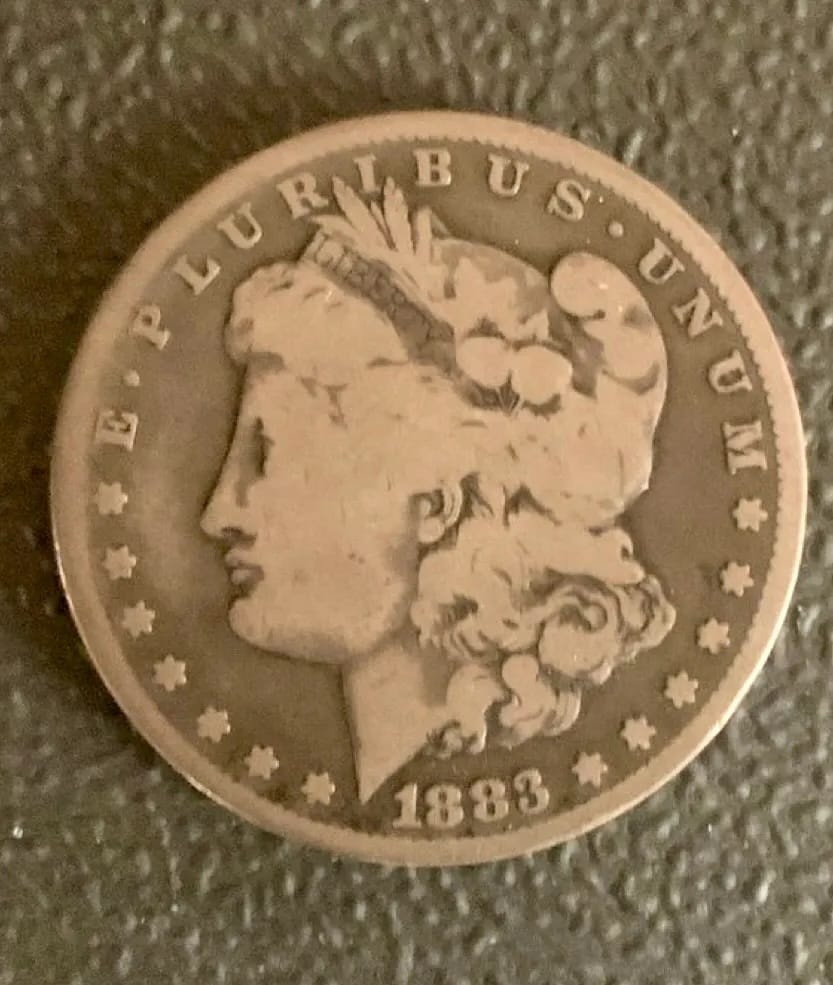
The new Base Commander had arrived at the great north outpost located in the inhospitable land of Great Falls, Montana. He surveyed the airmen in his charge and noticed something peculiar. None of the black airmen, regardless of rank, lived off base. Yet, most of the white airmen rented places in town. Instead of ignoring that distinction, he asked the most powerful question when dealing with racism: why?
Not satisfied with the answer he received and imbued with a sense of duty to his fellow man in uniform, he devised a plan to correct this problem.
This is his story and my family’s story.
My mother and father met at Arizona State University (ASU). They were both education majors. They wanted to be teachers. My mother was driven to be a teacher to exorcise the demons of segregation that still plague her to this day. My father wanted to be a math teacher and coach football. My dad was a football star at Yuma High School in Yuma, Arizona. He got a scholarship to be a tailback at ASU.
One of the reasons I detest Michael Jordan (I have a story that I have written in my drafts that one day I will hit publish) is because he never leveraged his celebrity to improve the lives and combat racism in the world. My father did. He told the coaches he would quit the team because the school buses did not come to the black area of town. It offended him that he and his youngest brother and sister all had to walk miles to school. He was tired of walking himself, but there is a special injustice when your baby sister has to walk.
He leveraged his athletic abilities to bend the will of the racist segregation policy to get equality. If you send buses to the white neighborhoods, then you must send buses to the black neighborhoods. The school relented and changed its policies to appease its star football player.
That is why Lebron James is the GOAT. He put his career on the line to uplift the lives of black people and speak out against injustice.
While my mom thrived in student teaching, it was the bane of my father’s existence. I can attest that he had no patience for children. He has only recently fostered and developed this virtue with my daughter.
Instead of allowing himself to be condemned to a life of teaching unruly kids, he graduated and decided to join the military. First, he went to the Marines to follow in the footsteps of his older brother. A couple of minutes in the recruiter's office with the other men willing to enlist, and he was like, nope.
Next, he headed to the Army recruiter’s office. He walked in, took a quick look, turned around, and left.
He finally found the fit he was looking for in the Air Force. He signed up and was off to basic training two weeks later.
He continued to correspond with my mother. They would exchange these heartfelt written letters (there is something sexy/romantic about a handwritten letter). My father completed basic training and was stationed at Great Falls, Montana.
This is the coldest place my father has ever lived. When I was growing up in Minnesota where bitter cold winters punctuated the eighties and early nineties, the frozen temperatures were a mere annoyance for my Dad. Our Minnesotan neighbors were mostly descended from hearty Nordic stock. While they shivered and were swaddled in ridiculous layers of clothes, my dad breezed through the winter wearing the bare essential of winter clothing: a trench coat without the lining.
He often remarked that this wasn’t cold. Y’all don’t know cold. Then, his mind would drift off to the cold he experienced in his early and mid-twenties that still stalks him to this day.
The young man from Arizona acclimated to the freezing temperatures of Montana, but I fear he never accepted the frozen hearts of the residents who dwelled in Great Falls.
Here is a fun fact: More black people lived in Montana immediately after the Civil War than live here now.
Montana’s picturesque landscapes were pocked with sundown towns. For those who are not familiar with the term, it describes certain locals in America where black people’s presence was not tolerated once the sun goes down. If you are found within the town’s boundaries, you will be lucky if you are only arrested. There are six known lynchings of black people in Montana.
However, while the Civil War was raging in 1864, 21 people were lynched in the span of six weeks in Montana. This is the foundation of this barren state.
Lawless outlaws like these murderers transformed the DNA of Montana into an inhospitable wasteland that caused an exodus of black people. Terror reigned supreme until overt hostile violence had to be replaced with an uninviting, frigid environment that my father and other black airmen found themselves sequestered in.
My father and mother were in love. Because they were black, they would not be allowed to live off the base. Great Falls was segregated, and the Base Commander did not care.
My father did not want to live with his new bride in the barracks, so he was prepared to wait until he was discharged to marry the girl of his dreams.
So my mom and dad continued to pine for one another from afar. There was no point in her visiting because there was nowhere for her to stay. While he watched white men being able to enjoy the companionship of their wives and girlfriends, he counted down the days until he could be reunited with my mother.
The letters and the injustice continued.
Until, one day, a white man arrived with a sense of duty and honor. He was justice personified. He came to administer this base. I do not know if this was a career-making placement or if this was the type of deployment where they sent you a not-so-subtle message to retire.
Whatever the circumstance, he arrived in Great Falls, Montana, and he came to leave his stamp on this base.
After he had completed his overview of his new command, he sought to figure out why none of his black officers lived off the base. He was told that the town of Great Falls refused to rent housing to any black person.
He did not beg the mayor to remove this racist policy/custom. Instead, he used his authority to recall every white airmen who was living off the base back to the barracks.
Can you imagine the uproar as he mandated every white airmen back on the base?
To say they were furious does not scratch the surface of how incensed they were.
The Base Commander told everyone that in his Air Force there is not black or white, it just the uniform. Every one of you is committed to giving your life to the man on either side of you. If we all can’t live off the base, then none of us can. We are all one uniform.
He was not done. He ordered the payroll office to order a massive amount of silver dollars and instructed that all airmen would be paid in silver dollars.
He wanted the town of Great Falls to feel the financial weight and hear the economic power of his base. Whenever his airmen ventured into town to buy whatever they wanted, the shop owners would feel the heft of all of these silver dollars. Restaurants would hear the clang of these silver dollars as they crashed into their tills.
Three weeks later, Great Falls surrendered and started renting housing to black people.
The town came to the Base Commander; he never went to them…because it has always been the stated policy of the United States of America: we do not negotiate with terrorists.
He was able to make a proud group of racists bend their knees to the almighty American dollar.
This white man saw a problem that he could not abide by, so instead of reasoning with hatred, he attacked its weakness with ruthless precision. He made them come to him. He crushed our enemy and ground them into dust.
He marshaled all the resources at his command. Creativity was his most valuable resource.
As a direct result of this white man tackling a problem for some of his airmen, my father sent my mother one last letter. It was his marriage proposal with a diamond engagement ring enclosed.
I don’t know this Base Commander’s name. I don’t know if this was his last post. I don’t know if his career ended after this bold act of courage. However, I am so grateful for him placing his shoulder against the boulder of progress and nudging it toward justice and equality.
This is my family story. This is an American story.