
No group is a monolith
I had a long conversation with a friend last night. Let’s call her Ciara. It started with a simple question about Foundational Black Americans and ended with the need for Black people to be segregated.
She thought I would be surprised by the take, but I wasn’t. It is an argument I’ve been hearing more often over the last few years. I imagine the rise of MAGA, the rollback of Civil Rights, and the country being more honest about its racism are all amplifying this line of thinking.
The question she kept asking me: “What has integration gotten us?”
Foundational Black American
“I guess in a sense I break it down to be: my race is Black, my ethnicity is Soulaan, and my nationality is American,” said Ciara.
Foundational Black Americans are Black Americans who can trace their lineage in America. It depends on who you ask, but it usually requires having Black grandparents or great-grandparents who lived in America. Most of them want that lineage to go back to the antebellum South.
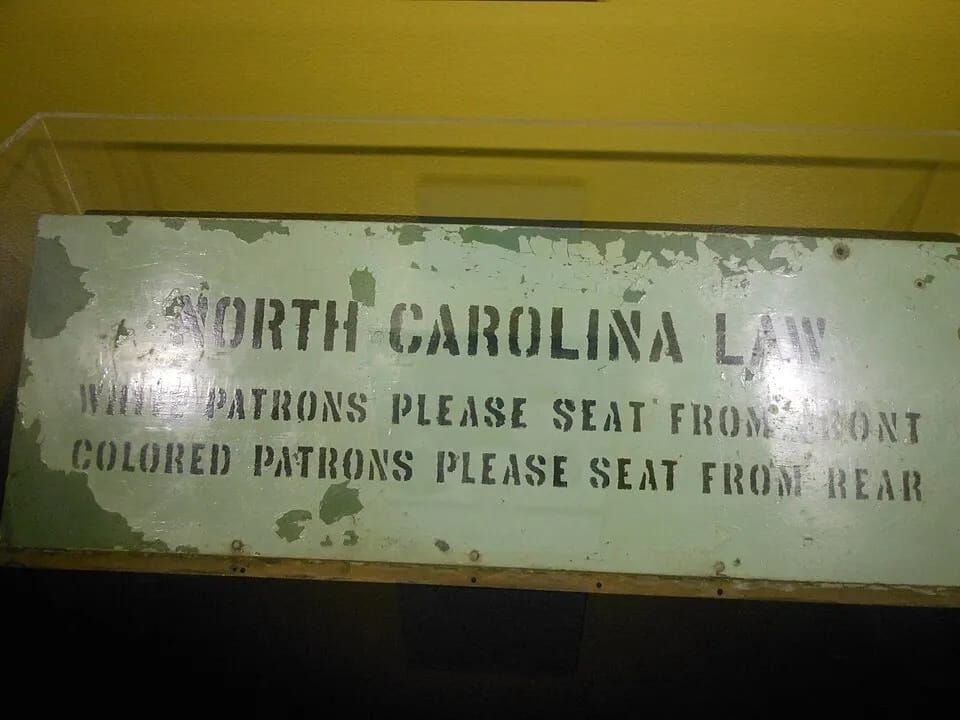
The “Foundational Black American” concept was created in 2019, but the Black American experience being a unique one has been common knowledge for a long time. Centuries of slavery, a hundred years of Jim Crow, and living with our oppressors shaped the modern community.
The difference, as far as I can tell, is that whenever someone mentions being FBA, they start attacking the rest of the African diaspora.
This is how Ciara started the conversation about being FBA:
“I rep being FBA and absolutely despise when people from other parts of the diaspora come and talk down on my culture when they piggyback off of it. Now, of course I’m not hostile with other members of the black diaspora but I no longer sit and pretend like they like us.Majority of them don’t, they would rather be closer to whiteness.They don’t believe in reparations, and they love to call us lazy and I’ve actually heard Africans say taht at least they can trace back their ancestors while Black people can’t. I don’t even put African American down anymore. I put Black.”
I honestly agree with a lot of this. There are plenty of people from many countries who buy into American propaganda and look down on Black people. There are many people, including Black Americans, who will do anything to gain proximity to whiteness.However, from my limited experience, FBA always seems to come from animosity rather than love.
As if to confirm my doubts, Ciara sent me a TikTok video:
Although it is empowering, the refrain is “fuck them other niggas”. This is the consistent messaging I receive when talking to someone passionate about identifying specifically as FBA.
This isn’t as surprising when one learns that Tariq Nasheed, a film producer and internet personality, created the concept. I admit I don’t know a ton about him, but when I do hear about him, he is usually saying something misogynistic, homophobic, or xenophobic.
I love my Black people. I love what we’ve overcome. I understand the fatigue. I know how it hits when people who look like you turn their noses up with the rest of the world. I understand a lot of this is a defense mechanism, but like I told my friend, we are aiming our firepower in the wrong direction.
The need for segregation
Ciara spent a bit of time complaining about Nigerians and Haitians, but she did concede that she was generalizing and being a bit pedantic about terminology.
After getting into her thoughts on political parties and healthcare, she transitioned by saying, “Segregation fucked us up honestly.”
She sent me this video to explain her views:
This is the argument I’ve been hearing quite a bit lately. It comes up in the barbershop. It comes up in the group text. I mean, I get it. We look back and see these amazing Black communities.We think about the unity. We think about how we supported each other. Black businesses, Black grocery stores and Black schools could thrive. We would have an American Wakanda. We then look at the present and look at how many Black people are still suffering and dying. Segregation must be the answer.
However, we have to be realistic about the past. We were never going to get separate but equal while living on American soil.They would continue to kill us whenever we started to do just a bit too well. How many neighborhoods have to burn or be drowned before integration becomes the best option? How many kids have to die because they looked in the wrong direction for too long?
I’m not saying things are good now, but we aren’t being genuine if we can’t admit that there is a bit less of that now. (Granted, we are going in the wrong direction.)
“I guess I don’t see the point of begging white people to please let us drink out your fountains, sit at your restaurants,and eat your unseasoned food, swim in your pools, etc. I’m not knocking what my ancestors did during the Civil Rights Movement. When I see Black people begging white people for respect, a seat at the table, a moment of appreciation it makes me rethink all the fighting our ancestors did. I’m not begging a white person for anything, will never kiss ass to be seated at their table. Give me the Harriets. Give me the Nat Turners. Those are the people I want in my corner.
I mostly agree with Ciara on her points; she just ignores reality a bit.I can be convinced otherwise, but I was especially frustrated by the way she described Civil Rights leaders as begging for white approval.
It is such a disconnect. They were fighting for their lives, for the future. I don’t see begging; I see demanding one’s humanity. Stop looking at me as if I am an animal, as if you are better than me. Obviously, integration wasn’t a unanimous decision, but it wasn’t a decision because a Black man wanted to taste a white man’s sandwich.
To say she wants to be Harriet and Nat is also a little disingenuous. I respect both of these figures, but she is talking about existing during slavery as if it provided the same options as existing during Jim Crow.
Nat Turner is most famous for killing white people during his unsuccessful slave rebellion. He was driven by a religion seemingly handed to him by white people.
Harriet Tubman is best known for her work on the Underground Railroad, where she helped free dozens of Black people, but she also worked for women’s rights in her later years. I imagine Ciara would say this was begging for a seat at the table.
Nat and Harriet are legends. The people who fought during the Civil Rights Movement had different tools, and they used them. They are also legends.
My friend goes on to ask me again, “What did we get from integration.I know what we lost. Unity, connection, and independence.”
Black people move mountains. When we unite, we shift reality. I just don’t think the call for segregation is the answer. We could unite now. What is really stopping us, outside of a preference for convenience?
Many people can’t stop shopping at Target or Amazon.Are they willing to make the sacrifices necessary to create the world many think segregation would create?
Is a Black-owned business able to compete with Walmart prices?Are you willing to pay the extra money, wait the extra time, drive the extra mile?
The 1955 bus boycott was successful because people helped each other with no incentive. Are we willing to break away from a late-stage capitalism mindset? Look at someone like Jay-Z, who talks a bit pro-Black game, but leans hard into selfish capitalism when pushed. He is a billionaire. He has the money to make this new world.
As a teacher, I’m always disappointed when I see kids coming in knowing almost nothing about the Civil Rights Movement and absolutely nothing about Jim Crow. In recent years, their brains understand slavery existed, and they kind of talk as if Martin Luther King Jr. solved slavery.
How does that happen when many of these kids have grandparents who lived during Jim Crow? I’ve asked some older people about this, and it seems to come from a desire to protect our babies from the past.
Sadly, we’ve created babies who don’t understand or appreciate the past. They aren’t worried about Black unity unless that is the name of a game on the PlayStation 5.
I don’t think we can be critical of our ancestors when they took beatings to get us a voice without first looking at ourselves and how we move.
Voting
Ciara also comments on the Black vote. From what I recall, she was adamant about not voting for Joe Biden. Depending on what day you ask, she voted for Kamala Harris. She loves being part of the 92 % (a common phrase to describe Black women because 92 % of Black women who voted voted for Harris),but I’m also fairly certain she said she did not vote because neither party planned on doing anything for Black people.
She says she has to vote with her morals. She isn’t going to vote for a Democrat just because…
I understand this argument. Heck, I agree with it to a certain extent. However, without a solid plan, I struggle to see this as best for Black people. At best, it is good for an individual. They can rest knowing they didn’t have to make a difficult decision, but how do you claim it is best for Black people when Trump is rolling back Civil Rights, eliminating DEI programs, and firing Black women? 300,000 Black women lost their jobs due to Trump’s aggressive cuts. Was that going to happen under Harris or any other Democrat?
Look, I hate most Democrats just as much as the next guy, but I want people to understand what is really going on when making these decisions. Not voting isn’t a grand sacrifice for Black people. It is the easy way out.
(To be clear,I can get behind some very specific plans that involve voting third party, but I’ve never heard them or witnessed the level of organization necessary to convince me that it is a realistic option.)
I really enjoyed my conversation with Ciara. The thing is, I really don’t have a complete answer for her question. “What has integration gotten us?”
We are, in the eyes of many, still second-class citizens. The government is still trying to push us down. However, it is easy to forget the grass isn’t always greener. It is easy to look for something different when you don’t like your present. Different isn’t always better.
Ciara is really just delving into some of her history and research, so I imagine her opinions will evolve. However, I understand my own biases.
My heart does warm up a little bit when I see a diverse group of students working together toward a common goal.The magic of an America that truly appreciates each individual and their culture sounds like a wonderful world. I know we are far from that, so I am open to some pretty extreme plans.
However, sowing division among minority groups, segregating, and abstaining from voting do not feel like the correct answers.