
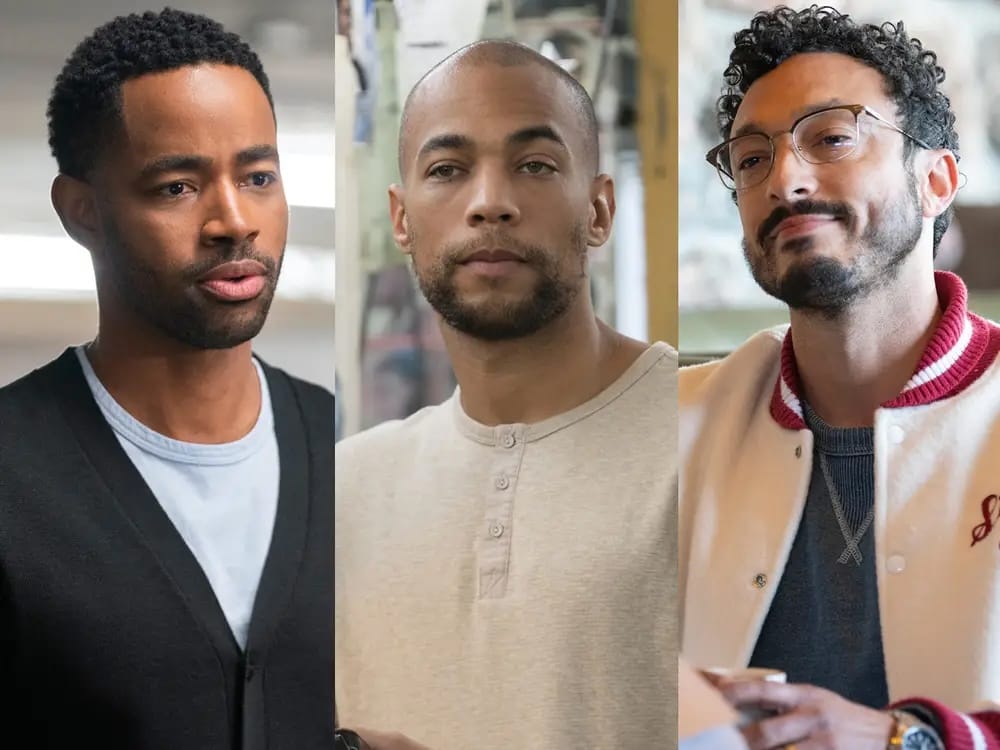
Black men have never been loved the way that Issa Rae has loved us. The creator of the transformative HBO series Insecure delivered an amazing five seasons and she carved the truth of that statement onto the walls of television history on her way off the set.
There have been a number of excellent television series and films written by Black women (and men) that walked its audience through the ups and downs of romantic relationships and life lessons. But I have never seen one that took the time and the care to write Black men as fully and as completely human as Issa Rae did. And it made this Black man feel really good, and I doubt that I am alone in that sentiment. Like most Black men who became avid watchers of the show, I came to it because my partner fits squarely in the target demographic for the show and she never missed it. In very short order, that meant I never missed it. And I did not even bother to pretend I was only watching it for her.
She wrote Black men like she cared about us and, just as importantly, like she cared what the world thought about us. And with all due respect to the great Shonda Rhymes, Issa Rae wrote Black men that nearly all real-life Black men could readily relate to. Most of us are not cardiothoracic surgeons or chief physicians at hospitals. We sure as hell are not members of a royal family in Never Never land. We are just Black men here on planet earth trying to find our way the best we can. And there is room for all of us. And it’s cool to love us in our spectacular imperfection.
What she presented was a panoramic view of Black manhood. All of our beautiful brilliance, messy complexity, our selfishness and selflessness, our wisdom and idiocy, all of it was on display. It was alternately funny and frustrating for the women in the story and for the men themselves. And none of the fully formed Black male characters was a hero or a heel. No convenient good-guy/bad-guy narratives were served up to the audience as if asking them to really think would be a bridge too far for a half-hour romantic comedy series. All of the men were both, depending on the situation, exactly like we are in real life. The funny thing is that in showing the truth of who the Black men in the story were, it forced the Black women to own their choices in a way that I can honestly say I have never seen on screen. And I have been a steady consumer of Black pop culture since taking my first girlfriend to see The Color Purple at Northland Mall in Southfield, Michigan.
The physical diversity of the brothers in her cast was unforced but undeniable; demonstrating that when it comes to physicality our range is so wide that sisters never need to stray from us on that basis. There certainly may be other legitimate reasons, but not finding your flavor amongst the Black men around you just ain’t one of them. Throughout the series, the women were pleasured by men who were hard and chiseled, and by men who were padded and fluffy. They enjoyed men of every complexion on the spectrum, and they were entertained by men of a broad variety of professions, although rappers and athletes were conspicuously absent from the picture.
Issa Rae told the truth about who we are and what we are, and she trusted that being truthful would paint us in the most favorable light of all. And I love her for that. There is room for stories of Black women being angry and frustrated by the no-good Black man, the disappointing Black man, the violent Black man, the oppressive and abusive Black man, the drug-dealing or drug-addicted Black man, the incarcerated Black man, and all the rest. But this beautiful young sister with the beautiful mind decided that her space was not really the place for that. And on behalf of all Black men who aren’t about any of that bullshit, I thank her. We have heard enough about all of that and as long as there are Black people willing to show it and sell it, white people will be willing to buy it and broadcast it.
But for five seasons, we got to watch a show devoid of the cut-out characters and clichés. She gave us a break from the tired tropes about why we always fail and why things don’t work out, and why we can’t work together and why we can’t support each other. We got to see that sometimes, in real life and in real ways, we can succeed, things can work out, we can work together and we can support each other. And above all of that, Black women and Black men can love each other and find their way home. Issa Rae told a story over a six-year span of time that told the world that we are worth the work, worth the wait, and worth the faith. And although we are conditioned not to acknowledge it, Black men need that affirmation, too. And we need it from Black women. This sister, who married a Black man herself earlier this year, just provided that for us. I hope those of us who saw it are moved to breathe life into it not just for ourselves, but for the women who share our lives with us.