
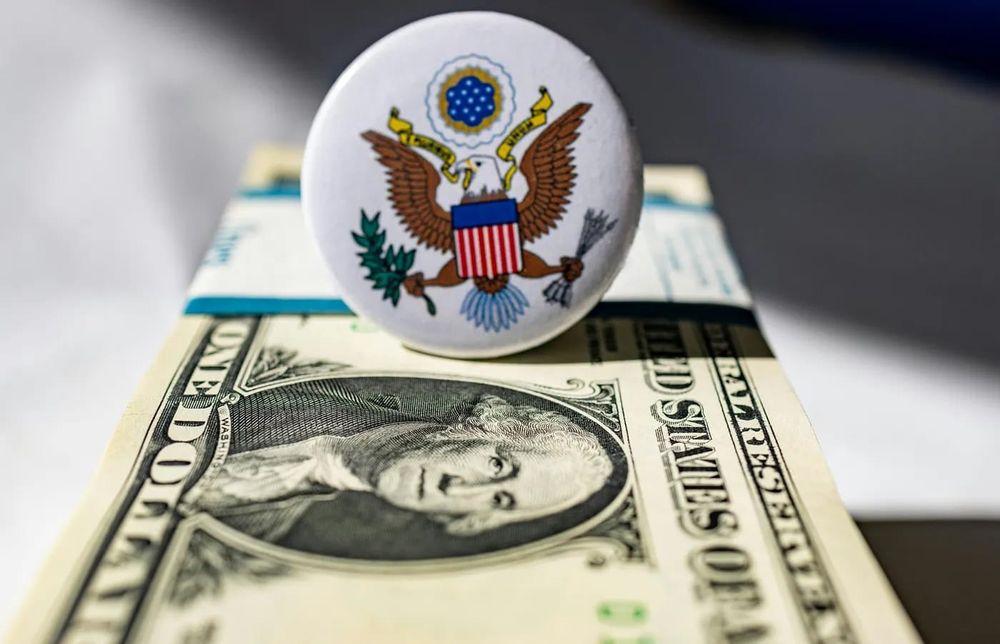
Donald Trump took to Truth Social late Friday night with the patter of a late-night infomercial host. His administration, he announced, would begin mailing ninety-dollar checks to more than 20 million seniors on Medicare Part B, rounding the number up to “nearly $100” in the pitch. To pay for it, he is draining two billion dollars from the Medicare Improvement Fund, a reserve Congress created in 2008 to shore up fee-for-service care.
Then came the hook. Weeks earlier, at the Republicans’ September convention, Trump had promised every adult citizen a $5,000 “dividend,” but only if the party kept both chambers of Congress. Now he waved the $90 as proof that the $5,000 was on its way.
I know many people are too busy getting to and back from work and managing their households to pay attention to the financial gymnastics and political rhetoric because it is constantly changing during this administration. It's almost as if that is the point to make individuals numb and indifferent, so you are not paying close attention.
The Arithmetic of an Insult
Put the rally rhetoric aside and look at the ledger. In 2026, the standard Medicare Part B premium is $202.90 a month. That is up almost ten percent in a year, the second-largest dollar jump in the program’s history. For the first time, basic outpatient coverage costs a senior more than two hundred dollars every month.
If you are on Part B, you hand the government $2,434.80 this year just to keep the coverage you paid into your whole working life. This year’s hike alone pulled $214.80 more out of your checks than last year. A one-time $90 deposit does not cover half of that increase. Not half your premium. Half of one year’s raise in it. Take $200 out of a man’s check every month, toss back $90 once before an election, and call it relief. It is an insult.
More than 40 million Medicare beneficiaries get nothing at all. The biggest group shut out is the 34 million seniors on Medicare Advantage, more than half of everyone enrolled in Medicare. CMS confirms they do not qualify. Low-income seniors whose premiums run through Medicaid are cut out, too, and so is anyone paying the higher-income surcharge. The people who do get the $90 receive one fractional payment, timed to land four weeks before an election.
When you are young, you don’t often take or have a long view of your finances, or care about retirement, healthcare, and housing. But, as we get older, life has a way of interrupting and waking us up to the prospect of getting held by a loved one or close family member going through difficulty, where the subject of nursing home, prescription medication, and bill paying hits you hard like a freight train. This was the case during the COVID outbreak, where many elderly family members succumbed to the deadly virus, and things like wills, hospice care, and funeral arrangements suddenly revealed themselves.
The Ghost of 2020
He has run this play before. In September 2020 (COVID era), six weeks before facing voters, Trump stood at a podium and promised 33 million seniors $200 prescription drug discount cards. White House aides scrambled behind closed doors to manufacture a legal rationale through Medicare demonstration waivers. HHS’s own general counsel warned in an internal memo that the plan could break federal election law. Senators Wyden, Pallone, and Neal demanded a GAO investigation. The project choked on administrative reality and quietly died. Election Day came and went. Not one senior received a dime.
When his approval sours and households buckle under grocery bills, power bills, and medical invoices, the administration invents an election-eve giveaway. We saw the same vaporware with the $5,000 DOGE dividend and the $2,000 tariff rebate. Neither ever existed beyond social media posts and applause lines. I’ve heard social media pundits discuss the need for moving the Federal Reserve under the Treasury department, but for me, that’s a bad idea since that office is political and the Federal Reserve is independent. Now he treats the federal treasury like a mail-order sweepstakes: $90 today, $5,000 tomorrow, if voters hand him the majority he wants.
The Republican Wrecking Ball
The cynicism runs deeper than the size of the check. It lives in the gap between this $90 performance and the record of the party behind it.
Trump is not warning you about what Republicans might do to Medicaid. He already did it. On July 4, 2025, he signed H.R. 1 into law. The Congressional Budget Office scored it as a cut of nearly one trillion dollars from federal Medicaid over 10 years, and found it would drive 7.5 million more people into the ranks of the uninsured by 2034. That is not a committee white paper or a campaign slogan. It is the law. It carries his signature. It is already pulling money out of the hospitals and nursing homes that seniors count on.
Listen, I was young once, and lived life in a way that the workday concluded, childcare, and what’s for dinner occupied my immediate attention week to week, month to month, and year to year. Keeping abreast of politics and finance was an older person’s job, but as you grow, you realize that a paycheck and taxes are part of adult life.
The same coalition has spent years trying to tear down the rest. Republicans in Congress have backed bills to repeal the entire Inflation Reduction Act, the law that caps insulin at $35 a month for Medicare patients and holds their annual out-of-pocket drug costs to $2,100. Kill the law, and the caps die with it.
At the executive level, Trump’s own CMS steered the money toward insurers, not patients. It finalized a payment increase to private Medicare Advantage plans of more than $25 billion for 2026, over five percent, after first floating a far smaller number. Those same plans spent the year trimming benefits and walking out of counties across rural America. UnitedHealthcare alone left 225 of them. The retiree who loses his plan is not the insurer’s problem. He drives farther, or he goes without.
The Kitchen-Table Verdict
Picture the table where this lands. A retired bus driver sorts the October mail. The Part B notice: $202.90, gone before her Social Security clears. The pharmacy receipt. The light bill. Somewhere in the pile, a $90 deposit and a letter signed by the President. She can see which number is bigger.
Again, finance and politics is an important part of being a citizen and becomes even more of a concern when you have a family of your own. Young people, too, need to understand that what happens in government affects them, and certainly with the midterm election nearly upon us, it’s time to understand what’s at stake. Vote. This is an opportunity.
Ninety dollars four weeks before a midterm is not healthcare reform. It does not lower the price of a prescription, a doctor visit, or a hospital stay by one cent. It is a panic payment from an administration that cannot defend its own record in daylight. Seniors know who drove up their premiums. The administration just mailed them the receipt and called it a gift. Ninety dollars and a lottery ticket do not buy back a trillion dollars in Medicaid cuts. The bill comes due. They're already there.