
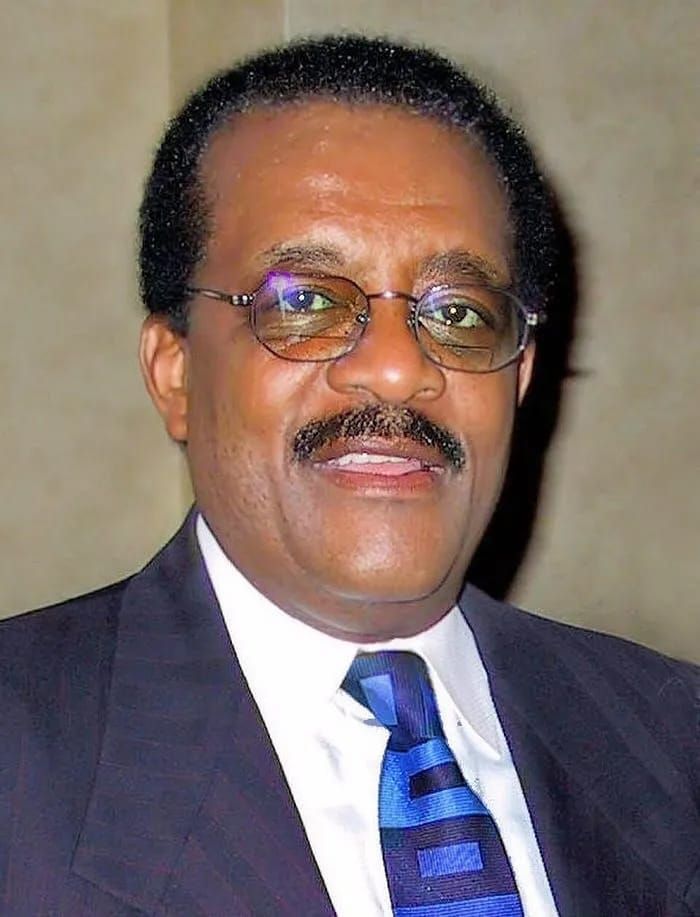
Long before the O.J. Simpson trial turned Johnnie L. Cochran Jr. into a household name, he had already spent three decades becoming the most formidable civil‑rights lawyer in Los Angeles, a strategist who understood police violence better than the LAPD understood itself, and a courtroom tactician whose victories shaped the legal landscape for Black Americans long before cable news ever pointed a camera at him. The O.J. trial didn’t create Cochran. It revealed him to the rest of the country. By the time he stood beside Simpson in 1994, Cochran had already built a career defined by landmark cases, political battles, and a relentless insistence that Black lives were worthy of legal protection in a system designed to deny it.
To understand Cochran’s rise, you have to understand Los Angeles in the 1960s, 70s, and 80s. In this city, the LAPD operated as a paramilitary force, where Black neighborhoods were treated as occupied territory, and where police brutality was not a scandal but a civic norm. Before I.C.E. and Border Patrol, there was the Los Angeles Police Department.
Cochran’s early career unfolded in a landscape shaped by Chief William Parker’s aggressive policing, the Watts uprising, and the long shadow of racialized violence. Cochran didn’t just practice law in this environment; he confronted it head‑on, case by case, client by client, until his name became synonymous with the fight for justice in a city that rarely offered it.
His pre‑O.J. career can be understood through several defining cases, each one revealing a different facet of the lawyer he became. These cases didn’t just make him famous. They made him necessary.
The Leonard Deadwyler Case (1966): Cochran’s Awakening
If there is a single case that transformed Johnnie Cochran from a promising young attorney into a civil‑rights advocate, it is the 1966 shooting of Leonard Deadwyler, a Black man rushing his pregnant wife to the hospital. Deadwyler was trying to get to the Los Angeles County — USC Medical Center about 12 miles from where he was shot. St. Francis Hospital and Compton Community Hospital were closer, but they didn’t always admit Black patients. Compton in 1966 was still transitioning to a Black community and was the site of a de facto segregated hospital. Deadwyler was speeding, panicked, and trying to get help. LAPD officers pulled him over. Within moments, Officer Jerold M. Bunch shot Deadwyler in the chest, killing him in front of his wife.
The police claimed Deadwyler was drunk, dangerous, and reaching for a weapon. Cochran, then in his late twenties, took the case and immediately recognized the pattern: a Black man killed under suspicious circumstances, a police department insisting its officers acted properly, and a city willing to accept the official story without question.
Cochran forced the city to confront the truth. He demanded an inquest, a rare public proceeding, and used it to expose contradictions in the officers’ testimony. He brought in medical experts who testified Deadwyler was sober. He showed that the police narrative didn’t match the physical evidence. And he did something even more radical: he insisted that the life of a Black man was worth examining with the same seriousness as any other citizen.
The coroner’s jury ultimately ruled the shooting “accidental,” but the case changed Cochran. It taught him that the courtroom could be a stage for truth even when the verdict was unjust. It taught him that police violence was not episodic but systemic. And it taught him that Black lawyers had a responsibility to challenge the machinery of state power.
Deadwyler’s death became Cochran’s political awakening — the moment he realized that the law could be a weapon, and he intended to wield it.
The L.A. Panthers and the Criminalization of Black Activism (Late 1960s–Early 1970s)
As the Black Panther Party grew in Los Angeles, so did the LAPD’s determination to crush it. The department’s surveillance, raids, and prosecutions were part of a national strategy to dismantle Black political organizing. Cochran became one of the few attorneys willing to defend Panthers targeted by the state.
He represented activists accused of weapons violations, conspiracy, and assault — charges often inflated or fabricated to neutralize political dissent. Cochran’s work in these cases was not glamorous; it was dangerous. He faced a police department that viewed Panther lawyers as enemies, and a public conditioned to see Black activists as threats.
Beginning in 1968, the FBI formally designated “Black nationalist hate groups” as a COINTELPRO target category. The Los Angeles chapter of the Black Panther Party was considered one of the highest‑priority targets.
The FBI shared surveillance files with LAPD, exchanged informant reports, coordinated on Panther membership lists, provided LAPD with dossiers on Panther leaders, and passed along forged letters and disinformation designed to provoke internal conflict. This was the environment in which Johnnie Cochran practiced.
What Cochran understood was that defending the Panthers was not about ideology. It was about constitutional rights. If the state could crush Black political organizing through selective prosecution, then no Black citizen was safe. These cases built Cochran’s reputation as a lawyer who would stand up to the LAPD even when the political winds were against him. They also taught him how to dismantle police narratives, a skill he would later deploy with surgical precision in the O.J. trial.
The Ron Settles Case (1981): Exposing Police Torture
By the early 1980s, Cochran was no longer a young lawyer fighting for recognition. He was a seasoned civil‑rights attorney with a growing national profile. The death of Ron Settles, a Black college football star arrested by Signal Hill police, became one of the most important cases of his career. Settles was found hanging in his jail cell. Police claimed he had committed suicide. Cochran knew better.
He forced the exhumation of Settles’ body, a bold move that revealed the truth. The autopsy showed Settles had been strangled. Cochran argued that police had tortured and killed him, then staged the scene to cover it up.
The case resulted in a settlement for Settles’ family and exposed the brutality of the Signal Hill Police Department, which had a long history of violence against Black motorists. Cochran’s work led to reforms, resignations, and national scrutiny. More importantly, it cemented his reputation as the lawyer families called when the police killed their sons.
The Michael Jackson Era (1980s): Celebrity Defense and Strategic Visibility
Before O.J., Cochran represented Michael Jackson in several civil matters, including a 1986 case involving allegations of wrongdoing that did not result in charges. Cochran’s work for Jackson was quiet, strategic, and effective. It showed that he could navigate the world of celebrity with the same skill he brought to civil‑rights litigation.
Representing Jackson gave Cochran something else: visibility. It placed him in the orbit of high‑profile clients and demonstrated that he could handle cases involving fame, media scrutiny, and complex public narratives. This visibility made Cochran a known quantity in Los Angeles, a lawyer who could defend the famous and the forgotten with equal skill.
The Elmer “Geronimo” Pratt Case (1970s–1990s): A 25‑Year Fight for Justice
Elmer Pratt, a decorated Vietnam veteran and prominent Black Panther, was convicted of murder in 1972. The prosecution’s case relied heavily on a jailhouse informant and on evidence that was suppressed, showing Pratt was 400 miles away at the time of the crime.
Cochran took the case and refused to let it go. For more than two decades, he fought for Pratt’s freedom, filing appeals, uncovering misconduct, and exposing the FBI’s COINTELPRO operations that targeted Black activists.
In 1997, Pratt’s conviction was overturned. The judge ruled that the prosecution had withheld exculpatory evidence and relied on false testimony. Pratt walked free after 27 years in prison.
Cochran called it the greatest victory of his career — greater even than O.J., because it corrected a historic injustice rather than simply winning an acquittal.
The Police Brutality Cases of the 1980s: Building a National Reputation
Throughout the 1980s, Cochran represented victims of police violence across Los Angeles. These cases rarely made national headlines, but they made Cochran indispensable.
He represented:
- James Mincey Jr., killed by LAPD chokehold
- Lloyd Thompson, paralyzed by police gunfire
- Kevin Gaines, an officer killed in the Rampart scandal
- Countless unnamed victims whose families sought justice
Cochran’s work helped force the LAPD to abandon the chokehold, exposed patterns of excessive force, and pressured the city to confront its own brutality. By the time Rodney King was beaten in 1991, Cochran had already spent 25 years documenting the violence that video finally made undeniable.
The Reginald Denny Case (1992): A Different Kind of Defense
After the Rodney King verdict sparked the Los Angeles uprising, truck driver Reginald Denny was pulled from his vehicle and beaten by four Black men. Cochran represented one of the defendants, Antoine Miller.
This case was different. Cochran was not defending a victim of police violence. He was defending a young man caught in the chaos of a city exploding under the weight of systemic injustice.
Cochran argued that the defendants were not symbols but individuals, young men reacting to a moment of collective trauma. He insisted on context, humanity, and due process.
The case showed Cochran’s versatility. He could defend victims of police brutality, political activists, celebrities, and criminal defendants with equal conviction.
The Man Who Was Ready for O.J.
By the time O.J. Simpson called Johnnie Cochran in 1994, Cochran had already confronted police violence for 30 years. He had defended political activists targeted by the state and freed an innocent man after 27 years in prison.
But that wasn't all. The tenacious lawyer and civil rights champion had much more on his resume. He exposed systemic brutality in Los Angeles and represented celebrities under intense scrutiny.
The O.J. trial didn’t create Cochran. It showcased him.
His cross‑examinations, his dismantling of police credibility, his insistence on racial context — these were not new skills. They were the product of decades spent fighting the LAPD, challenging prosecutors, and defending Black life in a city that treated it as disposable.
When Cochran told the jury, “If it doesn’t fit, you must acquit,” he wasn’t inventing a persona. He was distilling a lifetime of legal strategy into a single line.
Cochran’s pre‑O.J. career is a story of persistence, courage, and moral clarity. He understood that the law could be a shield for the vulnerable and a weapon against the powerful. He understood that justice was not automatic but demanded. And he understood that Black lawyers had a responsibility to confront the systems that harmed their communities.
The cases that made him famous before O.J.: Deadwyler, Settles, Pratt, the Panthers, the brutality cases, were not just legal battles. They were acts of resistance. Cochran didn’t become a legend because he defended a celebrity. He became a legend because he defended a people. He was Benjamin Crump before Benjamin Crump.
Long before America watched him in the trial of the century, Black Los Angeles already knew: if the police killed your son, if the state targeted your movement, if the system crushed your rights, you called Johnnie Cochran.
He was famous before O.J. He was necessary before O.J. And he was great long before the world noticed. Six years after the O.J. verdict, Cochran was diagnosed with a brain tumor and underwent surgery. After surgery, he reduced his courtroom work but continued public speaking and firm expansion. His symptoms returned in late 2004, and he died on March 29, 2005, about four years after diagnosis. The Cochran Firm still exists, and it is now one of the largest national plaintiff‑side law firms in the United States. It continues to operate under Johnnie Cochran’s name and legacy.