
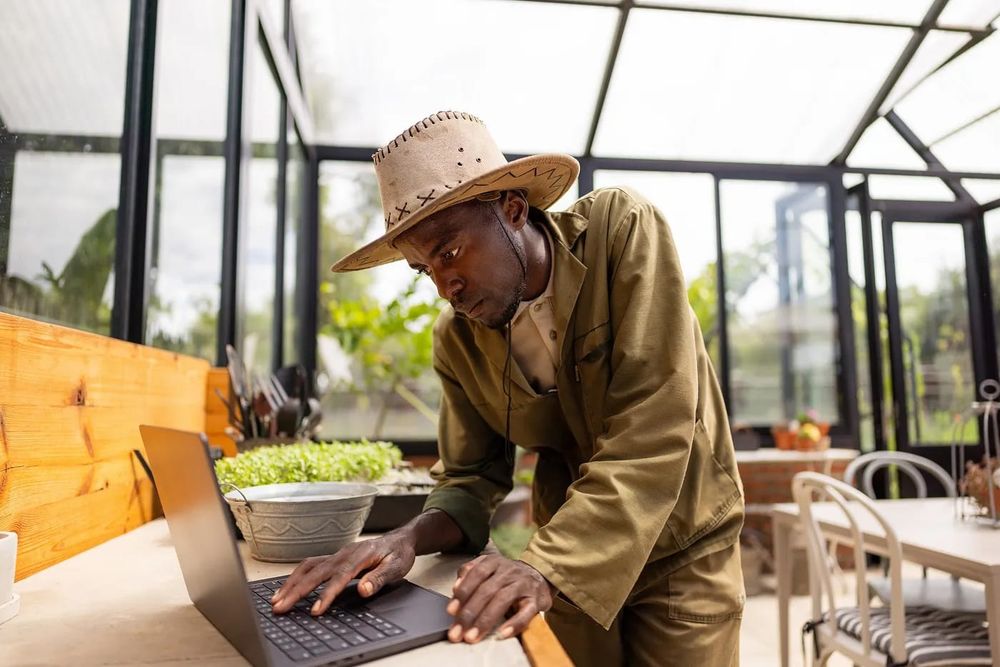
For much of the world over many centuries, Africa has been viewed as a place to take, take, take. We know the sad, abusive history, and the continuing patterns even today.
What we don’t like to talk about, because it doesn’t fit our narrow 21st-century black and white narratives, is how Israel takes a different approach to the continent than most countries. One that involves partnership and sharing technology.
A little history is in order.
From the late 1950s to the early 1970s, Israel was a major partner with many African countries.
In 1958, Israel established MASHAV, its agency for international development cooperation, after then-Foreign Minister Golda Meir traveled throughout Africa.
Her plan was for Israel to share technology and knowledge it had developed while confronting many of the same challenges facing newly independent African countries. Dry land. Water shortages. Food insecurity. Public-health problems. Newly developing institutions. And larger, more powerful countries attempting to control them.
Israel began sending agronomists, doctors, irrigation specialists, educators and engineers to African countries. And numerous Africans traveled to Israel for training in agriculture, medicine, education, women’s empowerment, community development and cooperative management.
By 1971, Israel had strong diplomatic relations with 32 African countries.
In Ghana, Dr. Kwabena Darko became one of the first African professionals trained through MASHAV in 1959. He returned home and helped develop Ghana’s entire poultry industry.
In Cameroon, Israel helped establish agricultural and civic-training centers as early as 1960. Israeli specialists later worked with Cameroonians on poultry breeding, irrigation and the testing of new vegetable varieties.
This is not to suggest Israel had none of its own interests. It, of course, wanted countries that would treat it fairly at the U.N. Countries that would stand up for it from time to time, especially when it gets more focus than some of the worst catastrophes in the world.
But Israel’s approach to Africa was still far different than most other nations.
It involved showing people how to produce more food, conserve water, treat patients and develop their own local institutions. It wasn’t about showing up, taking minerals and then leaving.
But in 1973, during and immediately after the Yom Kippur War, Arab governments demanded African nations kick Israel out. Oil-producing Arab countries promised that they would fill the void if they did. That they would do the partnering instead of Israel.
Twenty-five Black African countries acceded to the demands and ended relations with Israel that same year. By the end of 1973, only four Black African countries — Lesotho, Malawi, Mauritius and Swaziland, now called Eswatini — maintained diplomatic relations with Israel. In fairness to many African nations, they feared Arab oil producers might cut off supplies or refuse to provide discounted oil.
Sadly, though, once Israel was kicked out, almost none of what African nations had been promised by Arab nations materialized.
A few Arab nations provided financial assistance. Saudi Arabia, Kuwait, Libya and other Arab oil exporters provided approximately $1.7 billion in assistance to Black African countries between 1973 and 1981.
But the handouts didn’t replace the same broad network of hands-on farming, irrigation, medical and educational partnerships Israel had provided. Israel was teaching African nations how to fish. Temporary financial assistance usually just provides the fish.
By the early 1980s, numerous African governments were disappointed with the minuscule level of Arab assistance and the failure of the promised partnerships to materialize. Arab nations didn’t fill the void in the way many African leaders had expected. They left many African nations holding empty bags.
In the 1980s and 1990s, after years of those broken promises, slowly but surely African nations renewed their partnerships with Israel.
Zaire, now the Democratic Republic of the Congo, restored diplomatic relations with Israel in 1982. Liberia followed in 1983. Côte d’Ivoire restored relations in 1986, Kenya in 1988, Ethiopia in 1989, Nigeria in 1992, and Uganda in 1994. Shortly afterward, all but a few Black African countries restored relations with Israel.
And the development partnerships began again.
In 2001, Israel helped establish the first trauma unit at Komfo Anokye Teaching Hospital in Kumasi, Ghana. In 2008 and 2009, Israeli doctors and development specialists helped establish two mother-and-baby care units in Kumasi. Israeli neonatal specialists continued training Ghanaian doctors and nurses, and the two units reported saving approximately 700 babies each year.
In Ethiopia, Israel helped launch a small-farmer horticulture project in 2005. It brought Israeli irrigation technologies and new varieties of avocado to thousands of Ethiopian farmers.
Since 2013, Ugandan university students have participated in Israel’s AgroStudies apprenticeship program, receiving hands-on training in advanced farming methods and technologies, including irrigation, post-harvest technology, animal husbandry and water management.
By 2023, Makerere University reported that approximately 2,000 Ugandan students had benefited, with some graduates establishing agricultural businesses and transferring Israeli farming technologies to other Ugandan farmers. The program was still accepting Ugandan applicants for 2025–2026.
In Cameroon, more than 2,000 professionals have received Israeli training. Israeli doctors also conducted eye-surgery camps, bringing medical equipment and treating patients with serious eye conditions. Between 2017 and 2019, Israel partnered with Cameroon on a project to increase the productivity and income of 1,000 small mango farmers by twenty percent.
By 2018, approximately 36,000 African professionals had received MASHAV training in Israel, while another 31,500 had participated in Israeli-sponsored training programs in Africa. That’s more than 67,000 Africans trained in farming, irrigation, health, education, entrepreneurship and other areas, not counting thousands more trained since then.
In 2019, Israel opened its first embassy in Rwanda. That same year, it restored diplomatic relations with Chad, a Muslim-majority African country that had severed relations in the early 1970s.
At the end of 2025, Israel’s partnership with African nations culminated in its recognition of Somaliland. During 2026, that recognition developed into a much broader diplomatic, economic and security partnership.
The territory previously known as British Somaliland gained independence from Britain on June 26, 1960. Five days later, it united with the former Italian-colonized territory to create the Somali Republic.
In 1991, Somaliland ended its union with Somalia after decades of failure, repression and civil war. It returned to its former borders, issued its own currency and built a functioning, relatively stable nation.
Somaliland created its own government, security forces, courts, currency and electoral system. Although its democracy is far from perfect, it has held competitive elections and experienced peaceful changes of power. In 2024, the opposition defeated the governing party, and power was transferred without the country collapsing into war. That’s something numerous officially recognized countries still haven’t figured out how to do.
While most of the world treats Somaliland as a de facto nation, no United Nations member state had officially recognized it.
Israel finally did on December 26, 2025, becoming the first U.N. member to formally recognize Somaliland as an independent and sovereign state. The two governments signed a declaration of mutual recognition and announced that they would establish full diplomatic relations.
But not as a political stunt.
Indeed, almost no country praised Israel for its recognition. So, it wasn’t like Israel won any points with the world.
Somalia fiercely opposed it. And most of the world condemned it. Including nations that ironically have raped Africa for hundreds of years.
Israel nevertheless entered into a full partnership with the Black Muslim nation.
It involves agriculture and livestock technology, water management, renewable energy, healthcare, cybersecurity, food security, science, trade and security cooperation.
In January 2026, Israeli Foreign Minister Gideon Sa’ar traveled to Somaliland and announced that water professionals from Somaliland would travel to Israel for training. In May 2026, Somaliland’s first ambassador to Israel formally presented his credentials. Israel’s president specifically identified food security, energy and science as areas in which the countries would work together.
In June 2026, Somaliland President Abdirahman Mohamed Abdullahi led a major delegation to Israel. Somaliland asked Israeli businesses to invest and help develop its agriculture, livestock, water systems, renewable-energy industry, healthcare services and cybersecurity capabilities.
Of course, Israel has strategic interests. Somaliland sits on the Gulf of Aden, across from Yemen, where the Houthis have attacked ships and fired missiles and drones at Israel and other nations. Somaliland wants recognition, investment and technology. Israel wants a reliable African and Muslim partner along one of the most important shipping corridors in the world.
Both nations benefit.
That’s called partnership.
Israel gets diplomatic, economic and strategic opportunities. Somaliland gets official recognition, agricultural knowledge, water technology, medical cooperation, professional training, investment and a partner willing to treat it like an actual country.
That’s not the normal take, take, take paradigm.
For nearly seventy years, Israel repeatedly has approached African nations with an offer to share the technology it developed to survive its own difficult conditions. To teach African nations how to fish, and not just provide fish for today.
[Important side note. None of this absolves Israel’s right wing government of responsibility for their reprehensible leveling of Gaza in response to Hamas’s horrific terror attack on October 7 or their policies in the West Bank. As with any nation, though, the country is bigger than any awful political parties or a prime minister.]
The bottom line is that Africa doesn’t need pity. It doesn’t need outsiders who show up to take its oil, minerals, diamonds, cocoa, cobalt and land.
It needs partners willing to share knowledge, build local capacity and recognize African nations as equals.
So, the question really isn’t why Israel continues to partner with so many countries in Africa.
Maybe the bigger question is why so much of the world keeps refusing to do the same.