
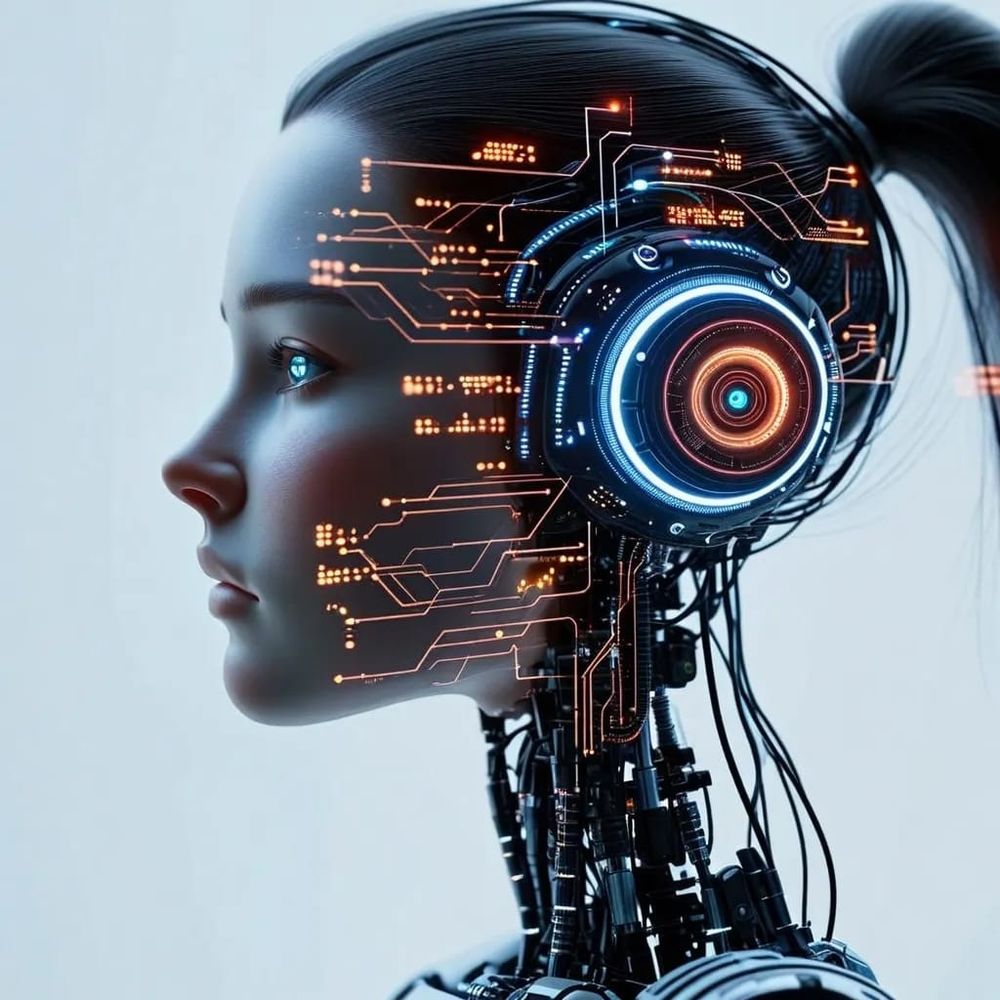
For Gen-Xers like me who no longer have time to keep up with the pace of every type of technology, AI seemed to happen overnight.
No build-up. No giant Motorola brick phones, then flip phones, then smartphone progression.
Of course, in reality, there was a long technology progression, and AI has been increasingly used and improved upon for decades.
But when ChatGPT hit the scene in late 2022, AI became an instant household name.
As an intellectual property lawyer, I’m often asked if I think that’s a good or bad thing.
My answer is always the same.
Yes
It’s a good and a bad thing.
When you think about it, AI is a lot like money.
We see how money can be used for awful things. Billionaires lobbying the government and paying to elect politicians to ensure their wealth increases, while the wages they pay employees remain disproportionately stagnant. While racial disparities persist.
CEOs of some of America’s largest companies making tens of millions a year, while workers don’t share in company success. Sometimes even laid off.
Uber wealthy people with multiple homes, lavish lifestyles and trips into outer space who can’t muster the heart to give back a portion of their billions to save L.A. or to end homelessness or to cure cancer. Some who even promoted an end to aid to developing countries.
Some billionaires hyper-focused on sowing discontent instead of using their gigantic platforms to encourage love and respect. Even telling Nazi jokes online, knowing full well far right-wing fanatics are giggling in delight.
But less sexy for news feeds are the many wealthy people who do incredible good with their money.
Like the Jewish family in London who donated money so Rwanda could open its memorials and museums to teach people about the horrors of hate and genocide.
Warren Buffett has donated $56.7 billion throughout his life, focusing on health and alleviating poverty. That is nearly half of his net worth!
Bill Gates and his ex-wife Melinda have likewise donated $42.5 billion toward health and poverty issues. They’ve literally eradicated some diseases in certain parts of the world. Bizarre conspiracy theories aside.
Taylor Swift has donated millions to help people suffering the effects of natural disasters, including the L.A. fires.
Former New York Mayor Michael Bloomberg has donated $17.4 billion to organizations addressing climate change, health and education.
Steve and Connie Ballmer donated $175 million to address child poverty in the U.S.
And even outside the billionaire realm, everyday people donate within their means all the time to help out.
How many of us have told ourselves how much we’d help if we had real money?
The list of people doing good things with money in this world is long.
So, whether money is good or bad is only as good as the ethics and intent behind the use.
AI has allowed small businesses with no marketing experience or marketing budget to come up with the right words and messaging to increase business.
It’s helped free up employees for more important tasks than writing routine memos. For teachers, AI helps prepare lesson plans, and for students, it can be a very effective tutor.
AI and robotics in hospitals have been used to diagnose rare diseases that previously remained elusive, saving many lives.
Mental health apps using AI now offer more support than ever, using predictive analytics to identify users at risk and provide timely interventions. It’s been a blessing for suicide prevention.
AI programs have revolutionized customer service, some capable of understanding and responding to customer questions, even complex ones, with the accuracy of a human. Sometimes better and most always faster.
AI has helped decrease the impact of cyber security and privacy breaches.
It even sends me ads for clothing it knows I’ll buy.
The list of AI doing good is long.
But AI has also been used for tons of bad.
In facial recognition software, AI has been trained to accurately recognize white people but has had a history of mistakenly identifying Black people in the criminal context, resulting in false arrests.
In that same vein, AI has gone awry when used in hiring practices, like when one major recruiting platform employed discriminatory recruiting algorithms, resulting in racist hiring.
Terrorists now have access to AI and have used it in drones and robot swarms carrying lethal weapons to launch remote attacks. AI’s even been used by terrorists to spread disease through AI-trained nanorobots.
AI has been used to create untold amounts of fake online content, generate false news stories, create millions of fake accounts, sow discontent and encourage people to be as angry as possible.
Fake X and other accounts have spread vicious lies and misinformation about nearly everything, and many of us just re-post it all without giving it much thought.
Aside from being employed in destructive ways, AI is also contributing to our rapid declining ability to think critically, as we rely more and more on fast paced AI content.
Like social media, AI also is reducing human interaction and connection.
A survey by Forbes shows that Americans still trust humans over AI by a large percentage.
As we proceed with AI, we should all do our best to use it with the human traits of honesty, empathy and good intentions.
Otherwise, AI will be as destructive as money can be.