
In the summer of 1870, a sea captain named Lorenzo Dow Baker bought a small bunch of bananas in Jamaica for a shilling apiece and sold them eleven days later in Jersey City, New Jersey, for two dollars a bunch. It was a modest transaction — almost accidental — but it set in motion one of the most consequential commercial adventures in American history. Baker had stumbled upon something extraordinary: a tropical fruit that Americans had barely tasted, a perishable cargo that demanded speed, refrigeration, and clockwork logistics to reach its market, and a gap in the world that an ambitious man with the right ships could fill. That man turned out to be Andrew W. Preston.
Preston was born in 1846 in Beverly, Massachusetts, to a modest New England family. He drifted through a series of occupations — shoe manufacturing, produce trading, stints with fruit merchants in New Orleans — before landing in Boston in the 1880s, where he began distributing bananas that Baker was shipping up from the Caribbean. Nothing about what Preston built next was accidental. Where Baker saw a lucky trade, Preston saw a system. He understood intuitively that the banana business was not really a fruit business at all. It was a logistics business. Whoever controlled the boats, the docks, and the timing controlled everything.
In 1885, Preston and Baker formalized their partnership and established the Boston Fruit Company. From the outset, Preston poured energy not into the plantations — that was Baker’s domain — but into the fleet. He started with four small, aging steamships, the kind of rust-streaked coastal vessels that ran ordinary commercial routes up and down the Eastern Seaboard. He replaced them, one by one, with faster, more powerful ships, vessels purpose-built for a trade that gave no quarter to delay. A banana that missed its market window by forty-eight hours was worthless. Speed was not a competitive advantage. It was the entire business.
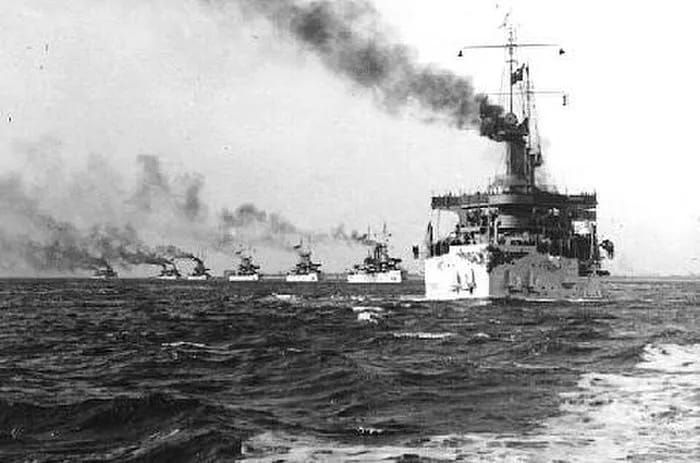
By the late 1890s, Boston Fruit’s white-hulled ships — kept brilliantly white in part to reflect tropical heat and slow the spoiling of cargo — had become a recognizable sight in Caribbean ports from Kingston to Havana. And Preston was still not satisfied.
The real transformation came in 1899. Minor C. Keith, a brash Bostonian who had spent two decades hacking railways through the jungles of Costa Rica and Colombia, approached Preston with a proposition. Keith had land. Keith had railroads. Keith had political relationships with Central American governments that no outsider could easily replicate. But Keith was perennially short of cash, his Caribbean banana export business was growing faster than he could finance it, and he needed partners with capital and, crucially, with ships.
On March 30, 1899, the merger was completed. The United Fruit Company was born, capitalized at $11.23 million, with Preston as president and Keith as vice president. Preston brought the West Indian plantations and, most importantly, the fleet. Keith brought the Central American railroads and an entire geography. Together, they had assembled the pieces of something unprecedented: a vertically integrated tropical empire that controlled cultivation, transport, and distribution from the jungle clearing to the American grocery.
Preston’s first act as president of United Fruit was to expand the fleet again. He did not tinker at the margins. In 1903, he commissioned United Fruit’s first refrigerated vessel. This technological leap transformed the entire calculus of perishable cargo shipping and effectively locked out competitors who lacked the capital to match it. Within a decade, the fleet had grown to 115 ships. No private company in the United States operated anything comparable. Collectively, they became known by the name that would echo through the history of the Caribbean for the next half-century: the Great White Fleet.
The ships were more than cargo carriers. They were instruments of total commercial power. Preston grasped what many businessmen of his era did not — that in the underdeveloped ports of the Caribbean and Central America, a private fleet of steamships was not merely a logistical tool but a form of sovereignty. When a country’s only reliable connection to the outside world ran through your hulls, you were, in a practical sense, that country’s government in all but name.
The Great White Fleet dominated the region’s ports so thoroughly that United Fruit could — and did — shut down commerce to any given territory simply by withdrawing its ships. During labor disputes, strikes, or moments of political inconvenience, Preston could impose a maritime blockade without firing a single shot. No fruit moved. No mail moved. No passengers moved. The governments of Guatemala, Honduras, Costa Rica, and Colombia understood this leverage perfectly, which is why they granted United Fruit its legendary concessions: enormous land grants, tax exemptions that lasted for decades, and control over the very railroads that connected the plantations to the ports.
The “banana republic” — a phrase coined by the writer O. Henry after a stint in Honduras — was not merely a colorful metaphor. It was a precise description of the political economy that the Great White Fleet made possible. A nation organized around a single export crop, shipped by a single company on its own ships, had, in every meaningful sense, surrendered its economic independence.
By the 1920s, United Fruit had extended the Great White Fleet’s reach across the Atlantic. Its British subsidiary, Elders and Fyffes, had been shipping Caribbean produce to England since the early 1900s, and by 1928, United Fruit had purchased ninety-nine percent of Fyffes’ shares, cementing its grip on the European banana market. By then, the fleet was not simply a Caribbean concern. It was a transatlantic commercial network, one of the largest in the world.
The ships themselves had acquired a cultural dimension that no one in Preston’s counting house had quite planned for. Because the routes between New Orleans, New York, and the Caribbean ports were reliable, comfortable, and exotic by the standards of the era, the Great White Fleet became a popular passenger service. American tourists booked berths to Havana, Kingston, and Puerto Limón, drawn by the romance of the tropics and the elegance of the white hulls gleaming in the harbor. Travel posters depicted smiling passengers on sun-drenched decks, with azure water stretching toward palm-lined shores. The fleet was, at once, a tool of commercial empire and a vehicle of American leisure. This peculiar combination said something profound about the relationship between the United States and the Caribbean in the early twentieth century.
Meanwhile, Preston had also commissioned the Tropical Radio and Telegraph Company in 1913, linking the fleet’s vessels and the company’s far-flung plantations into a communications network that gave United Fruit a real-time operational awareness most governments in the hemisphere could not match. The company knew where every ship was, what it carried, how long it had been at sea. It knew the weather along every route. It knew the political situation in every port. In almost every practical sense, it was a state within a state.
The political dimension of the Great White Fleet grew darker as the twentieth century wore on. United Fruit’s connections to the American government were not accidental — they were cultivated over generations. John Foster Dulles, who served as Secretary of State under President Eisenhower, had spent thirty-eight years as a lawyer for Sullivan & Cromwell, which counted United Fruit among its most important clients. His brother Allen Dulles, who became CIA director under Eisenhower, had done the same. When the democratically elected Guatemalan president Jacobo Árbenz began nationalizing unused United Fruit landholdings in 1954, citing them as the basis for an agrarian reform program, the Dulles brothers helped orchestrate a CIA-backed coup that removed him from power. It was not a coincidence that the operation was code-named PBSUCCESS. Success, in this context, meant preserving the commercial architecture that the Great White Fleet had spent fifty years constructing.
The coup was the high-water mark of United Fruit’s political reach — and, in retrospect, the beginning of its unraveling. The Guatemala operation attracted the kind of scrutiny that no corporation could indefinitely survive. Latin American nationalism, which had been simmering for decades in the shadow of the fleet’s smokestacks, began to boil. The word imperialismo acquired new resonance, and United Fruit became its most recognizable symbol.
The decline came in waves, each one more damaging than the last. In 1958, the U.S. Justice Department, which had been circling the company for years, forced United Fruit into a consent decree that required it to divest significant holdings and divest its control over the Great White Fleet’s monopoly routes. Then came the banana diseases — Panama disease and later the Sigatoka blight — which ravaged monocultural plantations across Central America and forced expensive replanting and reengineering of the entire agricultural model. The old certainties, built on vast monocultures and captive governments, proved fragile in ways that no number of refrigerated ships could fix.
In 1969, Sam Zemurray’s successor generation sold United Fruit’s controlling interest to AMK Corporation, and the company was formally reorganized as United Brands the following year. The Great White Fleet, that glittering armada of white hulls that had once seemed as permanent as the trade winds, was broken up, sold off, and repurposed. The passenger service — those sun-drenched Caribbean voyages that had charmed a generation of American tourists — quietly ended. The communications network was absorbed into larger systems. The ports remained, but the ships that had given them their purpose were gone.
In 1984, United Brands was reorganized, eventually emerging as Chiquita Brands International, a name conspicuously stripped of the word “fruit” and its imperial associations. The company that remained was a shadow of what Preston had built — a branded marketer of bananas, no longer an empire of steel and steam.
What the Great White Fleet left behind is not easy to categorize. It was, in the most literal sense, one of the greatest feats of private logistics in American commercial history — a system of such complexity and reach that it outpaced the administrative capacity of every government in the hemisphere it touched. It democratized tropical fruit for the American consumer, making the banana not a luxury but a staple, cheap and ubiquitous. It pioneered refrigerated shipping technologies that would eventually transform the entire global food supply chain.
But it also installed the template for what it means to be a “banana republic” — a nation whose sovereignty is conditional on the goodwill of a foreign corporation, whose government bends to the needs of a fleet of white-hulled ships anchored in its harbors. The men who sailed those ships, the dock workers who loaded them, the plantation laborers who filled them — they were the ones who bore the cost of an empire whose profits sailed north.
Andrew Preston died in 1924, before the worst of it, in the decade when the company he built was at the absolute peak of its power. He left behind 115 ships and an empire of fruit. He could not have known what it would eventually come to mean — or perhaps, in the quiet certainty of a man who had spent his life thinking about hulls and harbors and the distance between a jungle and a market, he understood exactly what he had built.
The Great White Fleet was named as such because all the ships were painted white to reflect heat and minimize spoilage. Not because it embodied white supremacy and helped perpetuate a system resembling enslavement (which it did).
By the time United Fruit became Chiquita Brands International in 1984, the fleet was a memory the company had decided was better forgotten. The new name said everything: away from ships, away from sovereignty, toward something softer — a logo, a cartoon sticker on a piece of fruit.
The enclave economies United Fruit engineered across Central America proved far more durable than its hulls. The land concessions, the captured governments, the suppressed wages, the vagrancy laws that delivered indigenous labor to the plantation — these did not dissolve with the fleet. They calcified into the economic architecture of entire nations. Guatemala, Honduras, and Colombia remain among the most unequal countries in the hemisphere. That inequality was not an accident of geography or culture. It was constructed, deliberately, over fifty years of corporate statecraft, and the construction was so thorough that dismantling it has taken generations and is not finished yet.
And then there is the banana itself — cheap, ubiquitous, taken entirely for granted — which is perhaps the fleet’s most lasting monument. Preston did not democratize the banana out of generosity. He did it because volume drove profit. But the effect was real: a fruit that once appeared only at world’s fairs became the least expensive item in any American grocery. Americans eat around 27 pounds of bananas per person per year. Very few of them have ever considered what it cost to make that possible, or who paid the cost, or whether they were ever asked.
Andrew Preston died in 1924, celebrated and unchallenged. His obituaries described a self-made man who had turned a tropical curiosity into a global industry. They were not wrong. They were simply incomplete. The workers who loaded his ships were not mentioned. The Jamaican farmers whose trade he swallowed were not mentioned. The strikers of Ciénaga were not yet dead.
They are mentioned now. History has a way of keeping its own accounts, independent of the ledgers that corporations prefer. The Great White Fleet is gone — sold for scrap, renamed, forgotten. What it built, and what it cost, is still on the books.