
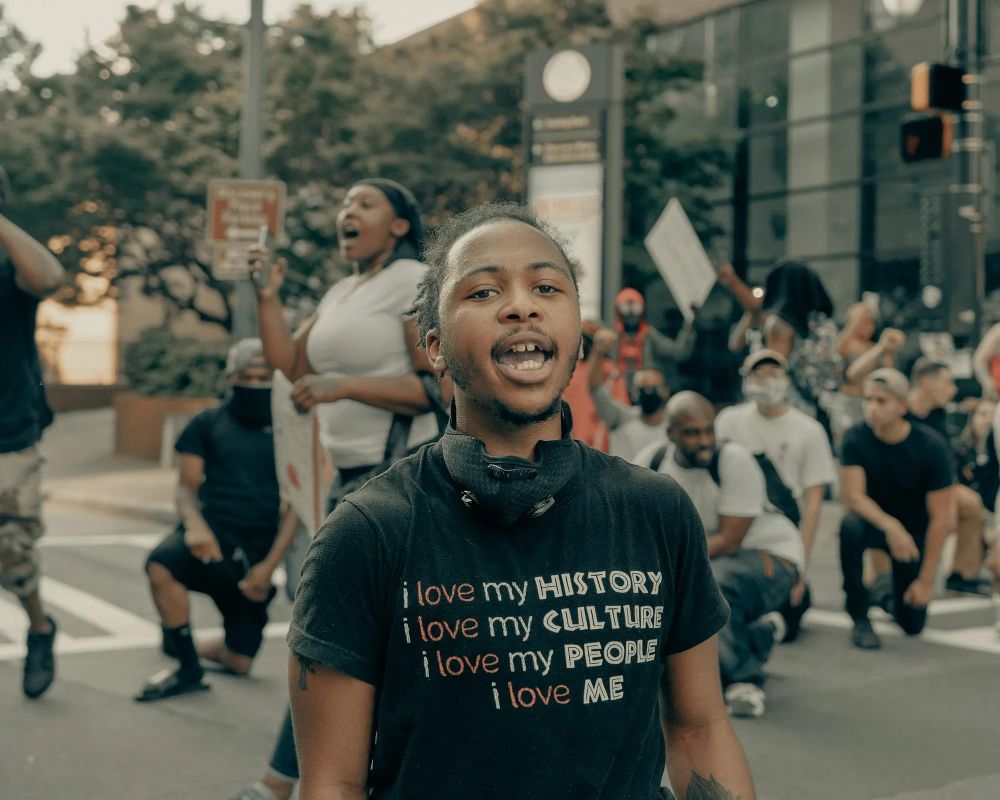
When I started teaching at my school about 15 years ago, we had a Black History assembly every year. It wasn’t much for a school with a majority Black student population, but it was something. There was an acknowledgment.
For the most part, the students viewed the assemblies as a reason to get out of class, but after the first half hour they were dozing off.
This shifted after a new young teacher joined the school and started the step team. At first, it was just a few performances added to the program. By her third year, she had chorus and orchestra involved, and she even got a speaker who moved the students.
This, I felt, was a positive turning point, but it was sadly the beginning of the end of Black History Month at my school.
The assembly that killed Black History Month
The assembly started with a Black doctor who graduated from my high school.
Strike 1: She started the speech by asking all of the Black kids to stand up. She wanted the students to know she saw them. It was a special moment for a lot of kids who never get an excuse to stand and shine.Unfortunately, a lot of white kids felt left out.They complained to their parents and administration.
Strike 2: During her speech, she discussed how the trauma of slavery still impacts Black kids today. In education, there is this unspoken rule that Black History is vague slavery, Rosa Parks, MLK, and Obama. They used to let us talk about Harriet Tubman, but they don’t even like that now.
Strike 3: The speaker decided to talk about her time at my school. She was in advanced classes with mostly white students. She had one other Black student in her history class as their teacher showed a war movie; I think it was Glory.
In it, a Black man is whipped, and the other Black student asked, “Why is he whipping him so bad?”
The teacher responded by saying, “Be quiet and watch the movie.”
The other Black student walked out. The teacher then turned to the speaker and asked, “Does anyone else want to leave?”
The speaker could not understand why the teacher was looking at her. She was a good student. She would never walk out, but it dawned on her that she was the only Black student in the class. She left.
She explained that she went to the principal, and he was kind. She says that she recognizes many of the teachers in the audience and appreciates most of them. She also explains how some of them should be more sensitive to similar issues.
Kids and parents were not the only ones to complain about this.
Strike 4: The chorus sang the Black National Anthem.
Strike 5: The step team came out in chains, removed them during the dance, and held up the Black power fist at the end of their dance.
At the end of the show, many of the kids were moved and motivated.However, some teachers and kids called the show racist. It was a Black History assembly that wastooBlack.
The dead years
The next year, the superintendent was the speaker for the Black History Assembly. He gave a quick speech about the history of the town, the district, and the importance of unity.
The year after, the assembly was gone. Black History quietly disappeared from the school. I fought for it,but I had no success.
Once our principal was replaced, aspects of Black History started to trickle back into the system. Initially, it was bringing in a panel to talk about the Negro Baseball League and playing Black music on the intercom during class change. It wasn’t much, but it was enough to show that the door was open.
The revival and Black History Club
A group of young Black women started teaching at my school a few years ago, and their impact vibrates in the walls despite the state pushing back against them.One of them got our school more involved with theAVIDprogram to help push students who usually wouldn’t reach the highest academic levels because they lacked the opportunity or external motivators. Another started the AP Black History program (before the state eliminated it), and one started the Black History Club.
The amount of work she put into that club as an individual is shocking. She ran the club like a business, and she made every day of Black History Month feel special for the school.
I watched with amazement. I continuously praised her accomplishments, and when I learned she was being promoted and leaving the school, I was sad for the students. No one could fill her role. I knew I couldn’t.
So when she sent out an email asking for someone to step in as the director of the Black History Club, I wasn’t surprised when she received no takers. I tried to talk some of the younger teachers into taking it, but the time commitment alone was intimidating.
When she sent out her final email, I finally bit the bullet. I always knew I was going to take the job. Luckily, a younger teacher showed up as well. She keeps the same youthful energy of the club, while we are able to split the background duties.
Black History Club at my school
Black History Club takes a lot of time, but I’m so glad I volunteered. We have almost 100 members, and we turn kids away. We require students to maintain at least a 2.5 GPA and follow all application rules when applying.
Once a member, you are expected to show up to all meetings and most events. If you are not able to make a meeting, we require advance notice.
Leadership: The program is broken into committees. Each committee has a chair, and the entire program is run by the president. We have elections for most leadership positions, but we hold interviews for the president.
This year, everyone expected a certain student to be president. She was already president of multiple clubs and basically brought her VP into the club with her.
She and her opponent are involved in so much. Both of them take advanced classes, participate in multiple clubs, and work. The opponent worked two jobs. In the end, we chose the expected victor. Her experience was hard to deny, and her opponent did seem a little hesitant about the overwhelming nature of the job. I hope she applies to be president again next year. Either way, it is refreshing to see such motivated kids eager to lead the club.
What we do: The club is a great place for a diverse group of students to bond. About 70 percent of our members are Black, but I love how involved all members are. No one seems afraid to speak up or share ideas. Most recently, we played Black History bingo. (My team almost won. I think we were cheated!)
Although it is fun to let the kids just play games, we spend most of our time planning events for the school and the community. I’ll list some of the things we have planned for this year.
- Read to elementary school kids
- Introduce the club to middle school kids
- Volunteer at the food shelter
- Black history-related dress-up week
- HBCU and D9 pep rally
- Mental Health Monday: We leave positive notes around school
- Soul Train Friday: We invite local Black businesses and celebrate by dancing
- Talent show (all students and teachers invited to enter)
This just scratches the surface. The kids are so passionate about spreading their love for Black History and positivity to everyone.The principal isn’t hands-on, but he is yet to say no to anything that we ask. He sees the type of kids we have in our program, and he trusts what we are doing despite the rocky history.
It has been a long road, but the school now has a stronger Black History presence than I ever imagined, and honestly, it is all thanks to the kids.