
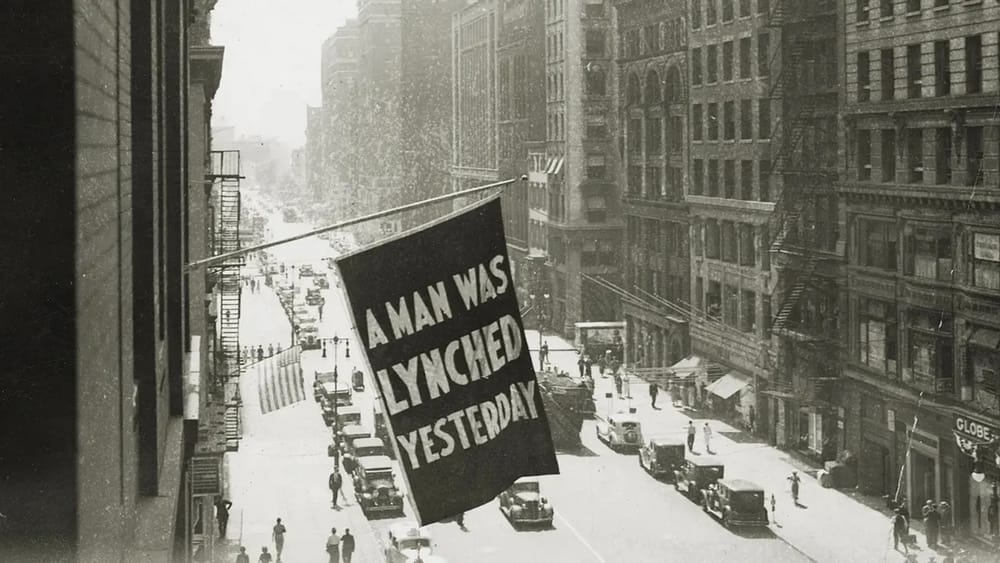
Americans often describe racial terror lynchings as solely a historical occurrence. In this way, they can place some distance between themselves and “southern horrors.” But that distance causes some to overlook the violence inflicted on Black people in the modern era and how it’s inextricably tied to the nation’s past.
According to A Crimson Record, a report published by the civil rights organization JULIAN, “more than 70 modern-day lynchings” have occurred between 2000 and 2025 within the seven-state region in the South, “with Mississippi reporting the highest number of casualties.” Contrary to popular belief, the lynchings that plagued the black community during the Jim Crow era did not abruptly stop in the 1960s or in any decade since including the 21st century.
On April 2, 2001, a 43-year-old Black man, Clarence Otis Cole, was found hanging from a pine tree in Linden, Texas, with an extension cord wrapped around his neck. Authorities ruled his death a suicide, but his family expressed doubts, arguing that “Cole had no history of depression, was a Sunday school teacher, and had plans for the future, including a daughter and an impending graduation. They also questioned the suicide notes’ authenticity, saying that it looked nothing like Cole’s handwriting.”
His mother, Azzie Lee Cole, suggested he may have been targeted because of his interracial relationship with a white woman. In 2013, the body of another Black man was found in a wooded area in Sabine County. While “white authorities maintain that Alfred Wright’s death was an accidental drug overdose,” an independent autopsy revealed he suffered “trauma to his head and neck, a slashed throat.”
Last May, Michael Lynch, a Black man, was found hanging on the school campus in Lubbock, Texas. He moved there for a fresh start after facing “persistent harassment from a group of white men in Snyder, Texas.” Authorities told his family he died by suicide. However, when they requested to see the note he left and the full details from the medical examiner, authorities denied their requests. When the family saw his body, “they noticed lacerations on his ear and other wounds that did not comport with the official suicide narrative.”
In 2000, the body of an unidentified African American man was found hanging from a tree near a park in Bossier City, Louisiana. Authorities claimed he was “not lynched” and that his death was “accidental and sexual in nature.” Still, public reports suggest they “rushed to judgment based on the women’s clothing and gagging, assuming that those elements meant the death was sexual and self-inflicted.” They never considered that “these easily could have been methods for lynchers to embarrass the male before his death.”
In the aftermath of Hurricane Katrina (2005), Black people in New Orleans faced an onslaught of racial hate crimes. For instance, some white residents in Algiers Point, New Orleans, erected a barrier to prevent Black people from reaching the ferry, an evacuation point. Roland J. Bourgeois Jr., a white man, used his firearm against Black men and even displayed “a victim’s bloody cap as a trophy.” Neighbors heard him say, “Anything coming up this street darker than a brown paper bag is getting shot,” according to Department of Justice archives. Bourgeois pled guilty to hate crimes in 2018. Approximately 11 people were injured in this community, and two Black men died. However, “the full scope of the violence and the total number of casualties remain unclear due to the chaotic aftermath of the storm, lack of investigation, and missing or unreliable records.”
The body of a Black teenager, 14-year-old Jason Smith, was found in a lake in Eros, Louisiana, in 2011. Initially ruled an “accidental drowning,” his father, Bruce Smith, didn’t believe their story. “He says his son did not swim and would have no reason to be near a lake or any body of water.” Reports indicate he had “bruises and trauma consistent with a struggle.”
In 2018, Mississippi authorities found the body of Willie Andrew Jones Jr., hanging from a tree in the yard of his white girlfriend’s house in Scott County, Mississippi. He was slumped under a pecan tree, with “a blue and white cloth belt wrapped around his neck. A yellow nylon cord attached to the buckle was tied around a branch of a tree.” The sheriff’s department quickly ruled his death a suicide, but the Jones family believed he was lynched. His mother said he never expressed suicidal thoughts and that “he had a sports injury that prevented him from being able to lift his arm above his head,” which, in her opinion, made it “physically impossible to hang himself.” They also suggested that O’Bryant, the stepfather of his girlfriend, Alexis Rankin, didn’t approve of their interracial relationship. His mother noticed “what looked like scratch marks and cigarette burns” on his body and suspected foul play. Research conducted by JULIAN revealed “inconsistencies in witness statements, proving that the suspects had lied to authorities.” They learned “that the main suspect had attempted to murder another Black man just two years earlier, who had also been in an interracial relationship with his stepdaughter.”
In another tragic incident, the body of a Black man, Otis Byrd, Jr., was found hanging from a tree in a wooded area in Mississippi on March 19, 2015, with a bedsheet wrapped around his neck. Authorities ruled his death a suicide, but research indicates “one of the major hindrances in the case was the premature cremation of his body before an independent autopsy could be arranged.” This case is being investigated as a potential lynching.
On May 28, 2017, authorities in Jackson, Mississippi, quickly ruled the death of Philip Carroll, a 22-year-old Black man, a suicide. Although authorities have denied this, their “initial reports claimed his hands were tied behind his back when he was found,” a discrepancy that raised suspicions among his family and the broader black community. How can someone kill themselves when their hands are tied behind their back?
The body of another Black man, 30-year-old Jeremy Jerome Jackson, was found in the same area within weeks of this case. A report suggests “his severed head was found on the steps of a home in Deer Park Street, and his burned body was discovered hours later, a mile away in a wooded area.” The civil rights group JULIAN “believes that despite the different manners of death, the proximity in time and location of Jackson and Carroll’s deaths is suspicious,” particularly as “both men were left on display.”
“What most people don’t know is it’s still going on. I’ve heard of other lynchings in Mississippi. You hear stuff on the news… But I never put in my head what’s going on, until it happened to my son.” — Tammy Townsend
Most recently, authorities found the body of Kyle Bassinga, a 21-year-old Black man declared missing in Atlanta, Georgia, hanging from a tree in a Cobb County park. He entered the park alone on Valentine’s Day. Police claim there was no foul play, but given the legacy of racial terror lynchings in this country, some Black people have raised serious doubts about how this case has been handled. When deaths are quickly called suicides without a full autopsy, suspicion is only natural, especially in a country where thousands of Black people have been victims of racial terror lynchings, and many more have been victims of police brutality and race-based hate crimes. So, when the news breaks that a Black person is found hanging, many believe they could have been a victim of a lynching. And while some white people or others may see this response as an overreaction, their response overlooks the inherent risks associated with being a Black person in America, how many lives have been taken, and how many Black victims have been denied justice.
It may feel comforting for some to consider lynchings as strictly a historical phenomenon. Yet this framing avoids the uncomfortable truth that modern-day lynchings persist, and that this history is still impacting Black people. A scholarly article in Social Science and Medicine found that “structural racism, via lynchings, provokes stress responses that trigger immune and inflammatory responses,” which in turn places “additional burdens” on the “balancing act of organ systems to maintain homeostasis (Adkins-Jackson et al., 2025).”
Another study noted “past lynchings have an adverse effect on the current economic opportunities of Black people (Kampanelis & Elizalde, 2024).” And Rigby and Seguin (2021) found that “capital punishment is more commonly practiced in places where lynching of Blacks occurred more frequently. With respect to available research, lynchings should not be considered as something strictly historical, because not only are modern-day lynchings and other forms of violence still impacting Black people, but historical lynchings are still impacting the black community, even those who do not personally experience violence. The fact that Black people have to ask themselves, “suicide or lynching,” after learning about a Black person found hanging, speaks to the dark cloud that continues to hang over our society.