
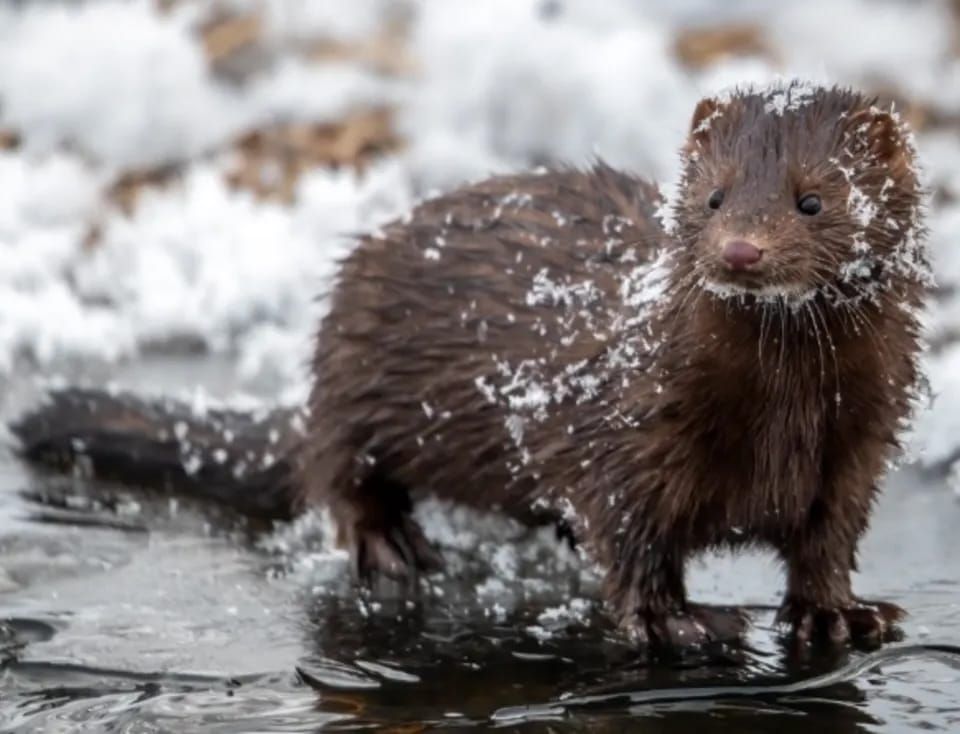
I attended Super Bowl XXVI in Minneapolis on January 26, 1992, and saw Donald Trump with a woman and a few men in suits. They stood out because they were overdressed for a football game, and Donald had that hair. Public records do not identify who the woman was, but at that time Trump was still legally married to Ivana Trump, though going through an ugly divorce. He was also publicly involved with Marla Maples, who would become Wife #2 the following year. The woman was wearing a mink coat.
By the late 1980s and early 1990s, mink was already slipping out of style. PETA’s anti‑fur campaigns exploded between 1987 and 1992, turning fur from a status symbol into a political flashpoint. PETA targeted mink because it was the most visible symbol of the fur industry. The coat represented glamour, wealth, and killing animals purely for fashion. Beginning in the late 1980s, their anti‑fur campaigns exploded, using graphic ads, runway disruptions, and high‑profile protests to make mink socially radioactive. Supermodels like Cindy Crawford, Naomi Campbell, and Christy Turlington publicly rejected fur, signaling that the fashion elite had turned against it.
Fur wearers began attracting protest rather than admiration, and mink shifted from a coveted status symbol to a controversial luxury item. By the time COVID‑19 swept through global mink farms decades later, triggering mass culls, permanent farm closures, and the collapse of the supply chain, mink was already culturally out of vogue. The pandemic didn’t start the decline; it simply finished what activism and shifting public values had already set in motion. So if wearing a mink coat might mean getting paint thrown on you, why did leather never achieve the same notoriety?
Leather was never targeted the way mink was because it sits in a completely different ethical, economic, and cultural category. Activists understood that mink was a pure luxury product — an animal killed only for its fur — while leather is a byproduct of the massive global meat industry. That single distinction shaped everything that followed. Going after mink meant confronting an industry built entirely on killing animals for fashion; going after leather meant confronting the entire beef economy, which was neither politically feasible nor strategically effective. Leather was woven into everyday life — shoes, belts, work gloves, jackets — and culturally coded as practical, durable, and normal. Mink, by contrast, was coded as elite, conspicuous, and unnecessary.

PETA’s campaigns were designed for maximum visibility and moral clarity, and mink offered both. Fur farms kept animals in small wire cages, killed them solely for pelts, and produced a product associated with wealth and vanity. That made mink an easy symbol of cruelty. Leather didn’t offer the same optics: cows were already being slaughtered for food, hides were a secondary product, and the industry could argue that banning leather wouldn’t save animals. Even consumers who supported animal rights often continued wearing leather because it didn’t carry the same stigma.
By the time PETA’s runway disruptions, celebrity pressure campaigns, and graphic ads made mink socially radioactive, leather remained insulated by its practicality and its connection to everyday consumer goods. Mink collapsed under cultural pressure and later COVID‑19 farm shutdowns; leather survived because it was never the moral centerpiece of the debate.
In full disclosure: I was in Chicago on business in the early 1980s and staying at a hotel on the Magnificent Mile. I walked across the street to a store on Michigan Avenue and bought a rabbit coat to bring home to my wife. Rabbit coats were cheaper, worn by everyday consumers, and not associated with wealth or celebrity culture. Rabbit meat is available in America on a limited basis, but sellers don’t have nearly the support that the beef industry can wield.

One major reason leather hasn’t been targeted is that it is a byproduct of killing cows intended for food. While rabbits are used for food, rabbit pelts and “lucky” rabbit's feet are popular as well. You could argue that people eat rabbit meat and that a dead rabbit has multiple uses. Is it possible that the reason you can buy a new rabbit coat on Amazon but not a new full-length mink coat (you can buy a used one) is that people wanted to punish the owners of mink coats?
The backlash against mink was never purely about animal cruelty. It has always carried a class and political charge, treating mink as shorthand for conspicuous wealth, feminine luxury, and elite detachment. Activists, journalists, and cultural critics framed mink as a symbol of greed and excess, and the public shaming of fur wearers operated as a moral critique of the rich long before the industry collapsed on economic grounds. Some never felt shame, like the woman accompanying Donald Trump to the 1992 Super Bowl, long after activists began targeting mink owners.
Even at the height of anti‑fur activism, mink owners continued flaunting their coats at private high‑society events. They wore their minks as a badge of honor. While activists were shaming fur wearers on sidewalks and at department stores. Charity galas, donor dinners, and winter balls still saw mink draped over chairs.
A 2026 luxury fur guide notes that natural fur has returned to the spotlight as part of “sustainable luxury fashion,” with mink included among the premium outerwear options. An analysis of mink coats describes the cropped mink coat as the modern evolution of the garment — lighter, more architectural, and designed for everyday wear rather than gala nights. It explicitly states:
“The traditional floor-length mink is a relic of the past.”
“In 2026, the crop mink coat represents a decisive shift toward agility and functional luxury.”
The revival of fur is being reframed as nostalgic, retro, or sustainable, especially on resale platforms and in fashion capitals. This reframing positions mink as part of a cyclical fashion trend rather than a fresh act of animal cruelty.
Activists historically targeted new fur production. Vintage and resale fur fall into a moral gray zone. The animal is already dead, the harm is not “new,” and the purchase is framed as recycling. “Sustainable luxury” rhetoric makes mink sound environmentally responsible, which blunts activist messaging.
Activist energy has shifted to platform bans and policy fights, not street-level fashion policing. Recent activism has focused on:
- banning fur on major marketplaces (Etsy, Shein Marketplace)
- pushing for national and EU‑wide fur farming bans
- targeting corporate supply chains rather than individual wearers
Etsy’s 2026 ban is a clear example: activists spent 58 days protesting corporate offices, disrupting investor conferences, and pressuring platforms, and not shaming people wearing mink on the street.
Melania Trump, Donald’s third wife, often wore furs, including mink, during the early 2000s. Melania formally stopped wearing fur after becoming First Lady. Her East Wing communications director, Stephanie Grisham, told CNN:
“She does not wear fur.”
Trump’s first wife, Ivana, wore “sables and minks and chinchillas galore,” according to her designer Dennis Basso. Wife #2, Marla Maples, wore furs, including the mink coat she wore to the Super Bowl in 1992, presuming that it was her. I’m betting that by the time the White House Ballroom opens, assuming it ever does. You might see a new mink coat on Melania. There is no indication that Melania has changed her mind since her 2017 pledge. But from her other clothing choices, she no longer seems to care about what others think, does she?
