
The saying "a lie can travel halfway around the world while the truth is still putting on its shoes," explains the gap between public perception and reality. Consider, for instance, the racist stereotype that suggests Black people are more likely to engage in violent, dangerous, or otherwise criminal behavior. By positioning Black people as a threat to public safety, some hope to justify the increased police presence in their communities, the violent methods often used against them, and the racially disparate impact of mass incarceration. Shine a light on the injustices Black people face within America's criminal justice system, and someone is likely to point to the high crime rates among the group as a "gotcha moment." It's their way of saying, "This is necessary, not excessive." However, by ignoring that Black people are the group with the highest exoneration rate in the country, their seemingly objective analysis falls short. Being the most accused does not mean a group of people is the most likely to be guilty. But sadly, the lie about black criminality has traveled far and wide.
"Somebody must show that the Afro-American race is more sinned against than sinning, and it seems to have fallen upon me to do so," Ida B. Wells, the renowned journalist, said in 1892. Throughout her career, she laid the thread bare, exposing the lies often used to justify racial terror lynchings. Southern Horrors (1892), A Red Record (1895), Lynch Law in Georgia (1899), and Mob Rule in New Orleans (1900) helped to correct misconceptions many held about Black people, especially the falsehood that Black men were routinely raping white women. Wells uncovered evidence suggesting lynching was "an excuse to get rid of Negroes who were acquiring wealth and property and thus, keep the race terrorized," because most victims were, in fact, innocent of any crimes white people accused them of. Records indicated that many lynching victims had "no offense," or were accused of "misdemeanors," which do not warrant the death penalty. As Wells stated, "it must be admitted that the real cause of lynching in all these cases is race prejudice and should be so classified."
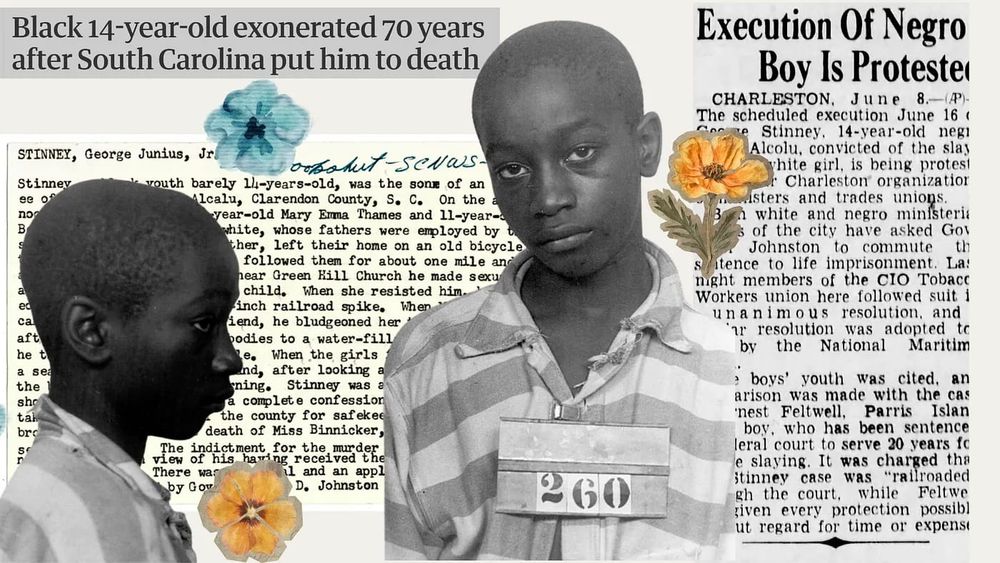
This stereotype of black criminality has persisted, often depriving Black citizens of the presumption of innocence afforded to White people. Take, for example, the tragic case of George Stinney Jr., a 14-year-old Black teenager who became the youngest person executed in America during the 20th century. In South Carolina, White people accused him of sexually assaulting and murdering two White girls, Emma Thames, a 7-year-old, and Betty June Binnicker, an 11-year-old. Since George Stinney Jr. and his sister had played with them before, they joined the search party in hopes of finding them. However, White people cast blame on the Black teenager without evidence. White officers interrogated him alone, and the sheriff later claimed he confessed but produced no written documentation. According to an Equal Justice Initiative report, what followed was a "sham trial." "No African Americans were allowed inside the courthouse," and his attorney did not call a single witness in his defense. "An all-white jury deliberated for 10 minutes before convicting poor George Stinney of murder, and the judge promptly sentenced him to death on June 16, 1944."
Seventy years later, with the urging of Stinney's family and community, authorities reopened the case. After reviewing new evidence, testimonies from his siblings and surviving members of the search party, and several experts, the state upheld the original opinion. However, the trial judge vacated its decision, stating, "I can think of no greater injustice," arguing that authorities deprived the young defendant of a fair trial. During the Jim Crow era, all-white juries often assumed Black suspects were guilty, and as documented in the case of Emmett Till, white suspects were often presumed innocent. Despite the trope that frames Black people as more criminally inclined, evidence does not support this stereotype. On the contrary, the high rate of Black exonerees points to a justice system tainted with prejudice, where innocent people are far too often convicted. According to a 2022 National Registry of Exonerations report, Black people are about 7.5 times more likely to be wrongfully convicted of murder than White people, and "80% more likely to be innocent than others." The fact that "half of the 1,947 people exonerated since 1989 are Black" is no coincidence, but rather a symptom of lingering prejudice. Collectively, the Innocence Project noted, "more than 15,000 years of freedom were stolen from them." This is time they could have spent pursuing their dreams, spending time with friends and family, or simply enjoying their freedom. The mass incarceration of Black people perpetuates a cycle, as increased arrests reinforce the public's belief that they should be imprisoned. Yet, the perception of Black people as more likely to engage in criminal behavior conflicts with the reality that they are the group most likely to be wrongfully accused.
The high rate of exonerations for Black people isn't confined to murder cases. The 2022 Race and Wrongful Convictions in the United States report found that Black people were "about 19 times more likely to be wrongfully convicted of drug crimes than innocent white people." The practice of police stopping Black people and people of color with the presumption that they are more likely to engage in criminal acts, racial profiling, leads them to face arrest more often than White people, despite using illegal drugs at a similar rate. To add salt in the wound, their report suggested, "drug crime exonerees, overwhelmingly Black people, were framed by police," indicating some abuse of their position of authority, to further criminalize Black people. Additionally, the authors of the study noted, "innocent Black people are almost eight times more likely than white people to be falsely convicted of rape." Yet, the presumption of criminality contributes to their increased arrest rate. Consider, for instance, how Alice Sebold, the author of The Lovely Bones, wrongfully claimed a Black man, Anthony Broadwater, raped her, which led to him being wrongfully convicted for sixteen years. Despite her apology, demonstrable harm was caused.
In light of this high exoneration rate of Black people, you would think most people would concede that America has a problem, that our system is tainted by explicit racism and implicit racial bias. But the stereotype of black criminality is strongly rooted in the nation's soil; it's challenging to uproot even when counterevidence is provided. When a group of people is subjected to prejudice based on the color of their skin, they are deprived of justice. Perhaps, since statistically speaking, White people are less likely to be wrongfully accused and convicted of crimes they didn't commit, this contributes to their misperception that our criminal justice system is fair. But, as research indicates, Black people are more likely to be wrongfully labeled as criminals. Thus, it's intellectually dishonest to claim that Black people are more likely to commit crimes while overlooking that they are also much more likely to be exonerated. The rise of facial recognition software adds to this problem, as this type of technology is more likely to misidentify Black people, leading to arrests for shoplifting and other crimes that individuals did not commit. As the daughter of a former public defense attorney, I learned early in life that not everyone you see wearing an orange jumpsuit is guilty. But not everyone is willing to acknowledge the role racism and bias play within the criminal justice system.
But there is evidence. For instance, Angola, a former Louisiana plantation where enslaved people once churned out 3,100 bales of cotton each year, along with other crops, now serves as a state prison, where 73% of the inmates and 80% of 10/6 lifers are Black. Some were sentenced as children. An ACLU report found that every person incarcerated in Angola "starts work in the fields, and switching jobs is difficult. Field workers work with limited access to water, minimal rest, and no restroom facilities, under the supervision of armed correctional officers on horseback." Most receive 2 cents an hour, virtually nothing for labor on the same fields where enslaved Africans toiled before the Civil War. Still, some will gaze upon these Black men working in the sweltering heat and believe that each one of them is guilty. Perhaps in a more enlightened era, no one, not even those convicted of a crime, would be expected to labor without adequate pay. But as it stands, Louisiana imprisons people at a higher rate than any other state or nation. And the stereotype of Black criminality helps to maintain this system, causing few to raise questions about why so many Black people are confined.
Perhaps it's true that a lie tends to travel much faster and further than the truth. Racists seem to love asserting that Black people are more likely to engage in violent or other types of criminal behavior, pointing to high-crime rates as the end-all to be-all evidence. Yet, the only reason this talking point seems to find a landing strip is that many Americans don't realize that Black people are the group most likely to be exonerated, having provided firm evidence that they were wrongfully convicted. While many see high crime rates within some black communities as a sign of their increased proclivity to commit crimes, the high rate of Black exonerees exposes a system riddled with racism, where the color of someone's skin is a greater factor in the outcome of a trial than their actual guilt or innocence. Retractions, efforts to correct the record regarding someone's innocence, arrive much more slowly than efforts to drag their names through the mud. This contributes to the misperception that arrest rates are equivalent to the rate of guilt. But Black people are not more criminal than other groups of people, and the assumption that they are is rooted in racism.