
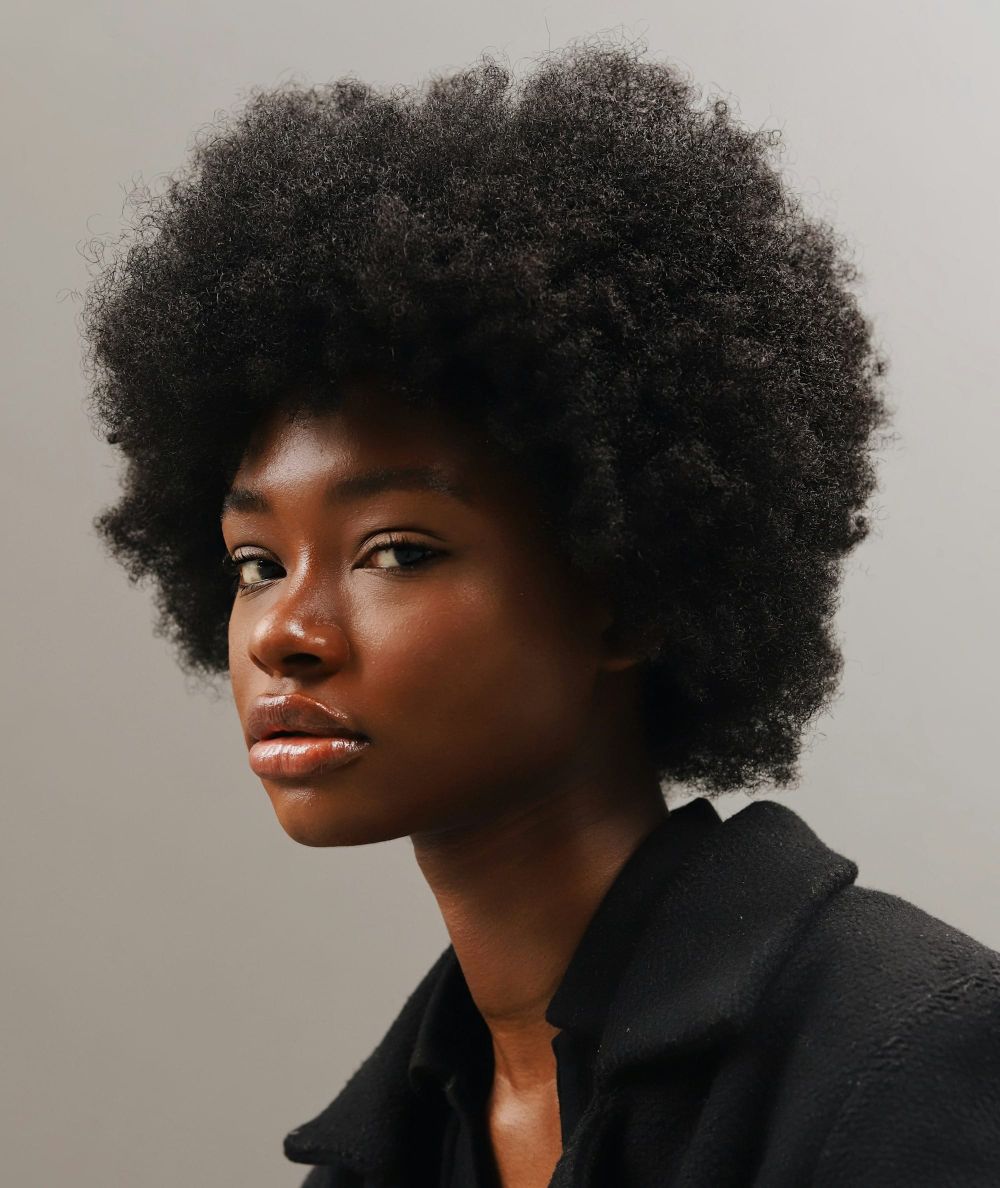
Inthe award-winning film Sinners, Delta Slim, a character played by Delroy Lindo, said, "white folks like the blues, they just don't like the people who make it." This quote illustrates how racism detaches Black people from what they create, as some profess love for the art but not the artists themselves. This dynamic also applies to other cultural contributions. For example, while the Afro is a hairstyle popularized by Black people, some prefer to use another name, one that removes the link from the chain. In a Vogue article, Hannah Coates described a "Cloud Bob" as the "latest iteration" of a style, a "short-to-mid-length cut defined by its ethereal sensibility." Tom Smith, a hairstylist, noted it was a "rounded haircut with soft, airy silhouette," distinguishing it from the "sharp, architectural bob of seasons past," because this version is "light, weightless, and characterized by its effortless lift and movement." This terminology provoked backlash from the black community, as many recognized the style as an Afro. Through this lens, detaching the hairstyle from the people who typically wear it is a classic case of cultural erasure.
The first documented use of "Afro" was in 1938, when editors of the Oakland Tribune used it as a prefix to describe African Americans. But it now refers to the "fully bushy hairstyle worn by some people of African ancestry." There's nothing new about Black people wearing rounded, light, airy, ethereal hairstyles. Historians estimate that Afro picks have been around for 6,000 years, with the oldest examples discovered in ancient Sudan and Egypt (Kemet and Kush) crafted from "bone and ivory." Later, carpenters created hair picks with wood, carved with intricate designs, often given as gifts or heirlooms. In America, the hair pick became a symbol of black cultural pride and solidarity during the Black Power movement of the 1960s and 70s, when many Black people wore afros, locs, twists, and other natural hairstyles, rejecting white-centered beauty standards that pressured them to straighten their hair. Samuel H. Bundles and Henry M. Childrey, two African Americans, became the first to submit patented comb designs for a "rake comb," according to the Pick Progress Project.
“I feel that the kinks, curls, or tight coils in Afro hair is beautiful and unique. No other race on this planet has hair like ours — that makes me proud.”
— Monica Millner, Natural & Free: Journey to Natural Beauty
While race is a social construct, those of African descent often share phenotypical characteristics such as dark brown skin, wide noses, and thick, tightly coiled, curly hair. The unique texture of Black people's hair is what makes it perfect for shaping a rounded Afro. According to researcher Cait Caffrey, "the evolution of afro-textured hair is believed to be an adaptation to protect early human ancestors from intense ultraviolet (UV) radiation, and it may have originally been the first hair type among modern humans." In addition to Black people, some other groups have similar, tightly coiled hair, such as Indigenous people of Australia, the Semang people of Southeast Asia, to name a few. But in American society, an afro has become synonymous with Black people and their cultural pride. And while White people of European descent can certainly add volume to their hair, this rounded shape described in the Vogue article, with hair so light that it rises, is more likely to be found among Black people. Removing the term "Afro," which hints at its origins, creates distance between this beautiful hairstyle and Black people. When we consider a cloud, with its rounded, often uneven edges, it more accurately describes the hairstyle that Black people often wear. That's not to say others can't experiment and wear a looser bob; one that doesn't focus on sharp, asymmetrical lines. But it's problematic that Black people often face discrimination for wearing ethereal, free-flowing hairstyles, while some White women are praised as fashionable when they do the same.
Many Black people felt snubbed by the Vogue article, and considered the description of a “cloud bob” a form of cultural erasure. One Black woman commented that "We are the only people on the planet whose hair naturally grows up and out like a tree, when it's 4-C textured," arguing that their description overlooks the roots of the style. A Black man highlighted the irony of some using "cloud bob" as "a way to disassociate any reference to Black people, all while showcasing it on a Black woman," referring to a viral post of the actress Tracee Ellis Ross, wearing a big Afro. While Vogue highlighted White people who wear a similar style, it's clear that their hair texture doesn't hold volume in the same way as Black people's hair. Photos included in the article show whimsically distressed hairstyles, but none were rounded, or shaped like a cloud, atop their heads in the way that Afro-textured hair would. The term "cloud bob" may sound harmless and whimsical, but it’s problematic given the hair discrimination Black people often endure when they wear natural hairstyles. While many White people may love the blues, and apparently our afros too, this controversy exposed the hesitance some have to give Black people their flowers, and aknowledge the positive cultural contributions they’ve made.