
I remember where I was when Michael Jackson died. You remember where you were when Michael Jackson died.
Less clear to me is where I was when I first heard Michael’s voice. He was always in the air. A song walking around in my body. Showing up at cookouts and Christmas.
A primetime event. The Simpsons was on or the news would stop. Michael bought broadcasts. He Superbowled himself into ubiquity. He MTVed himself into history.
I knew he was fallible — he was human, of course — but, as a child, I couldn’t see his flaws. I just felt confused. He was secretive about his inner life. I wondered whether he was a boy under all the layers of his altered body. Under the special effects. He had to be, no?
I walked out of the Michael biopic admittedly a little stunned. I felt the gray sprigs in my hair as I saw my reflection in the escalator glass. I saw the Black women in front of me on the ride down, ornate twists braided into a top bun and also gray. I heard myself say, “This was for our generation,” as if the Jackson brand could belong to an age. He’s an orchestrated series of decisions, measures of familiarity, fine enough secrets.
In elementary school, I remember someone brought the LaToya Jackson Playboy spread. Latoya and Michael looked very much alike to me. Would her centerfold be like seeing him naked? Was that part of the reason she showed herself? To reveal more than her brother?
I remember the 9 p.m. Oprah Winfrey interview, where the box lights on Michael made his skin glow. He was like an alien. “Look pon him face,” roared out of my living room as we got a close-up view of how much procedures had changed our icon.
Michael denied things we’d already circulated as true. He wasn’t as sexual as the other stars were. He didn’t say so, anyway. He was neither man nor woman. He’d charted the course for a gender fluid presence that became common after his death.
“What a way ‘im look like girl!” from inside my house, again. I wanted to be skinny like Mike. He was so skinny he could break. He was skinny enough to fit the space between gender and race and sound and laughter. I started to wonder what Michael ate if he ate at all.
Then, the other interviews aired. Michael Jackson was speaking about friends, who were celebrities too at times. They were boys. Michael Jackson liked famous boys. We wanted to hear sentences from him about his devotion to the music. We wanted to hear proof he could love us the way it echoed in the notes.
But Michael Jackson liked famous boys. That sentence keeps ringing in my ears and my nose. And then the lyrics feel like they support my strange theory.
When they say why, why…tell ‘em that it’s human nature.
I’m so stunned by the Michael biopic that I come home craving more music to drown out the noise of the sentence I hate. I pull the sentence apart and rearrange it so that it feels better as the moonwalk video from MoTown’s 25th anniversary loads on my YouTube.
“He liked famous boys, Michael Jackson. He never had a childhood.”
I append the phrase. I want the sentence to soothe me, percolate tears like the other Michael traits. Michael had perfect pitch. Michael was the best dancer I’d ever seen. The women loved Michael. Michael made fans faint in Turkey and Brazil.
But I keep thinking about sadness and happiness in those boys. I know they liked him back. Famous boys liked Michael Jackson. They said he’d done nothing unsavory to him. Famous boys like Macaulay Culkin and Emmanuel Webster were forbidden to touch. We’d never sacrifice a famous boy’s childhood, right?
It’s like Michael was asking us about himself through these bizarre behaviors.
Then as I grew older, I noticed that Michael was not weird to us. The sentence I hate would ring out as the stories got stranger. Sleeping in the chamber. Living in a museum and becoming an artifact. It’s like Michael needed us to go away and we wouldn’t.
Around Black families, I became a dissenting voice. The chorus said that those regular boys were lying. They wanted money and they knew they could get it from our very own Grown-up Boy. He was too kind and they had their own designs.
“Then stop befriending them!” I’d say. But Michael Jackson liked famous boys. Wasn’t that his right, they shouted back. Who doesn’t want to love and protect children?
This passage from Dan Ozzi’s essay “BAD” tells me what I thought of Michael might’ve been true for regular little 1990s white boys too.
“I watch Michael’s Moonwalker even though I’m scared of the bad guy in it. I’m scared of his hair and scared of his tiny sunglasses and I’m scared of the way he’s trying to hurt the children in the movie. But then at the very end Michael rescues them by turning into a giant robot and blasting all the bad guys with his laser beams pew pew pew. He does this because Michael loves kids like me and he will keep us safe from the bad guys.
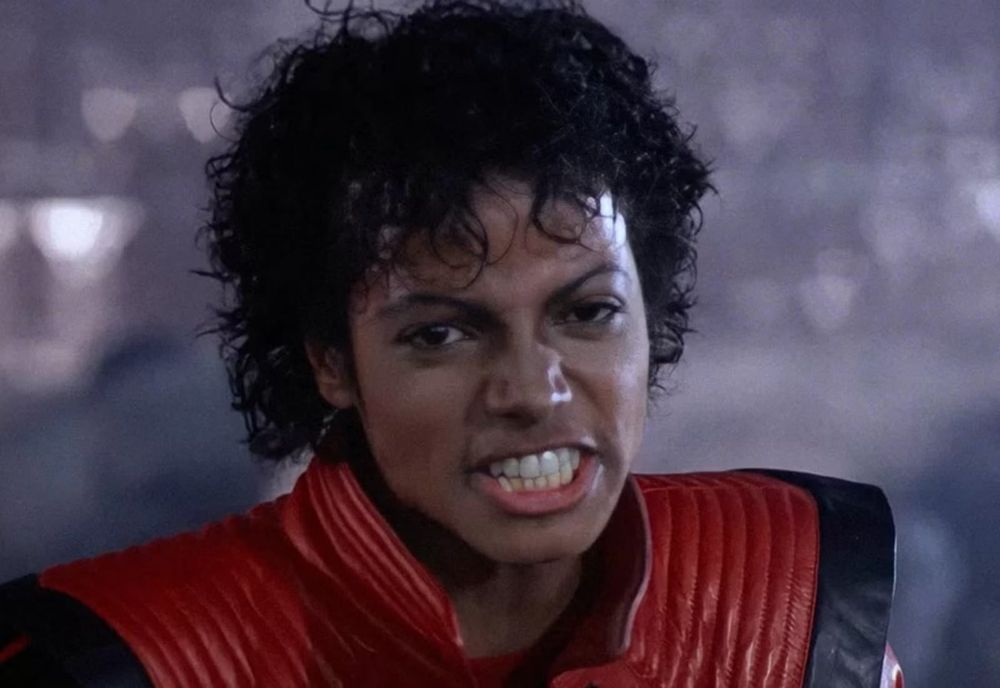
But I don’t like the video for “Thriller” though. I don’t like it because Michael turns into a gross and scary monster at the end. My mom tells me it’s just pretend and it’s not real but I still don’t like it. I know Michael and he would never turn into a monster like that. Michael would never hurt me.”
Myths don’t protect children. Myths protect childhood. They allow us to believe that the monsters only live in dreams and camp out under the bed. In reality, we send children into the monster’s beds and then pretend they don’t exist when the kids run out screaming.
We tell them there’s no such thing as monsters. They were a little weird, or they estranged themselves for unknown reasons. The accusers and their parents were trading innocence for recognition. We wanted Michael Jackson to like us so we offered children in our stead.
I’m still torn about why he was both weird and not weird to us. Why we refused to let him go despite all that we knew and felt bad about not knowing. My hope is that this biopic — made to answer and seal some reputational questions — goes on to raise more important ones.