
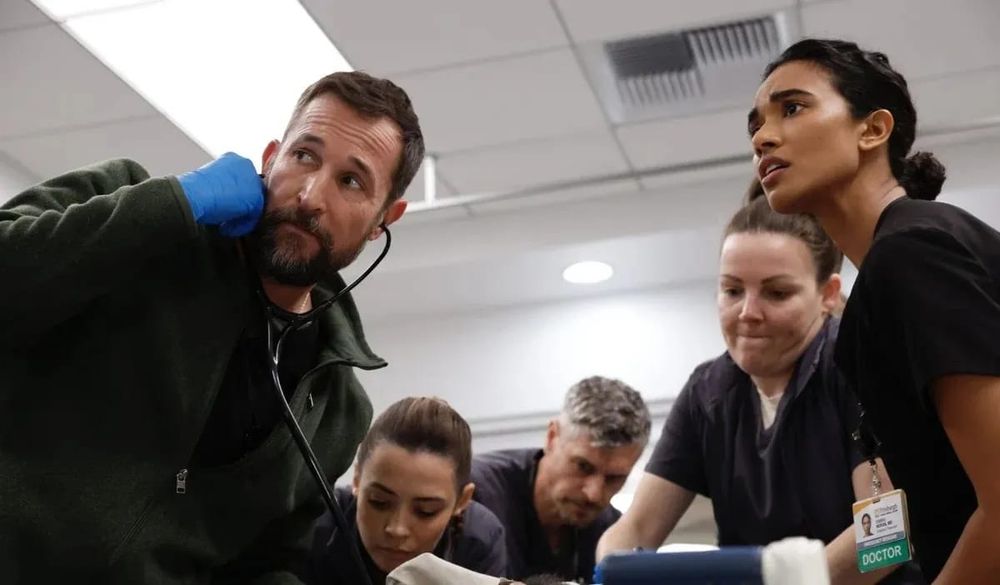
I’ve had bosses like Dr. Robby. I’m sure you have too.
Patronizing, empathetic sheep in scrubs hiding their narcissist wolf fangs.
The second season of The Pitt limped through the finish line like that same lame boss who made you donate to his wife’s melanoma GoFundMe as he ran the Brooklyn Half. “In honor of Tess.” The one who sent you the link to his TedX webinar where attendance was optional but suggested.
At every critical juncture, Dr. Robby failed himself, his staff, and his patients by centering his existential suffering. The Woe-Is-He storyline, irresponsibly teased and spray-painted over each episode this season, gave us each a silent endorsement of blunt patriarchy.
If the boss is unhappy but keeping everything afloat through self-imposed sacrifice and heartache, how bad could it be for you, the worker?
I’ll tell you how bad.
As Dr. Al-Hashimi pulls out of the lot in the final act, she breaks down into tears. She spent a day in her best version of survival mode under intense examination and facing antagonism from her attending, Dr. Robby, while offering consistent principled support as a counterweight to his scolds and tantrums. Yes, she’s incurred a risk, measuring the probability of emergent medical injury like a scientist of her own lifelong concern. Eventually, she folds to her crisis of conscience and to Robby’s pressure, pulling him into a private room to confide.
He wields this info with cruelty, stinging her with verbal lashes about her professional recklessness. This from the man poorly hiding a severe anxiety condition and the illegal protection of a senior staffer’s drug larceny. That’s how toxic bosses do, though. They gain a morsel of trust in order to choke you on later betrayal.
At my last job, I did well. I wasn’t a perfect employee, but I showed up for my team and met goals we set for ourselves and the company. For reasons unclear to me, I never gained my boss’s trust. In fact, she and another young white woman plotted to usurp my role, undermine and push back on winning strategies, and eventually push me out of the role so the young white woman could assume my position. The slow leeching took place over two years, and I kind of just ignored it because what use would it be bellyaching over it? Corporate media is a cutthroat game of cronyism and patronage, so uniquely competent black thought can only last for so long.
I can see a countdown clock overhead whenever I start one of these gigs, but that’s because I don’t value myself enough. I know there’s so little leverage to be had that I concede pride in my work, accept lower pay for the same labor, and plod along like the functionary I am until my number’s called.
Except this time, the bruise of a quiet layoff, internal chicanery, and the AI hype tsunami have soured me on this national project altogether. My toxic white workplace was the bullhorn for a tech giant now under query for lies about AI capabilities. Behind the guise of reducing headcount to increase value — will they or won’t they go public? — the outlet laid off a slew of employees after threatening AI doom for a year and a half if we didn’t use its tools to do the work of three and four humans.
Most of us played along, fiddling with the tools like zoo pandas with bamboo and staging presentations that politely detailed how ineffective many of them were. They could write some emails, help with basic brainstorming, or even configure code foundations for product improvements.
But on their own, they produced egregious errors. News articles cited the wrong dates, fabricated entire quotes in people, and generally took longer to do a worse job than a worker who could see, touch, and question the material. So, incompetent robots were sold to do a job, competent humans still do better. But your competence is not your security.
Your competence was never your security.
Your excellence is not your humanity.
Dr. Robby is a victim of his own patriarchal standards. Except he wants his co-workers to wear his white knight burden too. I see this in my male friends and in me.
The whole tough guy routine, the protector role no one assigned, the John Henry work ethic locks us in a prison of repression. All we’re left with is angry outbursts and shame spirals. Our overdue cries for help implode relationships. Bottlenecks become bottle rockets.
There are messy bedrooms with the blunt ashes next to crusty socks.
There are surly snipes at the unkempt girlfriend, too tired from work to assuage her always-angry man.
There are PS5 controllers and glowing blues from the 64-inch sleep demon staring back at insomniac pupils.
There are paltry paychecks, taxed to hell for Medicare that can’t get an appointment in the six-week window because the pallid bedraggled Dr. Robby in our life burnt out four months ago but won’t stop overbooking himself.
He has to win. He has to be perfect. He has to sacrifice your care like he sacrificed his own.
That’s the workplace monster who will consume raw the remaining flesh once your pound is tallied at the door. That’s the machine.
I’m tired of T.V. telling me to empathize with the master. I don’t even have the master’s tools in my house. I don’t know who I’m supposed to be when Master ain’t around, and as his anger cloud swishes through the room.
The Pitt was a great opportunity to show Americans how healthcare workers — and all of us — manage to care in a system that won’t ever care back. The script and characters are allegorical, written into tight parables and frozen archetypes. Ostensibly, it leans toward change and redemption.
But as American stories often reveal, there’s no redemptive arc for the least of us: the Black, the female, the poor, the addicted must receive our lessons in pain. The white, the male, the paternalistic, the autocratic bathe in the merciful glow of dusk as we absorb their dire, despicable blows.
Forgive me for not tuning in. I’ve seen that one before.