
Donald Trump is making me smarter, though arguably there is little value in learning how to defraud people if that isn’t an occupation one wishes to pursue. I understand the economy better because Trump broke it. I know more about world geography because Trump has taken us to war in various parts of the world. Lastly, though his popularity is continually dropping, there is that loyal base willing to follow him down every rabbithole. I’m not smart enough yet to have figured that out.
1. I know the price of gas
It’s embarrassing, but I didn’t pay attention to the price of gasoline. I could have guessed within a dollar, but my procedure was to wait until it got low, and then fill up the tank, paying little or no attention to the price per gallon. My car, an Audi Q-7, has a 22.5-gallon tank, which initially confused me because no matter how empty my car seems, I’ve never been able to put in more than 19 gallons. I now know that my Audi has a reserve tank holding up to 3 gallons, even when my dashboard says I’m out of gas.
The last five times I bought gas (all at the same station), I paid $4.19, $4.29, $4.19, $4.49. and $ 4.79. Because I know how much gas costs, I’m better informed about whether I want to make that extra trip to the store or go for a drive. I also have fewer concerns about running out of gas because I know I have at least a couple more gallons.
2. I know what happens if I don’t use the proper octane in your car
Related to #1, some people might be considering using regular unleaded gas, which may be as much as 80 cents a gallon lower than premium. I drive a car that requires higher octane, and I did wonder how it would be affected by using a lower grade. A little research on my part reveals just how bad an idea that would be, so I’ll keep sucking it up and paying the higher price.
 William Spivey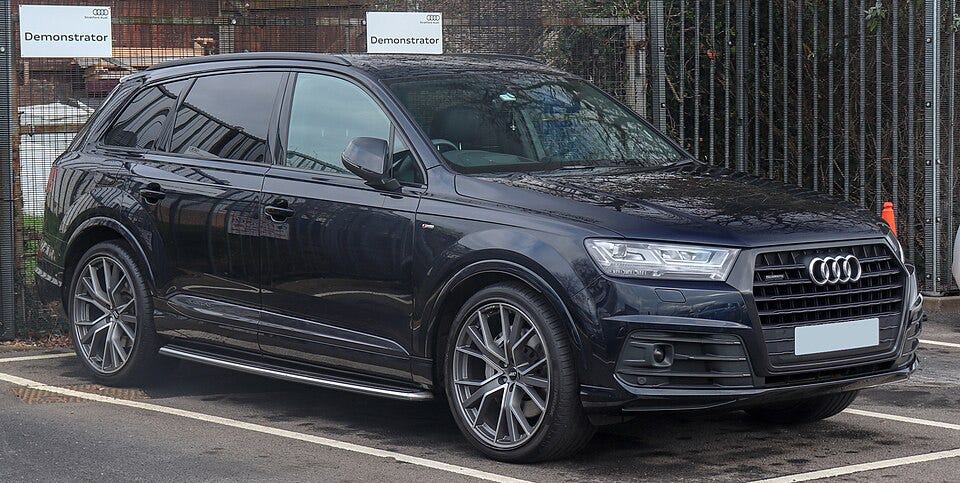
3. I could draw a map of the Strait of Hormuz
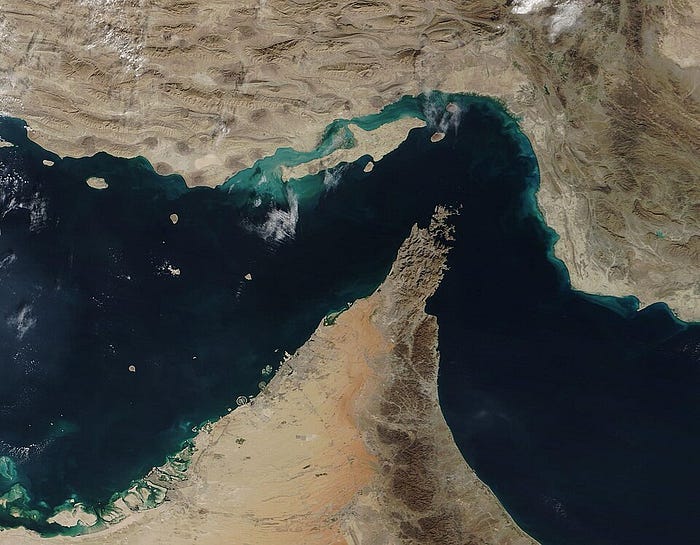
Before Donald’s “little excursion” into Iran, I did know there existed a narrow strait through which a high percentage of the world’s oil passes. I now know that the Strait of Hormuz is about 29 nautical miles (54 km) wide at its narrowest point and serves as the only sea passage connecting the Persian Gulf to the Gulf of Oman and the Arabian Sea.
Because the strait is so narrow and so essential, Iran, which borders the entire northern side, can exert military pressure. No alternative sea route exists for Gulf exporters like Kuwait, Qatar, Bahrain, and Iraq. Even Saudi Arabia and the UAE, which have limited bypass pipelines, still rely heavily on the strait.
4. How many modeling agents were involved in the sex trafficking of young girls
Perhaps as big an enterprise as the up to a thousand girls who were part of Jeffrey Epstein and Ghislaine Maxwell’s trafficking ring is the number of girls brought to New York hoping to become high fashion models. According to Epstein, Donald Trump was his best friend for over ten years, but Trump’s best friend before that was John Casablancas, who also trafficked young girls.
Trump denies that he was introduced to his 3rd wife, Melania, through Epstein (his first two wives, Ivana and Marla, were also models with no known ties to Epstein’s network). The official story is that Melaina Knauss was introduced to Trump by Paolo Zampolli, founder of ID Models, who has recently been accused by a former model/girlfriend with whom he has a child of having extensive ties to Epstein and pursuing her when she was an underage teen.
5. There really is a sucker born every minute
You’d think with his record, nobody would be interested in investing with Donald Trump. The pattern was usually the same. Donald Trump earned fees, salaries, or licensing revenue, the business lost money, and outside investors, bondholders, or shareholders absorbed the losses.
Here are some publicly verified examples.
1. Trump Taj Mahal (1990 bankruptcy)
Who lost: Bondholders, lenders
How Trump made money: Took $3 million in salary, $1 million in bonuses, and retained partial ownership after restructuring
tl;dr: Bondholders lost hundreds of millions; Trump personally avoided the worst losses.
2. Trump Plaza Hotel (1992 bankruptcy)
Who lost: Investors and banks
How Trump made money: Received management fees, retained a role and salary, and creditors took control while Trump kept his name on the property
tl;dr: Investors took the financial hit; Trump kept income and branding value.
3. Trump Hotels & Casino Resorts (public company, 1995–2004)
Who lost: Public shareholders.
How Trump made money: Earned over $44 million in salary, bonuses, and compensation, the company lost over $1 billion, and stock fell from $35 to 17 cents
tl;dr: Shareholders were nearly wiped out; Trump profited personally.
4. Trump University (2005–2010)
Who lost: Students who paid tuition.
How Trump made money: Received royalties and licensing fees, the business model was structured so that Trump earned money regardless of student outcomes
tl;dr: The venture ended in litigation, and the business paid a $25 million settlement, not the students who received refunds.
5. Trump Mortgage (2006–2007)
Who lost: Employees, partners, and investors.
How Trump made money: Earned licensing fees for the use of his name but the company collapsed within 18 months.
tl;dr: Trump’s personal risk was minimal and others absorbed the losses.
6. Trump Steaks, Trump Vodka, Trump Magazine, GoTrump.com (mid‑2000s)
These were smaller ventures, but the pattern was similar:
Who lost: Business partners and investors.
How Trump made money: Licensing fees, guaranteed payments, and no personal capital at risk.
tl;dr: Most of these ventures shut down within a few years.
7. Trump-branded real estate projects (2000s–2010s)
Examples include: Trump Ocean Resort Baja Mexico, Trump International Hotel & Tower Tampa, Trump SoHo (now The Dominick)
Who lost: Condo buyers, development partners, and lenders.
How Trump made money: Licensing fees, management fees, no personal investment in construction
tl;dr: Several projects collapsed or were never completed; buyers lost deposits.
Given Trump’s track record, who would be silly enough to invest in a crypto firm, meme coins, or Non-Fungible Tokens (NFTs), an area in which Trump has no background? Trump‑branded crypto tokens have repeatedly crashed after initial spikes. When the Trump Digital Trading Cards NFT collections launched the first drop sold out quickly. Prices spiked on secondary markets and he earned millions in licensing revenue.
But prices later fell dramatically. Many buyers who purchased at peak valuations saw substantial losses and trading volume collapsed after the initial hype cycle.
The most significant case involves World Liberty Financial. This crypto venture received a $500 million investment from a member of the UAE royal family, as reported by The Wall Street Journal.
Key points documented in reporting were as follows:
- The company’s token value has been volatile
- Retail investors who bought in after the initial surge have seen steep losses
- Trump’s stake is held in a family trust
- Trump receives licensing and branding value regardless of token performance
One might extrapolate the financial losses associated with investing in Trump and compare that to voting for Trump because he would avoid foreign wars or improve the economy. How did that work out?