
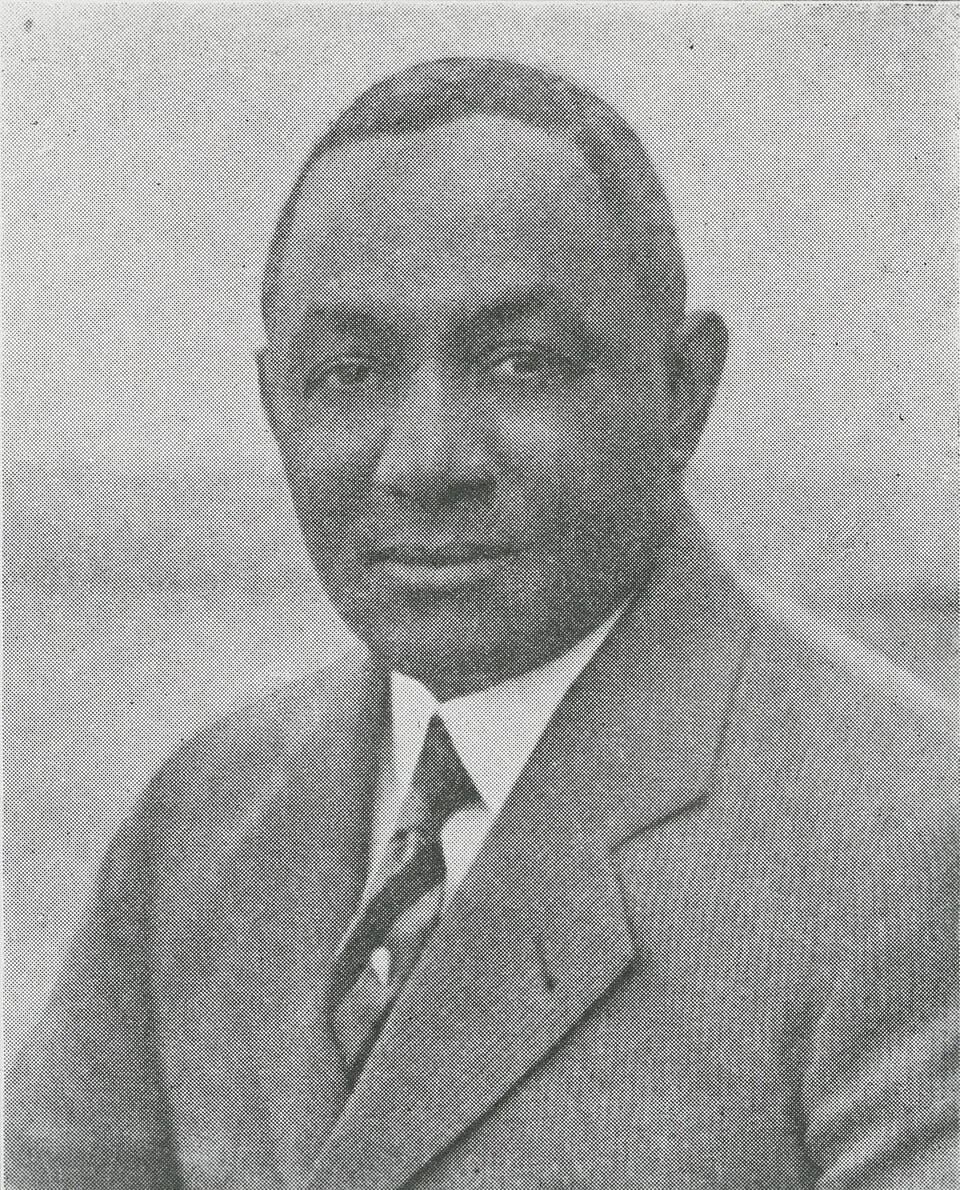
In the early mornings of his childhood on St. Croix, long before anyone in Harlem would call him a king, Casper Alexander Holstein walked barefoot across the warm, red‑brown soil of the island, carrying books that were already beginning to fray at the edges. His mother, a domestic worker, insisted he keep them wrapped in cloth to protect them from the dust. His father, a carpenter, reminded him that education was the only inheritance they could guarantee him.
St. Croix at the turn of the century was a place where Black ambition collided daily with colonial limits. The island had passed from Danish to American hands, but the hierarchy remained unchanged: white planters at the top, Black laborers at the bottom, and a small, striving class of mixed‑race families in between. Holstein belonged to that middle tier — not wealthy, not powerful, but determined to rise.
When he boarded a ship for New York as a teenager, he carried little more than a few coins, a change of clothes, and the quiet conviction that he could build a life larger than the one the island allowed. He arrived in the city with the same humility that would follow him for decades: a young man with no connections, no formal credentials, and no illusions about how the world worked.
He took whatever work he could find — janitor, porter, doorman. He swept floors in buildings where no one bothered to learn his name. He opened doors for men who never looked him in the eye. But he watched them. He watched the way they carried themselves, the way they spoke, the way they handled money. He watched the rhythms of the city, the way fortunes rose and fell with the tides of Wall Street. And then, almost by accident, he found himself inside the machinery of American finance.
Holstein became a messenger on Wall Street, running slips between brokerage houses, carrying the numbers that dictated the fate of men far richer than he would ever pretend to be. Most messengers saw only paper. Holstein saw patterns.
He memorized the daily clearinghouse figures — the published totals of transactions that moved markets. He studied the way numbers repeated, the way they fluctuated, and the way they could be predicted. He understood probability long before he ever used the word.
In the evenings, he returned to Harlem, where the streets pulsed with music, ambition, and the quiet desperation of a community shut out of the formal economy. Black workers earned less, saved less, and were denied access to the banks that held the wealth they helped create. But they had something else: the numbers game.
Policy, as it was called then, was a small‑stakes lottery played in barbershops, beauty parlors, and corner stores. It was a poor man’s stock market — a chance to turn a nickel into a dollar, a dollar into ten. The game had existed for decades, run by a mix of Black, Italian, and Jewish operators. But it was chaotic, inconsistent, and easy to rig. The winning number was often whatever the operator said it was. Holstein saw an opportunity — not to invent the game, but to perfect it.
Holstein’s genius was simple and devastatingly effective: he tied the winning number to the daily clearinghouse figure published in the newspapers. It was a number no one could manipulate, no matter how powerful they were. It was public, verifiable, and trusted.
With that single innovation, Holstein transformed the numbers game from a street‑corner gamble into a system. He brought transparency to an underground economy. He made the game fair. And Harlem responded.
By the early 1920s, Holstein was running one of the largest operations in the city. His runners collected bets from thousands of players. His writers recorded the wagers in careful script. His profits soared — estimates suggest he earned more than $2 million during Prohibition, an extraordinary sum for a Black man in Jim Crow America.
But Holstein did not behave like the gangsters who would later dominate the trade. He did not flaunt his wealth. He did not cultivate fear. He did not build an empire on violence. He built it on trust — the trust of a community that saw him not as a criminal, but as a benefactor. And he used his wealth accordingly.
Harlem in the 1920s was a crucible of Black creativity. Writers, poets, musicians, and artists converged on the neighborhood, drawn by the promise of a cultural awakening. But brilliance does not pay rent. Genius does not buy groceries. And publishers, galleries, and patrons were rarely eager to support Black artists. Holstein stepped into the gap.
He funded literary contests for Opportunity magazine, helping launch the careers of writers who would define the Harlem Renaissance. He donated to Black colleges, ensuring that students who looked like him could pursue education without the burden of debt. He supported Marcus Garvey’s movement, believing that Black people deserved not only civil rights but global dignity.
He sent money to the Virgin Islands after hurricanes devastated the region, remembering the island that had shaped him. He helped build schools in Liberia, seeing in that distant nation a reflection of Black America's aspirations.
Holstein’s philanthropy was not performative. It was not strategic. It was not a bid for legitimacy. It was, in the simplest terms, an act of responsibility — a belief that wealth meant nothing if it did not uplift the people who shared your struggle.
In 1928, Holstein’s quiet power made him a target. He was kidnapped by a group of white men who demanded a ransom of $50,000 — a staggering sum. The city buzzed with rumors. Newspapers speculated. Harlem held its breath.
Holstein was released after three days. He insisted no ransom had been paid. But the incident marked a turning point. His influence began to wane as white organized‑crime syndicates, led by men like Dutch Schultz, moved aggressively to take over the numbers racket. The violence escalated. The game that Holstein had professionalized became a battleground.
Holstein stepped back. He had never been a man of violence, and he refused to become one. He returned to philanthropy, to community work, to the quiet dignity that had defined his life.
Casper Holstein died in 1944, largely forgotten by the city he had once shaped. By then, the numbers game had become synonymous with gangsters, not philanthropists. The Harlem Renaissance had faded, its artists scattered by the Great Depression. The world had moved on. But Holstein’s legacy endures in ways that are easy to miss unless you know where to look.
It lives in the careers of the writers he funded, whose work still anchors Black literature. It lives in the institutions he supported, which educated generations of Black students. It lives in the idea — radical then, radical now, that Black economic power could be used to build Black cultural power.
1. Writers and Poets Supported by Holstein
Langston Hughes
Holstein helped fund literary contests and publications that directly supported Hughes’s early career. Hughes benefited from the Holstein-financed Opportunity magazine awards.
Countee Cullen
Cullen won multiple Opportunity prizes funded by Holstein, which elevated his national profile.
Zora Neale Hurston
Hurston also benefited from the literary contests Holstein subsidized, which provided both money and visibility.
Claude McKay
Holstein contributed to publications that printed McKay’s work and supported the broader radical Black literary scene in which McKay participated.
Jean Toomer
While not directly on Holstein’s payroll, Toomer’s work circulated in the same literary ecosystem Holstein funded.
2. Artists and Cultural Institutions
The Harlem Renaissance Literary Awards (Opportunity Magazine)
Holstein was the primary funder of the Opportunity magazine literary contests — the single most important talent‑discovery mechanism of the Harlem Renaissance. These contests launched or boosted the careers of:
- Hughes
- Cullen
- Hurston
- Arna Bontemps
- Dorothy West
- Helene Johnson
Holstein’s money made these contests possible.
The Urban League’s Cultural Programs
Holstein donated to the National Urban League, which sponsored salons, readings, and exhibitions central to the Renaissance.
The Negro World (Garvey’s UNIA newspaper)
Holstein supported Garvey’s movement financially, which indirectly supported the writers and editors who produced Negro World, one of the era’s most widely read Black newspapers.
3. Black Colleges and Educational Institutions
Holstein donated to:
- Howard University
- Hampton Institute
- Fisk University
- Tuskegee Institute
These institutions educated many Harlem Renaissance figures and sustained the intellectual infrastructure of the movement.
4. International Black Institutions
Holstein’s philanthropy extended beyond Harlem:
- Schools in Liberia (he helped fund construction)
- Hurricane relief in the Virgin Islands
- Scholarships for Caribbean students in New York
This mattered because many Harlem Renaissance figures — McKay, Eric Walrond, Arthur Schomburg — were Caribbean‑born.
Holstein understood something that America still struggles to accept: that marginalized communities often build their own economies when the formal system shuts them out. And sometimes, those underground economies fund revolutions of art, identity, and possibility.
Holstein’s story is a reminder that history is not only shaped by the men who hold official power, but by the men who create opportunity where none exists. It is shaped by the quiet kings — the ones who build, who give, who uplift, who innovate, who refuse to accept the limits imposed on them.
In the end, Casper Holstein’s life is not a story about gambling. It is a story about possibility. About what happens when a child from St. Croix, armed with nothing but intelligence and determination, decides that the world will not define him.