
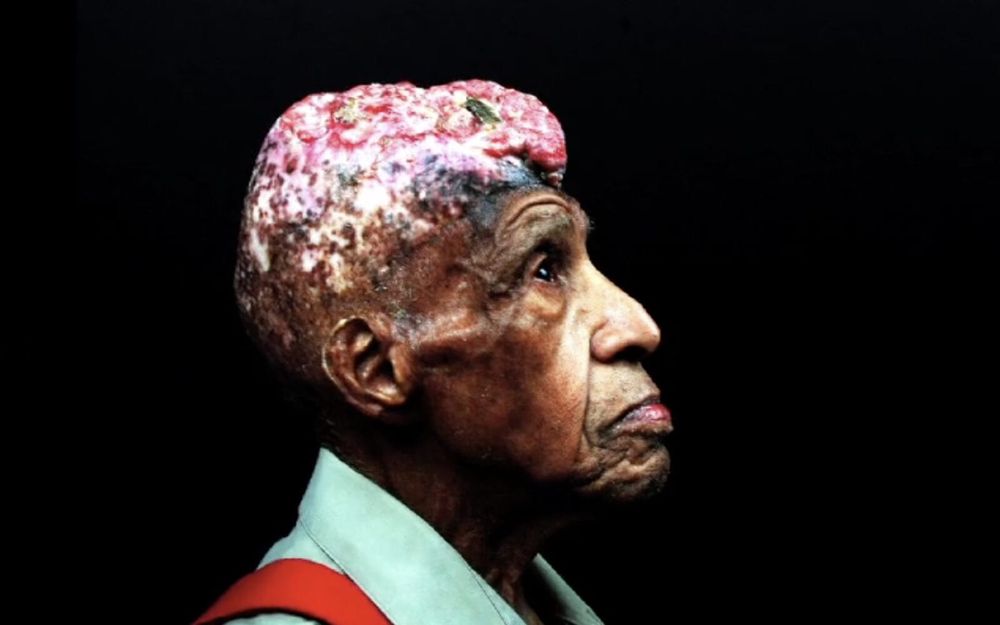
In the spring of 1928, in the tiny Black farming community of Lyles Station, Indiana, a five‑year‑old boy named Vertus Hardiman walked into a local hospital with his mother. He was small, bright‑eyed, and shy, the kind of child who clung to his mother’s dress hem when strangers spoke to him. He had a mild case of ringworm — a common childhood fungal infection that, in most cases, cleared with ointment and time.
Lyles Station was a Black community in Jim Crow America, and the hospital was run by white physicians who saw Black children not as patients but as research material. What happened to Vertus that day would leave him with a wound so severe, so grotesque, and so painful that he would hide it under hats and wigs for the next eighty years. What happened to Hardiman was part of a national program affecting at least 20,000 to 30,000 children.
This is the story of the boy who survived one of the most shocking radiation experiments in American history — and carried the evidence of it on his skull until the day he died.
A Childhood in Lyles Station
To understand Vertus’s life, you have to understand Lyles Station. Founded by free Black families in the 1840s, it was one of the oldest Black settlements in the Midwest — a place where Black farmers owned their land, built their own school, and raised their children with a sense of dignity that the outside world refused to grant them.
Vertus was born in 1922, the youngest of ten children. His father died when he was young, leaving his mother, Daisy Hardiman, to raise the family alone. She worked long hours in the fields and in white households, but she kept her children fed, clothed, and in school. Vertus was quiet, gentle, and unusually bright. Teachers remembered him as a child who loved reading and numbers, a boy who seemed older than his years.
But in 1928, when a county nurse visited the school and declared that several children had ringworm, the Hardiman family was told that Vertus needed “treatment.” The nurse assured parents that the procedure was routine, modern, and safe. It was none of those things.
The Experiment
The children were taken to Revelations Hospital in nearby Lyles Station. There, without informed consent, they were subjected to massive doses of radiation — far beyond what was medically appropriate, even by the standards of the 1920s.
The “treatment” was part of a federally funded program that used radiation to treat ringworm, disproportionately targeting Black children, poor children, and children in orphanages. The doctors told parents it was harmless. They did not mention that the doses were experimental and untested.
Vertus, at five years old, was placed under a machine that blasted his skull with radiation strong enough to burn through skin and bone. The procedure lasted only minutes, but the damage was permanent.
Within days, his hair fell out. His scalp blistered. The skin on his head began to peel away. His mother rushed him back to the hospital, but the doctors dismissed her concerns. “It will heal,” they said. It never did.
The radiation destroyed the growth plates in Vertus’s skull. As he grew, the bone beneath the burned area did not. The result was a gaping, open wound — a crater in his head that exposed raw tissue and never fully healed.
He learned to hide it. First with caps. Then with hats. As an adult, he wore wigs carefully styled to conceal the injury. He never complained. He never sued. He never spoke publicly about what had been done to him.
The pain was constant. The wound required daily cleaning. Infection was a lifelong threat. But Vertus refused to let the injury define him. He grew into a man of extraordinary resilience, humility, and grace.
A Life of Quiet Brilliance
As a young adult, Vertus moved to California, where he found work at the Los Angeles County General Hospital, ironically working in the radiology department, surrounded by the very technology that had disfigured him. But he never expressed bitterness. He was known as a gentle, soft‑spoken man who treated everyone with kindness.
He was also exceptionally intelligent. He mastered complex technical tasks, earned the respect of doctors and nurses, and became a beloved figure in the hospital community. He volunteered at his church, sang in the choir, and helped elderly neighbors with errands.
For decades, he kept his secret. He dated, socialized, and lived a full life, always careful to keep his head covered. Even close friends had no idea what lay beneath the wig. Vertus had grown up in a world where Black suffering was ignored, dismissed, or punished. He learned early that silence was safer than truth.
Vertus was in his seventies when he finally revealed his secret. He had befriended a fellow church member, Wilbert Smith, who noticed that Vertus never removed his hat or wig, even in private. One day, after years of friendship, Vertus asked Smith to come to his home. He said he wanted to show him something. In the quiet of his living room, Vertus removed his wig.
Smith was stunned. Beneath the wig was a wound the size of a baseball — a deep, open cavity in the skull, covered only by a thin layer of fragile tissue. It was one of the most severe radiation injuries ever documented in a living person.
Vertus explained what had happened in 1928. He spoke calmly, without anger. He said he had forgiven the doctors long ago. He said he had lived a good life. He said he didn’t want pity.
Smith, overwhelmed, insisted that Vertus’s story needed to be told. Vertus agreed — not for himself, but for the other children of Lyles Station who had suffered similar injuries, many of whom had died young or lived with lifelong disabilities.
In 2011, Vertus’s story became the subject of the documentary Hole in the Head: A Life Revealed. The film chronicled the Lyles Station experiment, the government’s role in funding radiation treatments on Black children, and the decades of silence that followed.
Vertus participated in the film with dignity and clarity. He spoke not as a victim but as a witness — a man who had carried the truth for eighty years and was finally ready to share it.
The documentary shocked audiences. Many Americans had never heard of the ringworm radiation experiments. They knew about Tuskegee. They knew about Henrietta Lacks. But they did not know that Black children in the Midwest had been subjected to high‑dose radiation without consent. Vertus became the face of that forgotten history.
A Legacy of Quiet Courage
Hardiman died in 2007 at the age of 85. He lived longer than any of the other children who underwent the 1928 procedure. He lived longer than the doctors who harmed him. He lived long enough to see his story told.
His life is a testament to the resilience of Black Americans who endured medical racism not as an abstraction but as a daily reality. His story forces us to confront the uncomfortable truth that some of the most egregious abuses in American medical history were not isolated incidents but part of a broader pattern of exploitation.
Vertus never sought revenge. He never demanded compensation. He never raised his voice in anger. Instead, he lived a life defined by kindness, humility, and quiet strength.
But his story is not quiet. It echoes across generations. It reminds us that the history of medical experimentation on Black bodies is not ancient history. It is a living memory. It is within the lifetime of people still alive today.
In an era when trust in medical institutions remains fragile for many Black Americans, Vertus’s story explains why. It is not paranoia. It is not a myth. It is history; documented, filmed, and carried in the body of a man who lived among us until the twenty‑first century.
Hardiman was not a symbol. He was a child who loved school, a man who loved music, a friend who loved quietly and deeply. He deserved better than what was done to him. But he turned his suffering into testimony, and his testimony into truth.
His life teaches us that the past is not past. It lives in the bodies of survivors. It lives in the memories of communities. And it lives in the responsibility we carry to tell these stories with accuracy, dignity, and moral clarity. Vertus Hardiman carried a wound for eighty years. Now the rest of us must carry the story.
The experiment that harmed Vertus Hardiman was not isolated. It was part of a nationwide, decades‑long program that exposed tens of thousands of children — disproportionately Black — to dangerously high levels of radiation for a minor, treatable condition. The consequences included lifelong disfigurement, cancer, and early death. Vertus’s injury was one of the most extreme, but the system that produced it was widespread, institutional, and deeply rooted in medical racism.
The U.S. government apologized in 1995 for many unethical radiation experiments. The government has never issued a specific apology for the ringworm‑radiation program or the Lyles Station children. Hardiman’s case remains unacknowledged, except through journalism, scholarship, and the aforementioned documentary.