
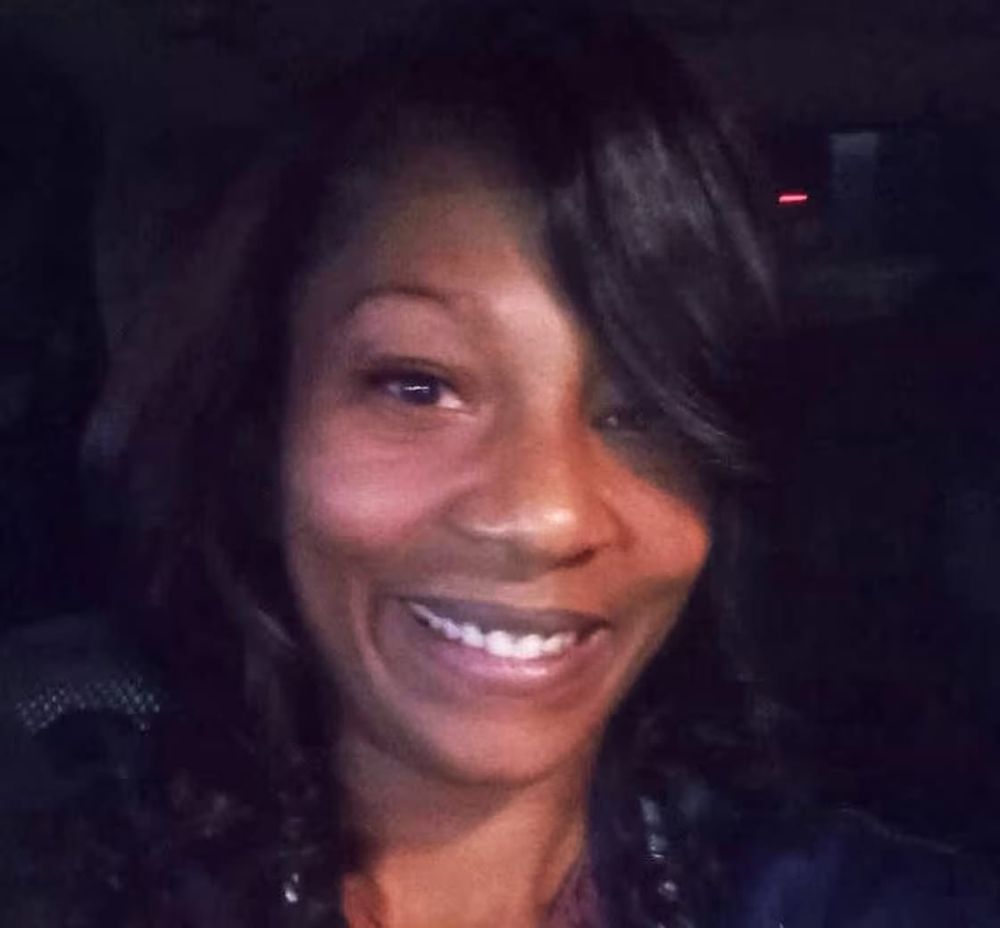
Springfield, Illinois. July 6, 2024. A woman calls 911 about a possible prowler outside her house. The #textmewhenyougethome hashtag didn’t come from nowhere. It came from women being attacked, killed, hunted. That’s the weight behind every emergency call.
Two Sangamon County deputies come. Sonya Massey opens her door and tells them, “Please, don’t hurt me.” They step inside. Deputy Sean Grayson spots a pan of hot water on the stove and orders it removed. She moves it. They joke about it.
Then she says, “I rebuke you in the name of Jesus.”
Grayson yells at her to drop the pot and threatens to shoot her. What came next is not in dispute. Massey apologizes. She puts the pot down. She goes down behind the counter. Grayson’s defense attorney, Dan Fultz, conceded it in his own closing argument: “It is true that she put the pot down.”
What happened in the two seconds after that is the entire fight. Fultz told the jury she picked the pot back up, stood, and threw it in Grayson’s direction. Dawson Farley, the other deputy standing a few feet away, testified he saw and heard nothing that made him consider Massey a threat. Farley told the court that what he feared that night was Grayson.
Grayson fired three times. One round went in just under her left eye. He did not activate his body camera until after he pulled the trigger. It caught the shooting anyway, silent, off a two-minute buffer that had already been rolling. His threat to shoot her never made it into his incident report. Now the verdict.
A jury found Grayson not guilty on all three counts of first-degree murder and convicted him of second-degree murder instead. In Illinois, that finding means one thing: he honestly believed he was defending himself, and the belief was unreasonable. Read that again. Twelve people watched a man threaten to shoot a woman in the face, and then shoot her in the face, and they came back saying his fear was sincere.
Her cousin Sontae Massey said it outside the courthouse. “It’s not meant for us.”
Go back to the closing arguments. Fultz told the jury that “the outcome of this case was driven by Sonya Massey.” Grayson had testified that “the only thing I had to stop the threat was my duty weapon.”
So the dead woman drove the outcome of the case about her own killing. She called for help, a deputy came to her kitchen and killed her, and a lawyer in a suit told twelve strangers she was the reason. That is racial gaslighting entered into the record and paid for by the hour. Half of it worked.
Grayson got 20 years in January, the maximum for second-degree murder.
Grayson isn’t an outlier, and departments keep proving it. In Antioch, California, an FBI probe named fourteen officers trading texts and memes for years: one wrote he’d “bury that [slur] in my fields.” Another joked they “kill more Mexicans than anything else.” A meme showed a nude Black man on George Floyd’s neck. A public defender asked the DA to review every conviction those officers ever touched, citing what investigators called an “entrenched culture of hatred, racism, homophobia, misogyny, and violence.” In Rankin County, Mississippi, a group of deputies ran a private chat for years: jokes about tasing men in the groin, photos of decomposing bodies captioned “that’s hot,” a joke about scoring points for shootings that got the answer “depends if they die or not.” In January 2023, deputies from that chat beat and tased two Black men and shot one of them through the mouth, calling it justice. Six went to federal prison. The supervisor got seventeen and a half years. At the last public accounting, at least nine deputies who worked there at the time were reportedly still on the job.
This is not a few bad actors. It is a culture with a badge and a union behind it, and the mechanism that lets it survive contact with the public is qualified immunity: the doctrine that shields an officer from a civil lawsuit unless a court has already ruled the same conduct illegal in the same way, in a prior case. Grayson can walk into a woman’s kitchen, threaten to shoot her in the face, and shoot her in the face, and his family still only owes hers a criminal sentence, because a civil suit against him personally would have to clear a bar the Supreme Court invented. Congress never wrote it.
I want it gone. Not narrowed, not studied, gone. The Justice Department has a role to play here every time one of its own lawyers stands in a courtroom on a civil rights case: stop defending the doctrine, argue against it, keep opening the pattern-or-practice investigations that led to a federal agreement with the Sangamon County Sheriff’s Office in January 2025, after DOJ examined how a disabled Black woman ended up dead in her own kitchen. No admission of wrongdoing came with that deal, but real reforms did. Four months later, the same department stood up Assistant Attorney General Harmeet Dhillon, who called consent decrees an “anti-police agenda” and shut down pattern-or-practice investigations into eight departments, Minneapolis included, four days before the anniversary of George Floyd’s death. That is the choice this DOJ made. A different one could unmake it. I am done waiting on whichever administration happens to be in the building.
Which is why it has to go through Congress too. The Ending Qualified Immunity Act and the Qualified Immunity Abolition Act of 2026 both sit in this Congress right now. They stall in committee every session because police unions spend real money keeping them there, and because “tough on crime” still polls better than “the officer who shot an unarmed woman still can’t be sued.” Fine. Make every member vote on it by name, and let their district watch the roll call.
Racial gaslighting happens when Black people name racial harm and are told they misunderstood, overreacted, imagined it, made it about race, or are being too sensitive.
That denial does not just dismiss the moment. It makes the person harmed defend their own reality. The conversation stops being about what happened and turns into an argument over whether racism happened at all. The harm becomes a debate. The person harmed has to explain it, prove it, and live through it again while everyone else in the room shops for a more comfortable explanation.
And that is the point.
Racial gaslighting protects the person who caused the harm. It protects the comfort of everyone watching. Fultz was not really talking to Sonya Massey’s family. He was talking to twelve people who needed a version of that kitchen they could live with, and he handed them one.
It teaches Black people to question what they know they experienced.
It can sound calm. It can sound reasonable. It can sound like “Are you sure?” Used to minimize harm, deny racism, or make someone prove their pain, those questions stop being questions. They become part of the harm.
Anti-racism requires believing people when they name racism. You will not want to. Your first instinct will be to go looking for the other explanation, the one where nobody meant anything, the one that lets you keep the man you like. Believe her anyway.
Farley stood a few feet from Grayson and told the court he saw no threat in that kitchen. One man in the room believed her.
Sonya Massey was 36 years old. She called for help. Everything after that was other people deciding what she really meant.