
Winners
1. James Talarico — Texas

James Talarico’s victory in Texas may be the most consequential individual Senate result of the entire election. By defeating Republican Ken Paxton, Talarico accomplished something Democrats had spent decades trying to do: win a Texas statewide election. The last Democrat elected to the U.S. Senate from Texas was Lloyd Bentsen in 1988, and the last Democrat to win a statewide election in Texas was in 1994. Talarico’s victory was particularly significant because he did not merely defeat an ordinary Republican candidate. He defeated Paxton, a prominent conservative figure backed by Donald Trump and substantial financial support from Republican donors and billionaire interests. Texas has been central to Republican presidential politics, congressional redistricting, and the Party’s strategy for maintaining national power. Losing a Senate seat there is therefore more than losing one vote in Congress. It raises questions about whether the Republican coalition that has dominated Texas politics for decades is beginning to fracture. Talarico’s election also gives Democrats an opportunity to compete more seriously in a state they had increasingly treated as politically out of reach. His victory will be remembered not simply because he won a Senate seat, but because he demonstrated that even Texas was not beyond the reach of a Democratic candidate.
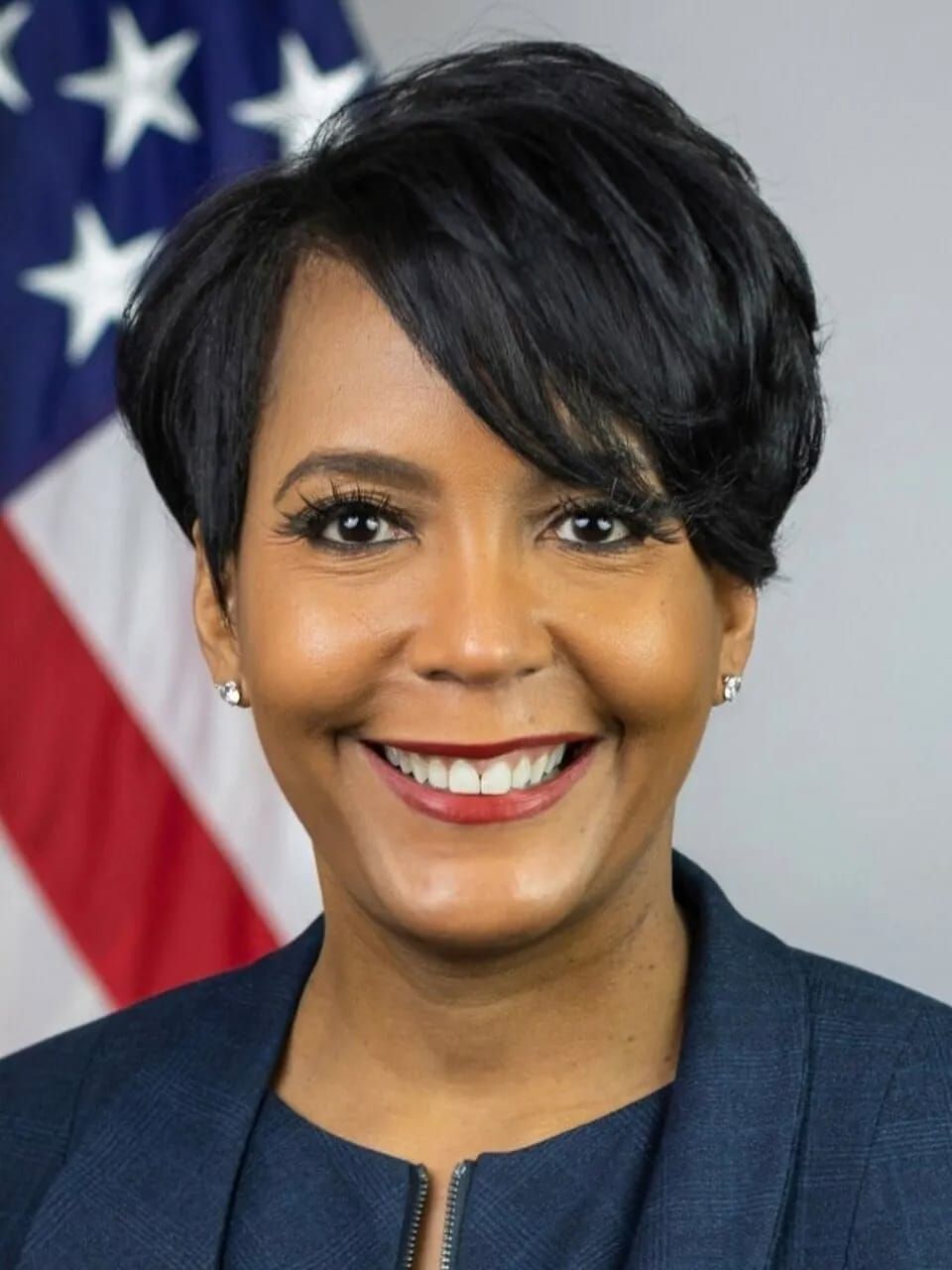
2. Keisha Lance Bottoms — Georgia

Keisha Lance Bottoms made history by becoming the first Black woman elected governor of an American state. Her victory in Georgia matters both because she broke a historic barrier and because of the political environment in which she did so. Georgia has become one of the country's most closely watched battleground states, and Republicans have invested heavily in maintaining control of its government. Bottoms, the former mayor of Atlanta, brought statewide political experience and name recognition to a campaign that ultimately produced a decisive victory over Republican Rick Jackson. Her election demonstrates that the growing political influence of Georgia’s Black electorate, combined with support from other Democratic constituencies, can produce victories beyond the state’s major metropolitan areas. She also enters office at a moment when Georgia is increasingly important to national debates over voting rights, education, economic development, and access to health care. Her victory has significance beyond party control. For generations, Black women have participated in American elections, organized political movements, and held elected office, but none had been elected governor. Bottoms has now changed that history. She will have to govern a state with substantial Republican representation and a politically diverse electorate, but her election itself represents a historic milestone.
3. Abdul El-Sayed — Michigan

Abdul El-Sayed’s victory in Michigan makes him the first Muslim elected to the United States Senate. His defeat of Republican Mike Rogers mattered not only because it helped Democrats secure control of the Senate, but also because it showed the political reach of a candidate whose background and policy positions made him a distinctive figure in a highly competitive state. Michigan has a large Arab American and Muslim population, particularly in the Detroit metropolitan area, and those communities have become increasingly important in national discussions about foreign policy, civil rights, and political representation. El-Sayed’s victory gives those communities a new voice in a chamber that has historically had very little Muslim representation. His background as a physician and former Michigan public health director also allowed him to campaign on health care, economic security, and public services. The election was not simply a symbolic victory, however. Republicans needed Michigan to retain their Senate majority, and losing the seat to El-Sayed contributed to their loss of control of the chamber. He now enters a Senate where Democrats will have the power to influence the legislative agenda, conduct investigations, and challenge the administration’s policies. His election is a historic first, but the responsibility that comes with representing Michigan will be measured by what he does with the office.
4. Hakeem Jeffries — New York

Hakeem Jeffries emerged from the midterms in a position to become one of the most consequential congressional leaders in modern American history. Democrats’ victory in the House positions Jeffries to become the first Black Speaker of the House, replacing Republican Mike Johnson. Although Jeffries was not running for a new national office, his reelection and his Party’s success transformed his political standing. For years, he has led House Democrats through a period when Republicans controlled the chamber, and Democrats had limited ability to shape legislation or conduct congressional oversight. The new majority changes that equation. Jeffries will have the power to set the House agenda, determine which legislation receives consideration, oversee committee assignments, and authorize investigations into the Trump administration. That authority matters because Democrats have promised to examine administration decisions involving government spending, immigration enforcement, political influence, and alleged corruption. Jeffries will also face the difficult task of holding together a Democratic caucus that includes moderates, progressives,s and members representing very different parts of the country. His achievement is both political and historic. He will have an opportunity to become the first Black Speaker in a chamber that has existed since the founding of the republic, while also becoming one of the central figures in determining how much accountability the Trump administration faces during its final two years. Jeffries will benefit by having a significant margin of Democratic House members, avoiding the possibility of a small group of his own Party holding him hostage as Mike Johnson faced when Republicans held a small margin.
5. Byron Donalds — Florida

Byron Donalds belongs on this list because the 2026 election was not exclusively a Democratic success story. While Republicans suffered major defeats nationally, Donalds won the Florida governorship, defeating Democrat David Jolly and securing the opportunity to succeed Ron DeSantis. His victory makes him the first Black Republican elected governor of Florida and places him in charge of one of the country’s largest and most politically influential states. Donalds is the first known former drug dealer to rise to become governor, so I guess that deserves credit. Unlike some of the other winners on this list, Donalds did not benefit from the Democratic wave. He won despite it. That makes his victory especially important to the Republican Party as it begins considering its future leadership and political strategy after the midterm defeats.
6. Gina Hinojosa — Texas

Gina Hinojosa’s victory in Texas is one of the most extraordinary gubernatorial outcomes of the 2026 election. She defeated incumbent Greg Abbott, ending Republican control of the Texas governorship and becoming the state’s first Democratic governor since Ann Richards left office in 1995. Hinojosa’s victory matters because Abbott was neither an inexperienced politician nor a vulnerable first-term governor. He had spent years building a powerful political organization, benefiting from Republican dominance in statewide elections and implementing policies that reflected the conservative movement's priorities. Texas also became central to the Republican strategy for controlling Congress, with its population growth and congressional districts giving the Party considerable influence in Washington. Hinojosa’s campaign benefited from growing dissatisfaction over the cost of living, public education, health care and the direction of state government. Her victory also demonstrates that Democratic gains in Texas were not limited to the Senate race. Democrats won both of the state’s most important statewide contests, a result that will force Republicans to reconsider their assumptions about the electorate. Hinojosa now faces the difficult task of governing a state whose legislature remains Republican-controlled. Nevertheless, taking the governor’s office away from Abbott is an enormous political accomplishment, and her victory will likely become one of the defining stories of the 2026 election.
7. Amy Acton — Ohio

Amy Acton’s victory in Ohio represents another important Democratic breakthrough in a state that has moved increasingly toward Republicans in recent presidential elections. Acton defeated Republican Vivek Ramaswamy, the wealthy entrepreneur and former presidential candidate who had become a prominent figure in Trump’s political movement. Her victory is particularly interesting because the two candidates represented very different approaches to public life. Acton, a physician and former director of the Ohio Department of Health, had become nationally recognized during the COVID-19 pandemic. Ramaswamy brought national political celebrity, considerable personal wealth, and strong connections to the Trump administration. His campaign attempted to make Ohio a showcase for the conservative political movement, but voters chose Acton instead. Her victory also gives Democrats control of a governorship in a state where they have struggled to compete successfully in recent presidential elections. Ohio has become important to national Republican strategy, and losing its governorship weakens the Party’s position in a state with considerable influence over congressional and presidential politics. Acton will have to address the state’s economic concerns, education system, health care need,s and relationship with the federal government. Her victory also demonstrates that candidates with professional experience and a record of public service can compete successfully against politicians with national name recognition and substantial financial resources.
8. Jon Ossoff — Georgia

Jon Ossoff’s reelection victory in Georgia was one of the most important defensive victories for Democrats in the entire election. Ossoff was the only Democratic senator seeking reelection in a state Donald Trump carried in 2024, making his race an obvious target for Republicans hoping to preserve their Senate majority. Republican Mike Collins attempted to portray Ossoff as out of touch with Georgia voters, but the incumbent ultimately prevailed. Ossoff’s victory matters because it shows Democrats can retain Senate seats in states where Republicans have strong statewide electoral strength. It also reflects political changes in Georgia over the last several election cycles, particularly in the Atlanta metropolitan area and among Black voters, younger voters, and suburban residents. Ossoff first entered the Senate in 2021 after winning a runoff election that helped Democrats gain control of the chamber. Five years later, he has successfully defended his seat in a national election that turned against Republicans. His victory also provides Democrats with continuity in a state that has become essential to their national political strategy. He will return to a Senate controlled by his Party, giving him a greater opportunity to influence legislation, oversight, and the administration’s policies. For a senator who entered office during an earlier political realignment in Georgia, his reelection shows the state’s changing political landscape is not temporary.
9. Ilhan Omar — Minnesota

Ilhan Omar’s reelection victory was particularly significant because she won despite being one of Donald Trump’s most frequent political targets. Omar defeated Republican John Nagel with more than 76 percent of the vote in Minnesota’s Fifth Congressional District, demonstrating that the controversy surrounding her national political profile did not translate into an electoral defeat in her home district. Trump and his allies have repeatedly criticized Omar, and she has become a central figure in national debates involving immigration, Muslim representation, foreign policy,y and the Democratic Party’s progressive wing. Her reelection also came amid federal scrutiny and political attacks that made her campaign more closely watched than an ordinary congressional contest. Rather than lose support, she won decisively. Omar now returns to a House in which Democrats will have the majority and the ability to investigate the Trump administration. Her position on the House Oversight Committee also allows her to participate in that work. Her victory matters for another reason: it shows that national political controversy and local electoral support do not necessarily move in the same direction. While Republicans have repeatedly attempted to make Omar a symbol of what they consider wrong with the Democratic Party, her constituents have once again chosen her to represent them. She remains one of the most recognizable progressive voices in Congress and will have a more influential position in the new Democratic majority.
10. Scott Colom — Mississippi

Scott Colom’s Senate campaign in Mississippi deserves recognition even though the race remained too close to call in the initial November 4 reporting. Colom, a Mississippi district attorney, challenged Republican incumbent Cindy Hyde-Smith in a state where Republicans have dominated federal elections for decades. The significance of his campaign becomes clear when you compare the results with the state’s recent political history. Donald Trump carried Mississippi by almost 23 percentage points in 2024, and Republican Senator Roger Wicker won reelection by more than 25 percentage points. Yet the early 2026 count showed Colom narrowly ahead of Hyde-Smith, with more than 95 percent of the vote reported by Decision Desk HQ. That performance transformed what had been widely considered a safe Republican Senate seat into a genuinely competitive contest. Even if the final count ultimately gives Hyde-Smith the victory, Colom’s performance demonstrates the extent of the Democratic gains in the 2026 election. If the lead holds and he is declared the winner, it would represent one of the most remarkable Senate victories in modern Mississippi political history. It would also give Democrats another Senate seat in a state where they have faced considerable obstacles since the realignment of Southern politics. For now, however, the responsible description is that Colom is narrowly leading, not that his victory has been officially called. He may not be the ultimate winner, but in the eyes of the nation, he’s already won.
Losers
1. Elon Musk — Billionaire political donor

Elon Musk’s political influence suffered a major setback in the 2026 midterms, particularly because of the enormous financial resources he devoted to helping Republicans maintain control of Congress. Musk became one of the most influential financial supporters of Trump’s political movement, and his spending helped establish him as more than a wealthy businessman with political opinions. He was increasingly seen as someone trying to shape the direction of government through campaign contributions, political organizations, and public influence. One of the most visible examples was his support for Ken Paxton’s Senate campaign in Texas. Musk reportedly spent more than $150 million backing Republican efforts there, yet Paxton lost to James Talarico. The broader Republican defeat also raises questions about whether large political expenditures can overcome public dissatisfaction with a party’s candidates and policies. Musk’s financial support did not prevent Republicans from losing the Senate, the House, or several important governorships. His political involvement has also raised questions about the relationship between billionaire wealth, corporate interests, and government policy, particularly regarding artificial intelligence, federal contracts, technology regulation, and data centers. The election does not mean Musk has lost his wealth or business influence, but it does demonstrate that financial power does not automatically translate into electoral success. For someone who invested so heavily in helping Republicans retain political power, the election was a particularly expensive disappointment.
2. Haley Stevens — Michigan

Haley Stevens experienced one of the election cycle's more complicated political defeats. The Michigan congresswoman sought the Democratic nomination for the U.S. Senate but lost the August primary to Abdul El-Sayed by about one percentage point. That loss might ordinarily have ended her immediate political ambitions, but Stevens made matters worse for herself when she endorsed Republican Mike Rogers just days before the general election. Her decision was particularly controversial because Rogers was running against the same El-Sayed who had defeated her in the Democratic primary. Stevens’ endorsement placed her at odds with much of her own Party at precisely the moment Democrats were attempting to unite behind their Senate candidates. Rogers then lost to El-Sayed, who became the first Muslim elected to the United States Senate. Stevens also lost her congressional seat to Democratic state Senator Jeremy Moss. Her political situation therefore involved more than losing a primary. She failed to secure the Senate nomination, publicly broke with the Democratic nominee, and ultimately saw her former congressional seat go to another Democrat. Her experience illustrates the risks of making political decisions that alienate a party’s voters during an election in which that Party is experiencing considerable momentum. Whatever she hoped to accomplish by endorsing Rigers, she destroyed her credibility for now and the future.
3. Vivek Ramaswamy — Ohio

Vivek Ramaswamy’s defeat in the Ohio gubernatorial race is an important setback for a politician who had become one of the most recognizable younger faces of the Republican Party. Ramaswamy used his business background, personal wealth, and national political exposure to build a profile that extended well beyond Ohio. His association with Trump and his participation in the broader conservative movement helped make him a nationally recognized candidate. Still, those advantages did not translate into victory over Democrat Amy Acton. His defeat is significant because Ohio has moved toward Republicans in recent presidential elections, making the governorship an important opportunity for the Party to consolidate its influence. Instead, Democrats captured the office in a year when they also won control of Congress and several other governorships. Ramaswamy’s campaign also showed the limits of celebrity politics. A candidate can have money, national recognition, and connections to powerful political figures without necessarily convincing voters that he is the right person to govern their state. His loss raises questions about his political future and whether he will continue seeking elected office or return to business and national political commentary. It also represents another defeat for a candidate closely identified with Trump’s political movement at a time when voters were delivering a broader rebuke to the Republican administration. The ad his campaign released attacking Amy Acton related to being a victim of sexual abuse as a child was universally condemned except by J.D. Vance and Donald Trump, also on the list of losers.
4. Darline Graham — South Carolina

Darline Graham’s defeat in South Carolina is one of the clearest examples of how far the Democratic wave extended into traditionally Republican territory. Graham lost to Democrat Annie Andrews in a state that had not elected a Democratic senator since 1998. South Carolina has long been considered one of the most dependable Republican states in presidential and congressional elections, and Republicans had little reason to expect that their Senate seat would become vulnerable. Graham’s defeat is therefore particularly damaging because it represents the loss of a seat that Republicans had considered safely within their control. The result also carries a historical dimension. South Carolina was at the center of the political realignment that transformed the South from a Democratic stronghold into a Republican one, and the state has remained a major symbol of that transformation. Andrews's victory suggests that the political assumptions surrounding Southern Republican dominance may be changing, particularly when voters are dissatisfied with the national Party’s leadership and policies. Graham’s defeat also contributed to the loss of Republican control of the Senate, making it more consequential than an ordinary statewide setback. Republicans will have to examine whether their candidates can keep relying on traditional party loyalty when voters express dissatisfaction with the country's direction.
5. J.D. Vance — Vice President

J.D. Vance emerged from the midterm elections facing serious political questions about his role in the Republican Party and his prospects for future national leadership. As vice president, Vance was not personally on the ballot, but he was closely associated with the administration whose policies became a central issue in the election. The defeat of Republicans across the country matters for Vance because many have viewed him as a potential leader of the Party’s next generation. Rather than acknowledge the results as a rejection of the administration’s broader political direction, Vance publicly blamed the war in Iran for the Republican losses. That explanation may have some political value, particularly among Republicans who opposed the conflict, but it also raises questions about whether the administration understands the broader sources of voter dissatisfaction. The Republican defeats extended well beyond foreign policy and included concerns about the economy, inflation, government corruption, and the growing influence of wealthy political donors. Vance now faces the challenge of distinguishing himself from an administration that has lost both chambers of Congress while remaining closely identified with Trump. If he hopes to become the Republican presidential nominee in 2028, he will have to explain what he would do differently without alienating the president and the political movement that helped make him vice president. The election has made that balancing act much harder.
6. Mike Johnson — Louisiana

Mike Johnson’s political standing took a major hit when Republicans lost control of the House, ending his tenure as Speaker and leaving him with the prospect of returning to a minority leadership role. Johnson had spent much of his speakership attempting to keep a divided Republican conference together while advancing Trump’s legislative priorities. He became one of the president's most important congressional allies, helping push through legislation and defend administration policies. That close association made him particularly vulnerable when voters rejected the Republican majority. The loss of the House means Democrats will now control committees, congressional investigations, and the legislative agenda. Johnson will no longer have the authority to determine which bills receive votes or which investigations are pursued. He also announced that he would not seek to lead House Republicans in the next Congress, creating an additional leadership vacuum within a party already struggling to explain its election defeats. His departure from the leadership contest reflects the political consequences of losing the majority, but it also raises questions about the Republican conference's future direction. Johnson was once viewed as a relatively unifying figure who could bridge differences within the Party. The election demonstrated how difficult that task had become. His political future is separate from whether he retains his congressional seat, but losing the speakership is an unmistakable reversal for a politician who had been one of Washington’s most powerful figures. Johnson has announced he will not be running for the leadership position of Minority Leader.
7. Susan Collins — Maine

Susan Collins’ defeat in Maine is one of the most consequential Republican Senate losses because of her long career and the seat's political importance. Collins had represented Maine in the Senate since 1997 and had repeatedly demonstrated an ability to win reelection in a state that has become increasingly competitive between Democrats and Republicans. Her reputation as a more moderate Republican helped her survive elections that might have been difficult for other members of her Party. This time, however, that advantage was not enough. Democrat Troy Jackson defeated her, ending a Senate career that spanned nearly three decades. Her defeat is particularly significant because Republicans had depended on Collins to help maintain their Senate majority. She was also one of the most recognizable Republican women in Congress and had frequently occupied a position between the Party’s conservative leadership and its more moderate members. The election raises questions about whether voters who once supported Republicans because of their individual records are now more inclined to judge them according to the national Party’s direction. Collins’ defeat also means Republicans lost an experienced legislator who had played an important role in negotiations over federal spending, judicial nominations, and major legislation. Her departure represents both a personal electoral defeat and the loss of an important Republican voice in the Senate.
8. Greg Abbott — Texas

Greg Abbott’s defeat is one of the most remarkable gubernatorial losses of the 2026 election. Abbott had been one of the most powerful Republican governors in the country, serving since 2015 and building a political record closely associated with conservative positions on immigration, education, abortion, voting laws,s and state government. He had also benefited from Texas’s long period of Republican dominance in statewide elections. Yet voters chose Democrat Gina Hinojosa, ending Abbott’s attempt to retain the governorship. The result's significance goes beyond the loss of one governor’s office. Texas has been central to Republican efforts to maintain control of Congress and build a durable national political coalition. Abbott’s administration had also been an important partner in Trump’s immigration policies and the broader conservative agenda. Losing the governorship means Republicans will no longer control the state’s executive branch, even though they retain substantial influence in the Texas Legislature. The election also exposes the limits of incumbency. Abbott had money, name recognition, a powerful political organization, and the advantages of governing a state where Republicans had dominated for decades. None of those advantages proved sufficient. His defeat, combined with Ken Paxton’s Senate loss, means Republicans lost both marquee statewide races in Texas. That is a devastating result for a party that had treated the state as one of its most reliable political foundations.
9. Ken Paxton — Texas

Ken Paxton’s defeat in the Texas Senate race is especially significant because he entered the election with the support of Donald Trump and considerable financial backing from conservative donors and political organizations. Paxton had become one of the most prominent Republican attorneys general in the country, known nationally for his lawsuits challenging federal policies and his close alignment with Trump’s political agenda. His political career, however, was also marked by serious controversies, including allegations of misconduct and a lengthy legal and political battle over his conduct in office. His victory in the Republican primary suggested that conservative voters remained willing to support him despite those controversies. But the general election produced a different result. Democrat James Talarico defeated him, preventing Paxton from entering the Senate and giving Democrats a historic Texas victory. Paxton’s defeat is particularly embarrassing for Trump because the president had supported him, and for Musk and other wealthy donors who invested heavily in the race. The result demonstrates that endorsements, campaign spending, and national political connections do not guarantee success when voters are dissatisfied with a candidate or the Party he represents. Paxton also loses the opportunity to move from the Texas attorney general’s office to a national legislative platform. His defeat will likely encourage Republicans to reconsider the political risks of elevating controversial candidates in competitive statewide races.
10. Donald Trump — President of the United States

Donald Trump made the midterms about himself, and he deserves all the responsibility. He handpicked several of the Republican candidates, including Darline Graham with no experience and the corrupt Ken Paxton. The number of ways Trump was already a loser is too numerous to list; the midterm elections are just one more.The remaining question is: will he be the first President to face Impeachment for a third time?