
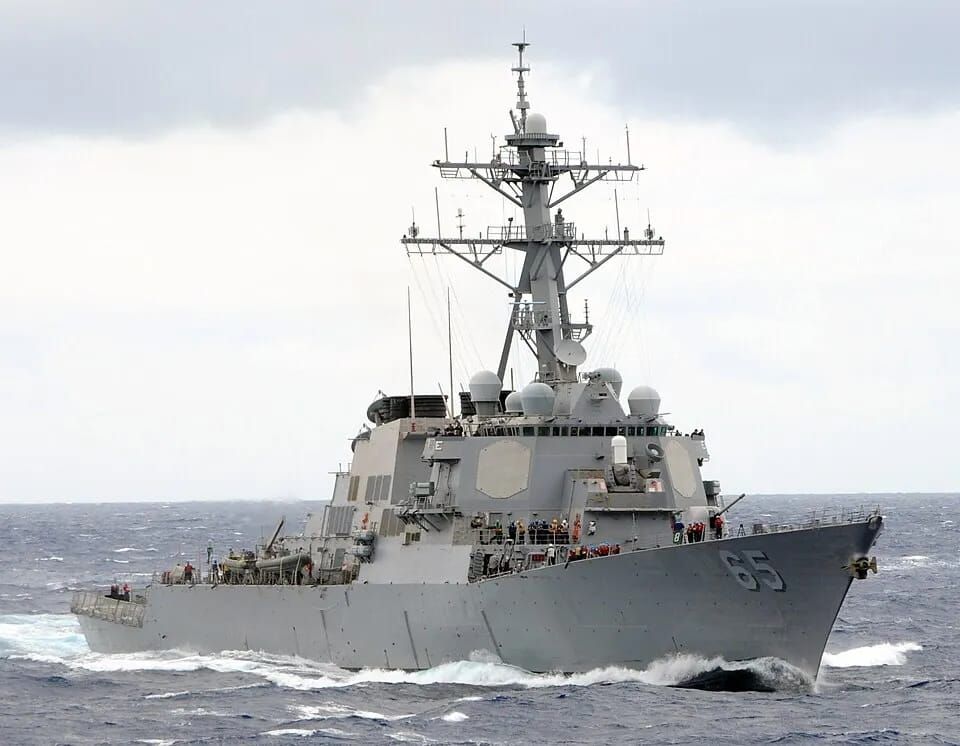
A Warship Adrift
On July 24, the USS Benfold — a billion‑dollar Arleigh Burke–class destroyer carrying roughly 300 sailors — lost power in the middle of the Pacific. Not partial power. Not degraded systems. Total power loss. For four days, the crew endured conditions that would shame a neglected civilian ferry: no drinking water, no functioning toilets, no air conditioning, no ability to cook meals.
This wasn’t a minor malfunction. It was a full‑scale engineering failure that left a frontline warship helpless in contested waters. And yet the public didn’t hear a word about it until weeks later, when USNI News forced the Navy to acknowledge the incident.
The official language was antiseptic: “an engineering casualty involving its generators.” But sailors don’t live in euphemisms. They live in heat, sweat, backed‑up sewage, and the knowledge that a powerless destroyer is a sitting target.
An unnamed U.S. Navy Destroyer near Puerto Rico once experienced something similar. Former Navy captain Carl Schuster described a complete power loss aboard a destroyer near Puerto Rico that lasted about four hours.
This account is important because it confirms that total power failures have happened before, even if they were shorter and less catastrophic. Even the approximate date is unknown, as is the administration under which it occurred.
Schuster’s description of the crew’s stress — worrying about drift, weather, food, and when help would arrive — mirrors what Benfold’s sailors endured, but on a smaller scale.
The USS Robert Smalls delivered meals to the stranded ship. Eventually, the Benfold was towed — not escorted, not assisted, but towed — to Subic Bay in the Philippines for repairs. It arrived on July 28. Only then were sailors given food and lodging off the ship.
On August 8, the Navy announced the destroyer had returned to normal operations. Crisis over, they said.
But crises don’t end when the lights come back on. They end when leadership confronts the failure honestly. That part never happened.
Overshadowed by Another Failure
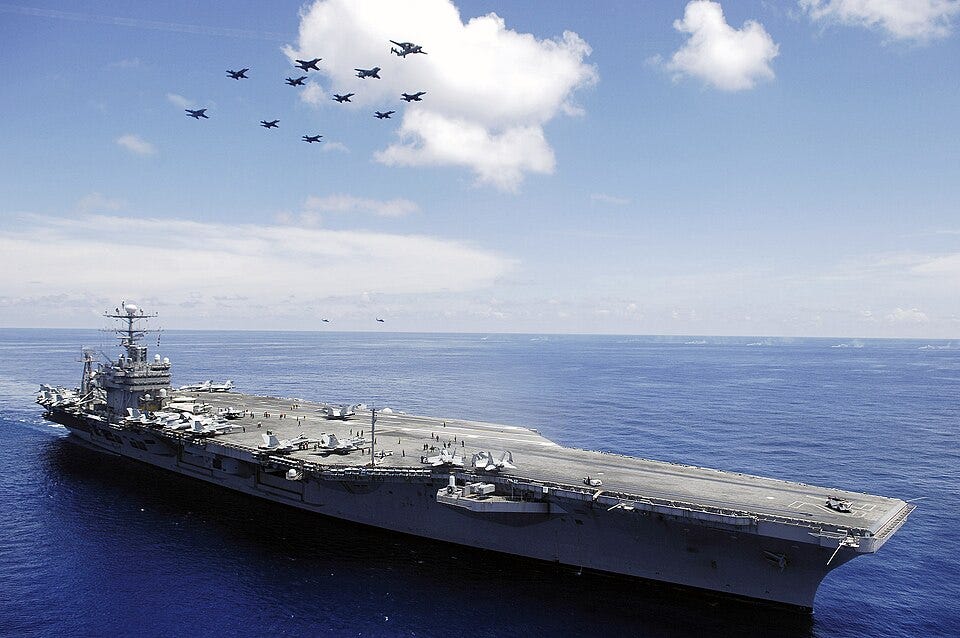
While the Benfold drifted powerless, the Pentagon was consumed with a different embarrassment: the USS Abraham Lincoln, trapped in a record‑breaking 250‑day deployment with shortages of food, hygiene supplies, and basic necessities. Sailors reported stress, exhaustion, and deteriorating mental health. Democratic lawmakers demanded investigations. The Lincoln became the headline. The Benfold became the secret.
Three hundred sailors went four days without water, toilets, or air conditioning — and the Navy kept quiet. The acting Secretary of the Navy, Hung Cao, focused instead on messaging around the Lincoln’s return and the administration’s shifting posture toward China. Optics over accountability. Again.
The Navy’s statement praised the Benfold crew for “resilience, grit, professionalism, and unwavering steadiness.”
And yes — sailors are resilient. They are gritty. They are steady. They do not panic when the lights go out. They do not complain when the air grows thick and hot. They adapt. They endure. But resilience is not a substitute for leadership. And grit is not a shield against neglect.
The statement said nothing about why the generators failed, why the breakdown lasted four days, why the incident was hidden, or why sailors’ suffering was treated as an inconvenient detail rather than a warning sign. It said nothing about the systemic maintenance failures that have plagued the Navy for years — deferred repairs, understaffed shipyards, aging vessels pushed beyond their limits. It said nothing about accountability.
The story isn’t just about a ship. It’s about the people aboard it. It’s about the sailors who tried to sleep in 100‑degree heat. The sailors who rationed water. The sailors who wondered whether anyone in Washington cared. The sailors who watched leadership prioritize public relations over truth.
It’s about families who learned of the breakdown from the news rather than the Navy. Parents who wondered whether their children were safe. Spouses who wondered whether the silence meant something worse. These are not abstractions. They are the human consequences of institutional failure.
The administration insists that China is now “a settled force” — not the top adversary it was under the previous administration — and that deterrence is the priority.
But deterrence requires credibility. Credibility requires readiness. Readiness requires ships that work — and leadership that tells the truth when they don’t.
A Navy that cannot keep its destroyers powered cannot project strength. A Navy that cannot feed its sailors cannot sustain operations. A Navy that hides its failures cannot learn from them. And a Navy whose leaders prioritize appearances over accountability cannot be trusted.
The sailors aboard the Benfold did their part. They endured. They adapted. They survived. Now it’s time for the Secretary of the Navy and the President to do theirs.
Leadership’s most important priority seems to be hiding failures and avoiding the appearance of weakness. But pretending everything is fine is the weakest posture of all. It signals to adversaries that the U.S. military is stretched thin and unwilling to confront its own vulnerabilities. It signals to service members that their suffering is secondary to political optics. And it signals to the public that transparency is optional.
Strength is not the absence of failure. Strength is the willingness to confront failure honestly.
Until leadership chooses honesty over image, the Benfold will remain what it was for four days in July: a symbol of a military adrift, a ship in the dark, and a reminder that resilience is not enough when leadership fails.
The other failure is not addressing the cause of a total power failure. Was it a powerful EMP blast causing all electrical systems to fail? Were those ships attacked with a new weapon by a foreign power? If a car loses power, a mechanic ultimately discovers the reason. When a large naval vessel loses power, there’s a reason as well. Do you think this administration will ever acknowledge what it was?