

As we celebrate the 250th Anniversary of America’s Independence from Britain. We should note that freedom wasn’t the same for everyone. Even Black people who were not enslaved had restrictions that didn’t apply to white people.
Here are 15 laws that demonstrated that independence for Black people was limited to what white people would allow. While some of these laws point to individual states, they generally had counterparts throughout the South, if not the nation.
1. Virginia — Act Concerning Servants and Slaves (1705)
Virginia’s sweeping 1705 omnibus law barred all Black people — free or enslaved — from holding any civil, military, or public office in the colony. It also stripped free Black people of the right to testify in court against a white person, effectively making them legally invisible as witnesses. A free Black man could own property but could not defend it in court against a white claimant. Virginia Center for Digital History. The Geography of Slavery — vcdh.virginia.edu
2. Virginia — Act for the Better Government of Negroes, Mulattos, and Indians (1723)
This act explicitly disenfranchised free Black people, removing the right to vote that some had exercised in earlier decades. It also prohibited free Black people — bond or free — from bearing arms, keeping weapons, or gathering in groups of more than five, even for religious worship. An exception was made only if a white person was present and supervising. Encyclopedia Virginia. “An Act directing the trial of Slaves … — Encyclopedia Virginia
3. Virginia — Horse and Livestock Prohibition (1732)
A lesser-known but economically devastating statute prohibited free Black people from owning horses, cattle, or hogs — the primary forms of productive agricultural wealth in colonial Virginia. Any such animals found in a free Black person’s possession could be seized and sold, with proceeds going to the parish poor fund. It was a targeted mechanism for keeping free Black people in permanent economic subordination even after legal emancipation. Encyclopedia Virginia. Free Black People in Colonial Virginia — Encyclopedia Virginia
4. Virginia — Vagrancy and Binding-Out Provision (1748 Revised Code)
Virginia’s 1748 revised code allowed county courts to declare any free Black person found without a fixed employer or “visible means of support” to be a vagrant — and bind them out as an involuntary servant for a term set by the court. In practice, this meant freedom was conditional on continuous employment under a white employer. A free Black person between jobs could be legally re-impressed into servitude. Encyclopedia Virginia. Free Black People in Colonial Virginia — Encyclopedia Virginia
5. Virginia — Mandatory Departure After Manumission (1762)
Virginia law required that any enslaved person freed after 1762 must leave the colony within twelve months of manumission or face re-enslavement. The law was designed to prevent a free Black population from accumulating in Virginia. It forced the newly freed into an impossible choice: abandon their families, community, and any property they had accumulated, or risk losing their freedom entirely. This law was common to many states. You might remember “Chicken George” from the miniseries “Roots” had to leave his family in North Carolina once he obtained his freedom. Encyclopedia Virginia. Free Black People in Colonial Virginia — Encyclopedia Virginia
6. Maryland — Slavery Follows the Mother (1664, Still in Force 1776)
Maryland’s foundational 1664 slave law established the principle of partus sequitur ventrem — the status of a child follows the mother. This meant that a free Black man who fathered a child with an enslaved woman had no legal claim to that child; the child was enslaved from birth. In 1776 this law had been in continuous force for 112 years and remained the bedrock of Maryland’s racial order. Maryland State Archives. Chapter 3 — Blacks before the Law in Colonial Maryland
7. Maryland — Intermarriage Prohibition and Re-enslavement Penalty (1717)
Maryland law prohibited marriage between free Black men and white women, and between free Black women and white men. The penalty was severe: a free Black person who entered such a marriage could be re-enslaved for life. The law also restricted free Black people from testifying in court against white defendants, mirroring Virginia’s 1705 provision and ensuring that free Black people remained legally subordinate even in matters directly affecting them. Notably, White men were free to marry free Black women. Maryland State Archives. Blacks before the Law in Colonial Maryland — free blacks
8. South Carolina — Prohibition on Literacy — Negro Act (1740)
South Carolina’s landmark 1740 Negro Act made it a criminal offense to teach any Black person — free or enslaved — to read or write. The law applied explicitly to free Black people as well as the enslaved. The penalty fell on the teacher, not the student — but the effect was identical: a free Black person caught learning to read could be used as evidence against the instructor, and the instructor fined. Literacy, the foundation of legal self-defense, was a crime to transmit. legalclarity.org+1legalclarity.org. The Negro Act of 1740: South Carolina’s Slave Code. Zinn Education Project. May 10, 1740: The South Carolina Negro Act is Passed
9. South Carolina — White Guardian Requirement — Negro Act (1740)
The same 1740 act required every free Black person residing in South Carolina to have a designated white “patron” or guardian who would vouch for their conduct and freedom status. A free Black person without such a patron could be treated as a runaway slave and subjected to the full penalties of the slave code — whipping, branding, or sale. Freedom, in other words, was not self-authenticating; it required a white sponsor to be real. legalclarity.orglegalclarity.org. The Negro Act of 1740: South Carolina’s Slave Code
10. South Carolina — Assembly Prohibition — Negro Act (1740)
Free Black people in South Carolina were prohibited from assembling in groups of more than seven persons without a white person present. The law was passed directly in response to the Stono Rebellion of 1739, in which enslaved people had organized, marched, and armed themselves. It applied to churches, social gatherings, and markets alike. A free Black family reunion with eight attendees was a criminal act. The Negro Act of 1740: South Carolina’s Slave Code
11. Georgia — Adoption of South Carolina’s Slave Code (1755, Revised 1770)
Georgia, founded in 1733 as a colony that initially banned slavery, reversed course entirely. Its 1755 slave code — comprehensively revised and tightened in 1770 — adopted South Carolina’s 1740 Negro Act nearly wholesale, including the literacy ban, the assembly prohibition, the guardian requirement, and movement restrictions for free Black people. By 1776, Georgia had been operating under this code in its most stringent form for six years. South Carolina slave codes — Wikipedia
12. North Carolina — Disenfranchisement of Free Black Voters (1715/1723)
North Carolina law formally stripped free Black, mulatto, and Native American men of the right to vote in colonial elections by the early 1720s, codifying a practice that had been inconsistently applied. Like Virginia’s 1723 statute, the North Carolina provision erased political standing that some free Black men had briefly exercised in the colony’s earliest decades, when land ownership — not race — had been the primary qualification for suffrage. Library of Congress. Free Blacks in the Antebellum Period — The African American Odyssey
13. Pennsylvania — Act for the Better Regulating of Negroes (1725–26)
Even in Quaker Pennsylvania — the colony most associated with early abolitionism — the 1725–26 act imposed a curfew on free Black people (no gathering after 9 p.m.), prohibited them from buying or selling goods without their employer’s written permission, and imposed fines for “tippling” or “carousing.” Interracial marriage was also banned, with a free Black person convicted of marrying a white person subject to being sold into slavery for seven years. The law remained in force in 1776. Library of Congress. Free Blacks in the Antebellum Period — The African American Odyssey:
14. All Southern Colonies — Pass Requirements for Travel
By 1776, virtually every Southern colony required free Black people to carry written documentation of their free status when traveling. A free Black person encountered on a road without a pass could be stopped by any white person, detained, whipped, and held in the county jail until someone vouched for them — at which point the free person often owed fees for their own imprisonment. Virginia’s 1705 pass system explicitly applied to free Black people as well as the enslaved. This was not one law but a coordinated legal architecture replicated colony by colony. Virginia Center for Digital History. The Geography of Slavery — vcdh.virginia.edu
15. Virginia — Prohibition on Striking a White Person (1705)
Virginia’s 1705 code established that no Black person — free or enslaved — could strike a white person under any circumstances, including in lawful self-defense. The punishment was corporal: thirty lashes on the bare back. A free Black man who defended himself against a white assailant was guilty of a crime; the white assailant who initiated the attack faced no comparable penalty under the same statute. Physical sovereignty over one’s own body was, for free Black people, a right that did not exist. Virginia Center for Digital History. The Geography of Slavery — vcdh.virginia.edu
By the time Americans declared independence in 1776, free Black people lived under a legal regime designed to make freedom conditional, revocable, and always subordinate to white authority. Across colonies — Virginia, Maryland, the Carolinas, Georgia, North Carolina, even Pennsylvania — the laws formed a single, unmistakable pattern: Black autonomy was treated as a threat, Black mobility as a crime, Black literacy as a danger, Black family life as a punishable offense, and Black self‑defense as something the law refused to recognize. A free Black person could be re‑enslaved for marrying the wrong person, jailed for traveling without a pass, punished for gathering with their own community, or stripped of economic independence through bans on property and livestock. Freedom existed, but only inside boundaries drawn by white lawmakers.
This is the part of 1776 America that rarely appears in patriotic retellings. The Declaration’s soaring language was signed alongside statutes that made Black freedom fragile and contingent. The Revolution promised universal rights while the colonies enforced racial control so thoroughly that even free Black people lived under surveillance, restriction, and the constant threat of losing what little liberty they had.
To understand the founding honestly, we have to hold both truths at once: America was born with a vision of equality — and with a legal system built to deny that equality to Black people. The gap between those two realities is not a footnote; it is the story. And until we confront how deeply these laws shaped the nation’s beginnings, we cannot fully understand the struggle for freedom that Black Americans have waged ever since.
In 2026, Black achievement is often treated as unearned, the product of the evil DEI, designed to unfairly take positions from white people. Every program that attempts to level the playing field has been weakened or removed. Black history is being erased, and the three Reconstruction Amendments have been gutted, particularly the 15th, with the 14th under continuing attack. Birthright citizenship survived this time, but what of the next, and the next?
 William Spivey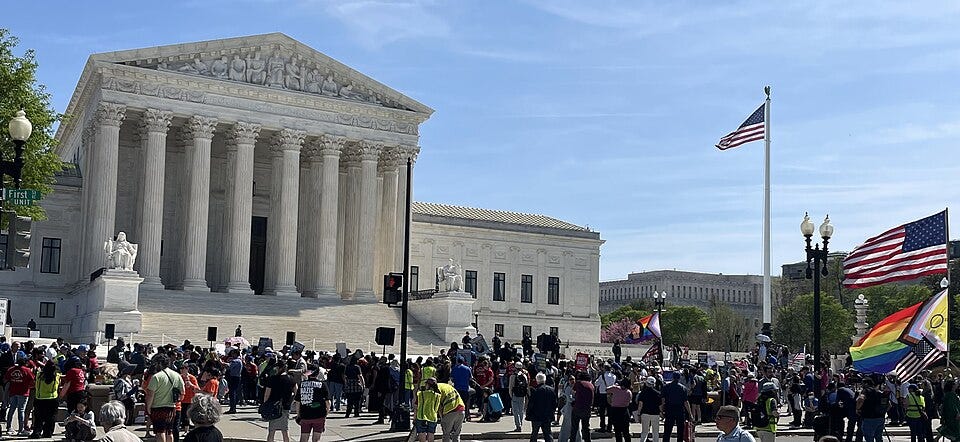
In many ways, Black freedom faces the same kinds of restrictions in 2026 as in 1776. The Supreme Court ensures actual racism isn’t addressed; we only look for intent. You’d think after 250 years we’d see more progress? Maybe in 2076, things will be better.