
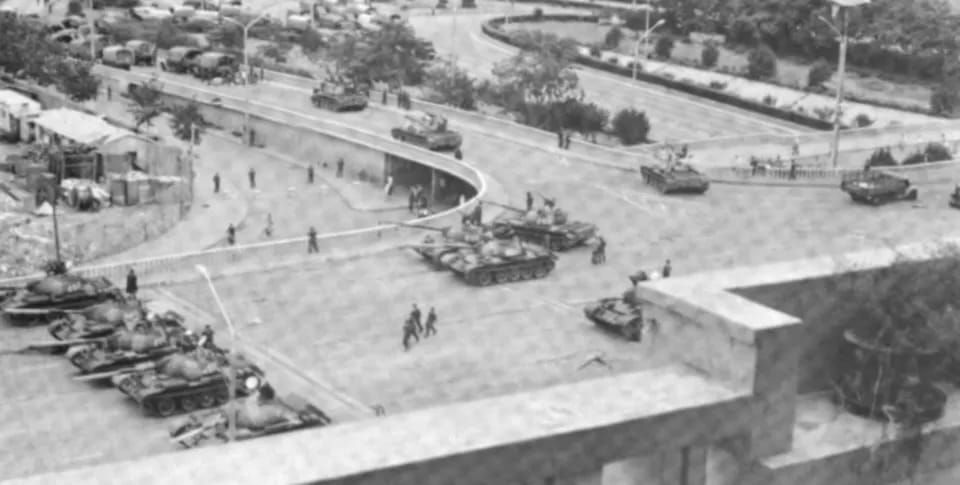
Yesterday marked the 37th anniversary of the massacre of thousands of young people in Tiananmen Square in Beijing, China. The protesters had been gathering daily to voice their disapproval of high inflation and rampant corruption, and for freedom of the press and free speech, among other issues. China eventually declared martial law, positioning tanks and troops throughout the city, eventually marching into Tiananmen Square. Soldiers fired at the students with assault rifles, killing an unknown number (estimated between several hundred and several thousand with thousands more injured. On this anniversary, the event is barely spoken of in China, with the government accusing the outside press and US government officials of a “violation of International Law” for bringing it up. The US demands that China talk about its darkest moments, which is quite hypocritical given the scant mention of numerous events on US soil, almost all perpetrated against minorities.
Here are 12 events that are often omitted from school curricula, glossed over, or misrepresented in popular accounts.
The Ocoee Massacre
Because two black men had the nerve to try to vote in the 1920 Presidential Election, white people from Orlando (including a former police chief), Winter Garden, and surrounding communities, shot and killed random black people and burned out the rest. Ocoee had no black residents for the next 40 years. To their credit, the current leaders now mention it and are organizing a memorial. Depending on who you believe, the death toll for blacks was between 39 and 500. The headline the next day in the major newspaper read, “Two Whites Killed in Race Riot.”
Black Wall Street
It started when a young black shoeshine boy was accused of raping a white elevator operator in a building he had permission to enter to get water and use the bathroom. She didn’t file a complaint or press charges, but officials went ahead and arrested Dick Rowland anyway. White people formed a mob and demanded that he be lynched. Black men stood outside the courthouse until a white man with a gun approached and confronted an unarmed black man. There was a struggle over the gun, and the white man was shot.
Black people retreated to the Greenwood District, probably the richest black township in America. Greenwood had black-owned banks, restaurants, hotels, and businesses. They formed a barrier and awaited the assault. White people outnumbered the black people greatly, including members of the National Guard who used planes to drop nitroglycerin bombs on the black citizens. When it was over, 35 blocks and over 600 homes had been destroyed. The official death toll was 26 black victims, but estimates range as high as 500. Be on the lookout for the upcoming film, “Tulsa 1921.”
The Colfax Massacre
Another election-related massacre in 1872, where the black citizens of Colfax, LA, were under the misconception that Reconstruction was still ongoing and they could vote: Democrats and the Klan, which were often the same. Using rifles and a cannon, they surrounded the black people in the local courthouse, killing some and taking dozens captive for several hours before ultimately killing them too. A few of the perpetrators were convicted but ultimately freed after the US Supreme Court declared the Fourteenth Amendment only applied to the government and not individuals, nullifying rights previously passed by Congress to protect the Civil Rights of black people.
Sand Creek Massacre (1864)
The Sand Creek Massacre unfolded on November 29, 1864, when Colonel John Chivington led roughly 700 Colorado volunteer cavalrymen in a surprise attack on a peaceful Cheyenne and Arapaho village camped along Sand Creek in southeastern Colorado Territory.
The village, led by Black Kettle, was flying both a white flag of truce and an American flag — symbols meant to signal their intent to negotiate and remain under U.S. protection. Despite this, Chivington ordered his men to advance. What followed was a brutal assault that killed more than 150 Native people, the vast majority of them women, children, and elders.
Survivors described soldiers pursuing people into the creek bed, killing indiscriminately, and mutilating bodies. News of the massacre sparked national outrage once eyewitness accounts reached the East Coast. Multiple federal investigations condemned the attack as an atrocity, with one congressional committee calling it “a foul and dastardly massacre,” yet no one was criminally punished.
The event deepened distrust between Native nations and the U.S. government, fueling decades of conflict on the Plains. For the Cheyenne and Arapaho, Sand Creek remains a defining trauma — a moment when promises of peace were betrayed, and entire families were destroyed under the banner of U.S. military authority.
Opelousas Massacre
In the fall of 1968, several black men from Opelousas, LA, attempted to join the local Democratic Party in nearby Washington. They were rejected, and the local unit of the Knights of the White Camellia (Klan) gathered to oppose them. An 18-year-old white teacher wrote an article and invited blacks to become Republicans. He was beaten nearly to death and fled to the North.
Thinking the teacher had been killed, blacks marched on the courthouse, some armed although they didn’t have the same right as white citizens to bear arms. After a confrontation, 29 black people were taken prisoner and put in jail. Twenty-seven of them were killed, touching off weeks of the Klan randomly killing black people in the area. When it was over, Republicans said 200–300 black people had been murdered, Democrats put the number between 25–30, presumably not including the original 27 removed from the jail and then killed.
Hanapepe Massacre
Kaua’i, Hawaii, was a paradise in 1924, unless you worked on the sugar plantations. The newest minorities on the block were from the Philippines, having less status than the Chinese and native Hawaiians. By 1922, the Filipinos had begun to organize, and in 1924, a strike was called, demanding $2 a day and an 8-hour workday. Ultimately, strikers were assaulted by police with clubs and guns (the strikers were unarmed). Fourteen Filipinos and four policemen were killed. It goes without saying that the Courts sided with the companies in denying the workers a living wage.
Chinese Massacre
It struck me as ironic that this massacre broke out on Calle de los Negros (Street of the Negroes). Black and mulatto people had been displaced by the Chinese in what could graciously be called a slum. Chinese residents had little protection from whites, as laws had been passed prohibiting them from testifying against white people. An incident occurred, and a white policeman was injured, blowing his whistle for reinforcements. When it was over, between 17–20 Chines had been hanged and displayed in multiple locations. They didn’t suffer as they’d been shot and killed first. Ten of the mob of over 500 were arrested, and eight were convicted of manslaughter. The convictions were all later thrown out on technicalities—no justice, no justice, never any justice.
Elaine Massacre
The Elaine Massacre erupted in Phillips County, Arkansas, in late September 1919, when Black sharecroppers gathered in a rural church to organize for fair payment for their cotton harvests. Their efforts threatened the exploitative plantation system that had dominated the Delta since Reconstruction. A confrontation outside the church — still disputed in its details — became the spark white planters needed.
Within hours, posses of armed white men, joined by federal troops, descended on the area. Over the next several days, they killed an estimated 100 to 200 Black residents, making it one of the deadliest racial massacres in American history. Most of the victims were not involved in the labor organizing at all; they were simply Black people living in the wrong place at the wrong time.
In the massacre’s aftermath, authorities arrested more than a hundred Black men and charged them with inciting insurrection. Twelve were swiftly sentenced to death in trials that lasted minutes, with coerced confessions and no meaningful defense. The NAACP intervened, launching a national campaign that eventually led to the landmark Supreme Court case Moore v. Dempsey (1923), which ruled that mob‑dominated trials violated due process.
Though the ruling saved the defendants’ lives, it did not undo the devastation inflicted on the Black community in Elaine. The massacre stands as a stark reminder of how racial violence, economic exploitation, and the legal system intertwined to suppress Black political and economic power in the Jim Crow South.
Wilmington Coup & Massacre
The Wilmington Coup and Massacre of 1898 was a planned, coordinated overthrow of Wilmington’s elected multiracial Fusionist government by white supremacist leaders who used months of propaganda, intimidation, and paramilitary organizing to justify violence. On November 10, white mobs burned the Daily Record, killed dozens of Black residents, and forced the mayor and aldermen to resign at gunpoint, installing their own slate of officials in the only successful coup d’état in U.S. history.
In the aftermath, thousands of Black residents fled the city, their businesses and political power destroyed. At the same time, the coup’s leaders faced no consequences and went on to shape North Carolina’s Jim Crow regime. Wilmington — once a thriving Black-majority city — was transformed through violence, disenfranchisement, and state-sanctioned erasure, leaving a legacy that shaped the state’s racial and political landscape for generations.
Ludlow Massacre
The Ludlow Massacre occurred on April 20, 1914, during a violent confrontation between striking coal miners and the Colorado National Guard near Ludlow, Colorado. The miners — many of them immigrants from southern and eastern Europe — had been evicted from company housing after demanding safer working conditions, fair pay, and the right to unionize. They and their families lived in a tent colony that had become the symbolic center of the strike. Tensions escalated as the Colorado Fuel & Iron Company, owned by the Rockefeller family, hired private guards and pressured the state to intervene. On the morning of the attack, Guardsmen opened fire on the camp, and the fighting continued for hours as miners attempted to defend their families.
By the end of the day, the tent colony had been burned to the ground, and at least twenty people were dead, including two women and eleven children who suffocated in a pit where they had taken shelter. The massacre ignited national outrage and triggered a broader wave of violence known as the Colorado Coalfield War, as miners across the region retaliated against company property and guards. Although no one was held criminally responsible for the killings, the Ludlow Massacre became a turning point in American labor history, galvanizing public support for workers’ rights and contributing to later reforms in labor law and workplace protections.
Bear River Massacre
The Bear River Massacre took place on January 29, 1863, when U.S. Army troops under Colonel Patrick Connor attacked a winter encampment of the Northwestern Shoshone near present‑day Preston, Idaho. The Shoshone had been suffering through a harsh winter, facing food shortages and escalating tensions with settlers who were encroaching on their homelands. Connor’s forces launched a dawn assault that quickly overwhelmed the camp. What began as a brief firefight turned into a rout as soldiers pursued fleeing families into the river bottoms, killing indiscriminately. By the end of the attack, an estimated 250 to 400 Shoshone men, women, and children were dead, making it one of the deadliest massacres of Native people in U.S. history.
In the aftermath, the Army framed the massacre as a battle, and Connor was praised and promoted, while the Shoshone survivors were left devastated, displaced, and without justice. The massacre shattered the Northwestern Shoshone’s ability to sustain themselves on their ancestral lands, accelerating their forced dependence on government rations and missionary control. For generations, the event was minimized or omitted from official histories. Still, it remains a defining trauma for the Shoshone people — a stark example of how federal policy, settler expansion, and military force combined to destroy Indigenous communities in the American West.
Mountain Meadows Massacre
The Mountain Meadows Massacre occurred in September 1857, when a wagon train of emigrant families from Arkansas — known as the Baker‑Fancher party — was traveling through southern Utah on its way to California. At the time, tensions between the U.S. government and the Mormon leadership in Utah Territory were extremely high, with rumors of invasion and martial law shaping local fears. In this climate, a group of Mormon militia members, aided by Paiute allies, surrounded the emigrants at Mountain Meadows and initiated a siege that lasted several days. The emigrants attempted to defend themselves, believing they were under attack by Native groups, unaware of the militia’s involvement.
On September 11, the militia leaders orchestrated a deceptive plan: they approached the emigrants under a white flag, promising safe passage if the group surrendered their weapons. Once the emigrants complied, the militia separated the men, women, and older children and then carried out a coordinated killing of nearly all of them — around 120 people. Only a small number of very young children were spared. In the aftermath, territorial leaders attempted to conceal the militia’s role, blaming the massacre entirely on Paiute warriors. It took decades for the truth to emerge, and only one participant, John D. Lee, was eventually tried and executed. The massacre remains one of the most painful and controversial episodes in the history of the American West, illustrating how fear, isolation, and religious extremism can converge with devastating consequences.
When I say these were limited examples, I was underestimating. The history we’re not taught paints a far different picture than who we are. Legislators in Texas are trying to impose yet another history on us in which American Exceptionalism is to be highlighted, and slavery was like summer camp. The next time we want to point out other nations' failure to discuss their history honestly. We should take a closer look at our own.