
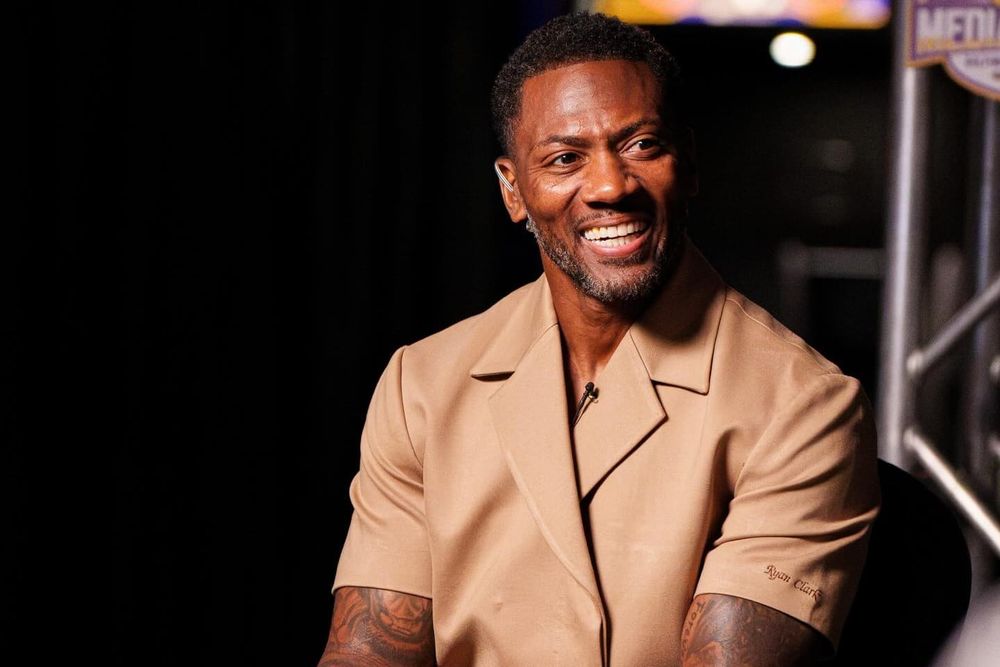
Two ESPN announcements landed on the same Monday post-World Cup 2026. First, a press release where Tim Tebow signed a multi-year extension on SEC Nation and College Football Playoff coverage. Second, in the middle of NFL Live, after OutKick reporter Dan Zaksheske emailed for comment and the network feared Clark would learn online first, a producer walked in during a commercial break and told Ryan Clark his eleven years at the network were done. Clark asked one question. “Should I be done now?” The answer was yes.
Stack those two announcements on the same news cycle and ask what the network’s layoff sheet just told itself. I enjoy Ryan Clark’s biting analysis, his sharp wit, and professional fashion attire. However, I no longer enjoy ESPN as a sports outlet as they have retreated from the national conversation.
By Tuesday, Cam Newton and Bart Scott, two more Black former NFL players who had built platforms at the network, were on the same layoff list. Newton, on his own show, used the word extinct. Analysts without their own platforms, he warned, are going to end up like dinosaurs.
The “he had it coming” chorus tuned up before the office lights were off. Breiden Fehoko, former NFL defensive lineman, on X: “Nah, we need fewer race baiters.” Marcellus Wiley, on his podcast weeks earlier, had already used the same word. OutKick, Clay Travis, the whole boys’ club that has spent years marketing itself as the alternative to what they call woke ESPN, took a lap.
The “race baiter” charge is not a description. It is a device. It permits people to stop listening. Once the label sticks, the argument the analyst was making can be ignored, because the analyst has been reframed as a bad-faith actor. It’s another sleight of hand media political trick trotted out for the more fringe broadcasters, painted with a particular type of brush and paint color.
So look at what Clark actually said. When ten NFL head coaching jobs opened this offseason and zero of them went to Black candidates, Clark named it. When Shedeur Sanders slid in the draft further than his tape and his interviews suggested he should have, Clark asked the question about race that everyone in the league office already knew was in the room. When Angel Reese caught the harder end of the Caitlin Clark comparison coverage, Clark called it. He got some of it wrong. He apologized publicly for the RG3 comments. That is not the profile of a bomb-thrower. That is the profile of an analyst working an uncomfortable beat in real time.
Sports have never been a race-free zone. Not in the Negro Leagues era. Not when Kenny Washington and Bill Willis re-integrated the NFL in 1946. Not when the Rooney Rule was written in 2003 to force interview equity. Not now, when a league where more than half the players are Black just closed a ten-vacancy hiring cycle with zero Black hires and left three Black head coaches standing out of thirty-two. Even Roger Goodell said the process needed a second look. Race is stitched into the ownership rosters, the coaching pipelines, the endorsement math, the quarterback trust question, and the coverage angles. To insist a sports analyst not discuss it is to insist half the room stop describing what everyone in the room already sees.
The Tebow pairing tells you exactly what ESPN considers safe. White, Christian, non-confrontational, endorsement-friendly, and has no history of making a general manager or a network sponsor uncomfortable. Tebow is a fine analyst inside his lane. He talks Xs and Os in front of SEC crowds on Saturday mornings. He does not talk about who is not getting hired in the coaching pipeline, or why. The complaint here is not that he was extended. The complaint is what the extension, stacked against three simultaneous Black analyst exits in the same news cycle, communicates about which voice a Disney subsidiary considers a commercial asset and which voice it considers a liability.
Yes, ESPN acquired NFL Network in April. Yes, there was redundancy. Yes, corporate layoffs need cover stories. But redundancy does not explain the timing. ESPN walked the analyst who talked about race off the air mid-broadcast. ESPN signed the analyst who does not have a multi-year run. Same news cycle. Same network. Same day.
Ryan Clark will be fine. He has a podcast, a live-show circuit, and a national profile that predates NFL Live. Cam Newton was right. The analysts who built their own platforms survive the corporate cull. That is not a triumph. That is a survival tactic developed because the corporate lane will not carry the conversation about race. Somebody had to build the alternative.
There is a temptation to treat this as a Ryan Clark story. It isn’t. It’s a sports media story. It’s a Disney story. It is a story about which questions a multibillion-dollar company will let its analysts ask on the air, and which questions will get them told during a commercial break that they are done.
You have not solved the race question by removing the analyst who raises it. You have just made sure the person who was going to raise it on your broadcast is no longer on your broadcast. You have to move the lemonade stand from the sidewalk to the front porch. The math on Black head coaches did not change. The math on Black ownership did not change. The math on which coaches get hired and which get fired after one season did not change. What changed was who was left in the studio to point at the numbers.
That is not neutrality. It is a choice about which questions get to be asked out loud. What is occurring is part and parcel of what the Federal Government and Pentagon. has done with Diversity, Equity, and Inclusion (DEI) by not talking about the Navajo Code Talkers or Air Force Gen Daniel James. Dismantling the goal posts after you’ve moved many times doesn’t hide the end zone or erase past scores made. This action highlights that you don’t like a certain type of player on the field and can’t stand it when they perform well.