
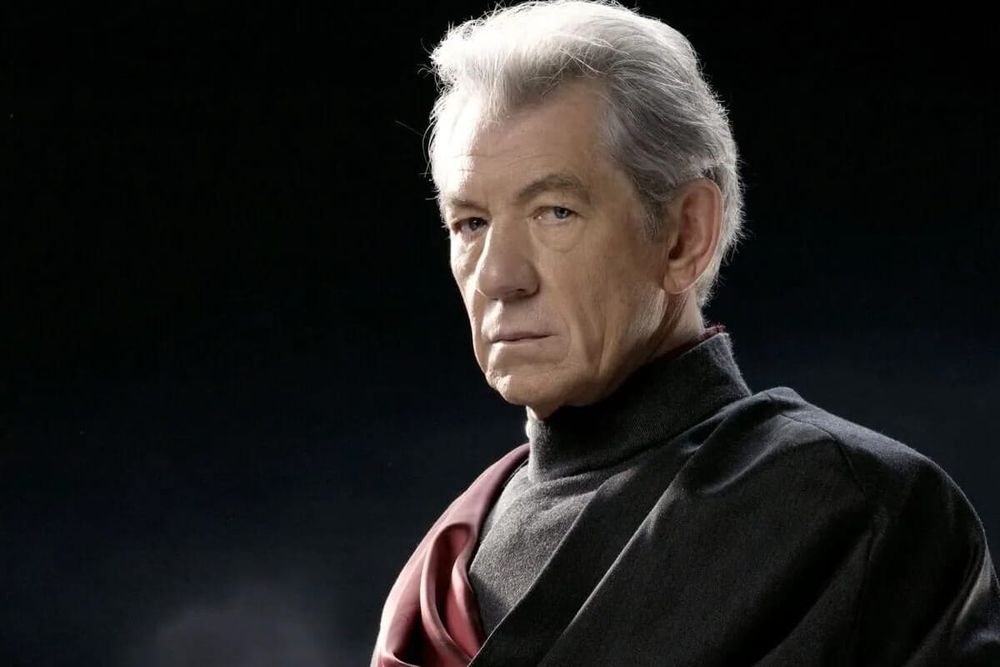
Magneto was right.
In the early 2000s, when I was at an age when I could truly digest and analyze what I was reading, this slogan made its way into my life. I first remember seeing it on a rebellious mutant’s shirt in a comic book. It stuck with me because Magneto was the bad guy.
He was the bad guy in the video games. He was the bad guy in the cartoon. He was the bad guy in the movie. He was the bad guy in most of the comics I owned. How was he right?
Writing relatable villains is nothing new. I remember plenty of people saying Thanos had the right idea. In some cases, the villains are so relatable the writers force them into more heroic roles. This isn’t exactly the case with Magneto.
The state of the world needs Magneto to be a hero.
Most casual readers probably know Magneto best as Sir Ian McKellen from the X-Men movies, and with a new season of the animated series airing now and new movies on the horizon, this felt like the right time to discuss the complex character.
Magneto is a comic book villain published by Marvel Comics and created by Stan Lee and Jack Kirby to fight the X-Men. If you asked Stan Lee, he would claim Magneto was Malcolm X to Professor Xavier’s Martin Luther King Jr.
If anyone reads the comics from the 60s, this is a reductive statement for two complex historical figures. For the most part, Xavier is a traditional hero of the time, sending teenagers out to fight villains. Magneto’s goal is to disrupt the system, the most villainous act of the time, but he is presented as nothing more than a moustache twirling cliche with no redeeming qualities.
The X-Men comics actually failed and were cancelled for several years until Chris Claremont took over the book in the 70s. He is the one who adds the additional layers to Magneto.
Magneto grows closer to Malcolm X once Claremont is in charge. His villain of the week antics and monologues are replaced with nuance and sympathy. Magneto was revealed as a Holocaust survivor in the early 80s, creating a direct parallel to the way mutants and Jewish people were treated.
In God Loves, Man Kills, around the same time, we see Magneto mourn for murdered Black children who also happened to be mutants. Events like this led to the mutant metaphor becoming a popular phrase. In short, it describes how the mutants in these stories represent different minority groups.
Magneto experienced a genocide, had his daughter killed by a racist mob, and still watches oppressed groups suffer in modern times. Suddenly, his desire to tear down the system becomes more reasonable. By the end of Claremont’s run, Magneto was even teaching students and had basically replaced Professor Xavier. However, against Claremont’s wishes, Marvel wanted the old Magneto back.
The X-Men needed a bad guy, and no one was quite like Magneto. For the next few decades, there was a power struggle behind the scenes. I’ve seen new readers confused about Magneto’s alliance. Is he a good guy or a bad guy? Truly, it is dependent on how the writers and editors view the past material and the world.
Most people consider Chris Claremont the most important writer in X-Men history, but many people say Grant Morrison is a close second.
Ironically, Claremont and Morrison have opposing views on Magneto.
“What people often forget, of course, is that Magneto is a mad old terrorist twat. No matter how he justifies his stupid, brutal behaviour, or how anyone else tries to justify it, in the end he’s just an old bastard with daft, old ideas based on violence and coercion. I really wanted to make that clear at this time,” -Grant Morrison.
This is a fair take, especially if one looks at Magneto from the 60s and his return to the dark side in the 90s. Morrison started his run on New X-Men in 2001, and from the start, he knew he would end with what he considered to be the definitive Magneto story, the final Magneto story.
Magneto poses as a character named Xorn, hiding in plain sight among the X-Men. In this run, he breaks Xavier’s spine, enslaves New York City, threatens to destroy the human race, and fatally injures an X-man before being stopped.
Magneto had killed plenty of people before this moment, but this escalated his villainy to a degree unlike anything readers had seen. Even then, some would argue he was driven to insanity when 16 million mutants were killed on Genosha, and he started taking a new drug.
Of course, Morrison makes it clear that there is no real excuse for these horrific acts. It is true, and Marvel also knew it was true.
Once Morrison left, Chris Claremont returned to write X-Men and immediately retconned Morrison’s story to reveal that Xorn was actually a real person and only believed he was Magneto. Of course, it doesn’t make sense, but we know how Claremont feels about Magneto.
Is Magneto a freedom fighter or is he a fascist tyrant? For decades, it truly depended on who you asked, but in recent years, the picture is solidifying.
The recent episode of the X-Men animated series has Magneto performing some of the most heroic acts, and he is basically a part of the X-Men at this point despite being depicted with the villains in the introduction.
In recent comics, Magneto is now firmly on the side of the heroes. He sacrificed himself to save the world, even using his powers to stay alive a few extra excruciating moments after having his heart ripped out.
Of course, comic characters do not stay dead, and after facing his sins in the afterlife, he is brought back and currently serves as a leader of the X-Men.
It’ll be hard to go back to Magneto being a villain. The thing Malcolm X and Magneto have most in common is how revolution was once viewed as evil by mainstream society. In the last several years, I’ve spoken to people who thought Malcolm X murdered white people. I know people who still ignore what the Black Panthers really did and stood for because they see them as terrorists.
The narratives the world spun about revolutionaries are the acts Magneto committed in the comics. They could never say that his goal for liberation was villainous, so they presented him as going to the extreme. The way he went about it was villainous.
Other X-Men enemies, like the Mutant Liberation Front, also fall into this category. It isn’t that their goal is wrong, but they should peacefully protest, assimilate, and be sure to clear the streets when good ol’ normal white people approach.
If we look at the world today, we have Nazi-adjacent groups marching through the streets. We have people literally attacking the country in an attempt to destroy democracy. Minority groups are hunted with such inhumanity the real world makes 1960s Magneto look tame, and at least he had a just cause.
There will always be people who call for the X-Men to keep their mouths shut and save the normal people. It is very “shut up and dribble” energy. However, the world has moved past that. We need people to say, not anymore. We need Magneto to be a hero.