
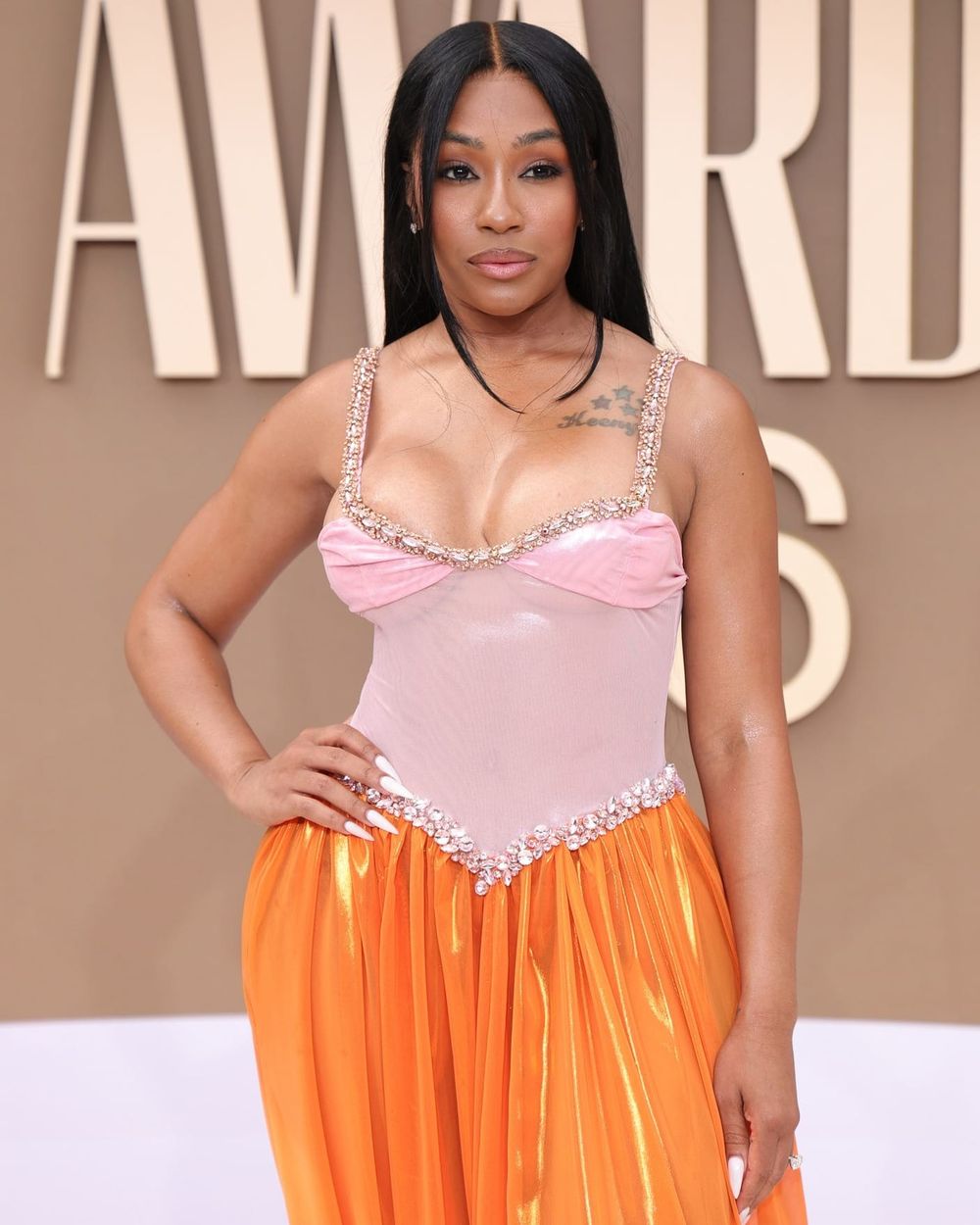
I grew up between Opa-Locka and Miami Carol City. I know what corner Yung Miami is standing on. When “Spend Dat” plays and half the internet decides she is a menace to Black youth, I know exactly what they are looking at, and I know what they refuse to see.
The song is doing what art has always done in that stretch of Dade County. It names what is on the block. Scammers, boosters, quick money, the Goyard bag, the trap phone, the run to the mall. Caresha Brownlee, from Opa-Locka herself, is making music for the girls she grew up around. When she walked out to present at the BET Awards this summer, the crowd sang along for twenty seconds. That is not a random accident. That is recognition.
I do not need to pretend the lyrics are polite. Scamming hurts people. Boosting hurts people. Nobody in the projects is confused about that. But the argument aimed at Yung Miami this month is that she is glorifying crime, poisoning Black youth, betraying respectability. It is the same argument they aimed at Uncle Luke.
In 1990, Broward County Sheriff Nick Navarro walked into federal court and convinced a judge that 2 Live Crew’s “As Nasty As They Wanna Be” was legally obscene. Charles Freeman, a Fort Lauderdale record store owner, got cuffed two days later for selling a copy. Four days after the ruling, deputies came for Luke and Fresh Kid Ice after a set at a club in Hollywood, Florida. It took the 11th Circuit in 1992 to establish what should have been obvious. The music had artistic value. It was protected speech. Luke Records v. Navarro is the reason a rap record out of Liberty City can even reach a mainstream audience today. That case is Miami. That case is the reason “Spend Dat” is legal to hum.
They did not stop with Luke. They came for N.W.A. over “Fuck tha Police,” with the FBI writing Priority Records to complain about a song. They came for Ice-T over “Cop Killer,” pressuring Warner Bros. and Time Warner shareholders until Body Count pulled the track. They came for Cardi B and Megan Thee Stallion over WAP, as if two Black women naming their own bodies was a national security matter. They came for Kendrick Lamar after his BET performance of “Alright,” with Geraldo Rivera declaring on Fox News that hip-hop had done more damage to Black youth than racism. Every generation this country produces a Black artist and a moral panic, and the panic always has the same shape. The lyrics are the crime, never the conditions the lyrics describe.
Here is the actual accounting. Yung Miami is 32 years old. Opa-Locka is a city where making a rap record is one of the more lawful ways to get money out of that ZIP code. Miami-Dade sits on cash bail rules that keep poor Black people in county lockup for months on charges they have not been convicted of. Florida’s sentencing schemes send a young man to Raiford for a decade over the same schedule of narcotics that would earn a Coral Gables sophomore a stern conversation and a rehab week. Section 8 waitlists run years long. The housing in Liberty City has been left to rot for two generations. Federal Pell dollars have been cut and cut again. School resource officers get funded before school counselors do. The pipeline from the classroom to the county jail is not accidental. It is designed. If you want to hear it in one song, put on “Spend Dat.”
Musical artists express what they see. A painter does it in oil. Yung Miami does it over J. White production. What she is describing is a neighborhood the state manufactured and then criminalized. If the song is ugly, ask who built the mirror.
Set that beside the man the President put a flag at half staff for last September. Charlie Kirk spent a decade calling George Floyd a scumbag, describing Black Americans as “prowling,” saying Martin Luther King was “awful,” suggesting Black professionals only got their jobs through affirmative action, and defending biblical slavery on his podcast. When Kirk was shot at Utah Valley University, the President called him “The Great, and even Legendary, Charlie Kirk,” “a martyr for truth and freedom.” Vance eulogized him. Rubio eulogized him. A campus stop on his American Comeback Tour became four days of national mourning on federal order.
Yung Miami wrote a song about her block and got told she was corrupting the youth. Kirk built a career denigrating Black people and got a half-staff funeral. That is the selective decency I want you to see. The moral panic runs one direction. It always has.
The critics telling you Yung Miami is the problem are running interference for the system that produced her material. They are worried about the boosters and the scammers and the words on a track. They are not worried about the deputies who turn traffic stops on 27th Avenue into an income stream. They are not worried about the private probation companies collecting fees off people too broke to pay them. They are not worried about the state legislature that keeps starving public schools in Opa-Locka. They are not worried about a President who spent last September calling one dead white activist a martyr for truth and freedom, and has not spent a single day since on the conditions in Overtown.
“Spend Dat” is not a betrayal. It is testimony. The betrayal is a country that will jail a young Black woman for narrating what it built.
The panic will move on. It always does. Then somebody in Opa-Locka will put out another song, and the same people will pull out the same pearls, and the corner will keep telling the truth the country refuses to hear.