
There’s a lot of reporting that the Trump administration and some red states like Florida and Texas don’t want you having access to a lot of material having to do with race and sexuality. Particularly how those issues have been dealt with historically in America. The books most banned over the past ten years include: The Color Purple by Alice Walker. The Hate U Give by Angie Thomas, Beloved by Toni Morrison, The Bluest Eye by Toni Morrison, and All Boys Aren’t Blue by George M. Johnson. Laws in at least one‑third of states prohibit curricula offering “critical views of the racial past of the U.S.,” and some explicitly name the 1619 Project as prohibited content.
Critical Race Theory materials are banned or restricted in 16 Republican‑controlled states. State laws prohibit teaching “divisive concepts” related to systemic racism, oppression, diversity, or race. These laws often target any history text or unit that frames racism as structural rather than individual.
History units addressing systemic racism, segregation, or racial violence have been removed or altered in states with “educational gag orders.” Laws deny the existence of systemic racism and prohibit instruction that might cause “guilt or shame based on race.” This results in removal or sanitization of units on Jim Crow, redlining, lynching, and civil rights history.
LGBTQ history units (Stonewall, AIDS crisis, queer civil rights) have been restricted under laws targeting “gender,” “sexuality,” and “identity.” These laws suppress instruction on LGBTQ+ identities and history, often under the same umbrella as race‑related restrictions.
Some states ban history texts or units that frame U.S. history as contested or morally complex. State policies aim to enforce a single “accurate” interpretation of history and remove critical perspectives.
It’s far easier to find what material Trump et.al. don’t want you to know than to get a clear understanding of what they believe should be taught. Politicians issue general references to wanting more “American exceptionalism. Trump is never good for more than a confusing sentence or two, often with misspellings. But there didn’t exist a comprehensive document articulating what the government wants taught about American history until now.
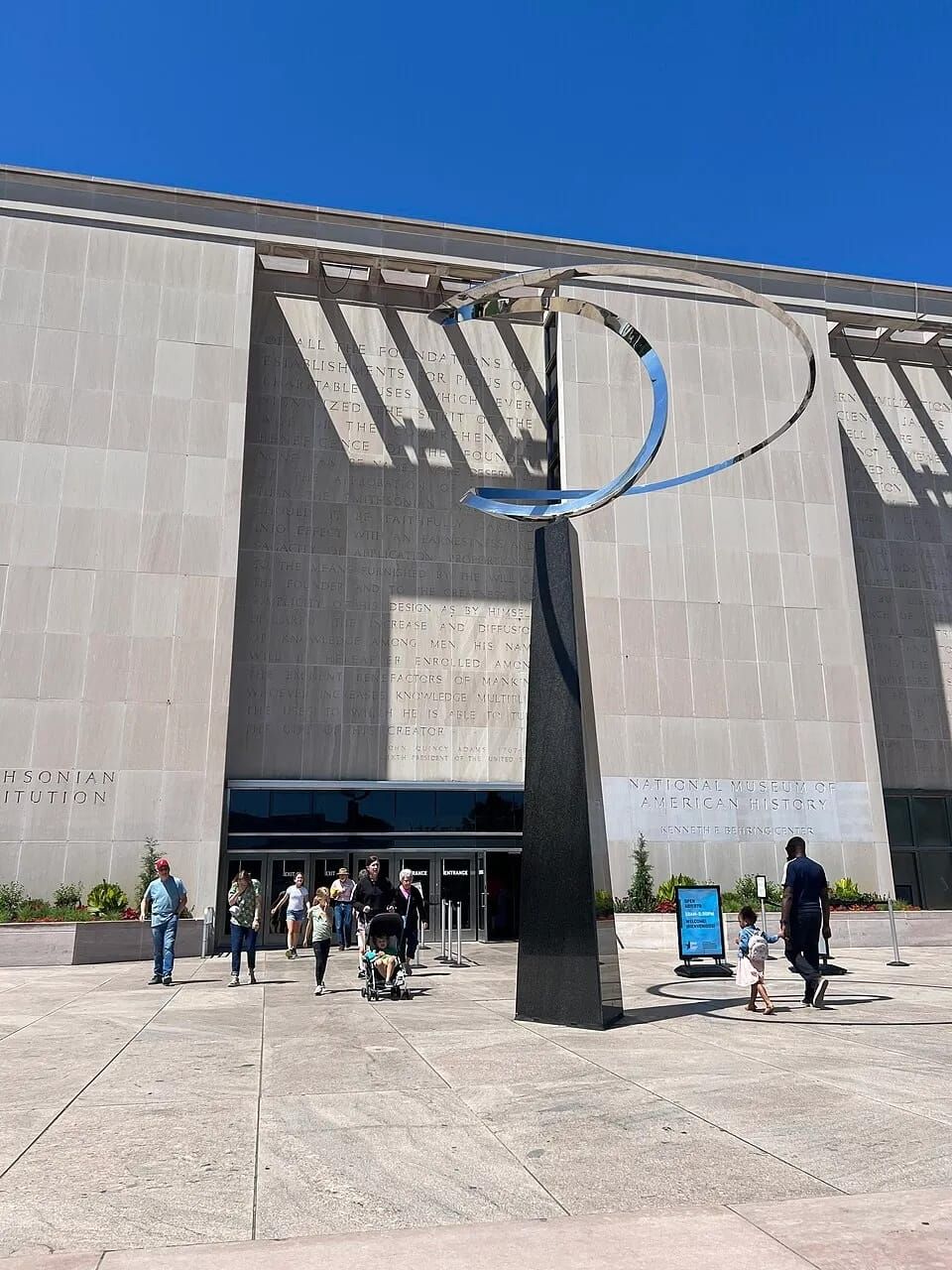
As part of the Trump administration's attacks and smears of the Smithsonian Institution and its multiple museums. Trump’s Domestic Policy Council issued a report that accused the Smithsonian and the National Museum of American History of failing to present history “in a way that is inspiring, unifying, and worthy of our great republic.” Trump issued an Executive Order requiring that visitors be warned about what they’ll find inside these museums and that the public be directed to “accurate information regarding America’s history.”
“Visitors: Please be advised that the National Museum of American History contains ideologically influenced content. Accurate information regarding America’s Founders and heritage is available at designated exhibits ahead.”
Here is that order:
By the authority vested in me as President by the Constitution and the laws of the United States of America, it is hereby ordered:
Section 1. Policy. On March 27, 2025, I issued Executive Order 14253 (Restoring Truth and Sanity to American History). Pursuant to that order, the Domestic Policy Council recently completed a months-long review of the Smithsonian Institution and its National Museum of American History (Museum). It issued its findings in the report entitled Saving America’s Story: How Ideological Capture at the Smithsonian Institution’s National Museum of American History Erases Our Heritage (Report).
The Report demonstrates that the Smithsonian leadership does not present American history as a shared national inheritance to be taught and celebrated. Instead, it views American history as a “prime tool” to advance ideas of social justice and the radical transformation of our society. The Report also overwhelmingly demonstrates that current leadership of both the Smithsonian Institution and the Museum cannot be trusted to tell America’s story with honesty and gratitude.
It is therefore the policy of my Administration to take all available steps to ensure that the issues identified in the Report are addressed and to restore trust in the Smithsonian Institution.
Sec. 2. Restoring Trust in the Smithsonian Institution. The Secretary of the Interior, the Director of the Office of Management and Budget, the Administrator of General Services, and the Assistant to the President for Domestic Policy shall identify and utilize any available authorities to promote the policy of this order and to restore trust in the Smithsonian Institution, including any mechanisms available to encourage correction of the issues identified in the Report and compliance with any applicable statutes, regulations, executive actions, and funding or contract conditions.
Sec. 3. Warning Visitors About the Ideological Capture at the National Museum of American History. (a) The Secretary of the Interior, acting through the Director of the National Park Service (NPS) and in coordination with the Assistant to the President for Domestic Policy, shall install temporary signage along the NPS-maintained sidewalks and walkways used by the public to access the Museum, informing visitors of the findings of the Report and of the policy outlined in section 1 of this order. Such signage shall notify visitors that the Museum exhibits should be renovated consistent with the findings in the Report and direct visitors to locations and resources for accurate information regarding America’s history.
(b) Because the Museum has failed to appropriately honor the 56 signers of the Declaration of Independence during this 250th anniversary year of the founding of our country, the Secretary of the Interior, acting through the Director of the NPS and in coordination with the Assistant to the President for Domestic Policy, shall install temporary exhibits or signage on NPS-maintained sidewalks, walkways, and land used by the public that corrects inaccurate information presented in the Museum.
Sec. 4. General Provisions. (a) Nothing in this order shall be construed to impair or otherwise affect:
(i) the authority granted by law to an executive department or agency, or the head thereof; or
(ii) the functions of the Director of the Office of Management and Budget relating to budgetary, administrative, or legislative proposals.
(b) This order shall be implemented consistent with applicable law and subject to the availability of appropriations.
© This order is not intended to, and does not, create any right or benefit, substantive or procedural, enforceable at law or in equity by any party against the United States, its departments, agencies, or entities, its officers, employees, or agents, or any other person.
(d) The costs for publication of this order shall be borne by the Department of the Interior.
DONALD J. TRUMP
THE WHITE HOUSE,
July 24, 2026.
The Executive Order also deals in generalities. It’s in the 162-page report from Trump’s commission, “Saving America’s Story,” where you find what the Trump administration wants available to Americans. I read the full report so you didn’t have to. Thankfully, the last 33 pages were references. Most of the report criticized what Trump’s commission felt the National Museum of Natural History (NAMH) got wrong. It did say in multiple places what American history is supposed to look like.
The report says the Museum’s founding goal “was more than simply the increase and diffusion of general knowledge”; NMAH was intended to be “proudly patriotic.” Speaking at the Museum’s dedication ceremony in January 1964, President Lyndon B. Johnson explained his hope and belief that the Museum’s “iconic artifacts should be used to foster patriotism.” He stated:
I would hope that there will come to this building the children of the nation. For here is recorded, as William Faulkner expressed it, the agony and the sweat of the human spirit, the victory of freedom and genius of our country. Here, young children see, with their own eyes, yes, even to touch with their own hands, the ripe fruit of America’s historical harvest. Whitney’s cotton gin, Singer’s sewing machine, McCormick’s reaper, Edison’s phonograph, Bell’s telephone — they are all here, a part of this treasure-house of our inheritance. The more we understand the meaning of the past, the more we appreciate the winning of the future. If this Museum did nothing more than illuminate our heritage so that others could see a little better our legacy, however so small the glimpse, it would fulfill a noble purpose.
Trump wouldn’t mind describing the impact of the cotton gin, so long as there was no reference to the slaves who picked and chopped the cotton, cleared the land, and baled the fiber. Trump won’t likely mention how the cotton gin greatly increased the demand for enslaved people. A demand met by forced breeding and rape. They won’t say that ending the Transatlantic Slave Trade to America in 1808 wasn’t a step toward eliminating slavery, but a protectionist move to increase the value of domestic-bred slaves, the products of forced breeding and rape. They would describe the documented extraordinary increase in domestic-bred slaves as “natural increase,” like many historians before them.
Their conviction is that the American story should explain the rise of the original thirteen colonies, the struggle for independence, the principles of the Declaration of Independence and the U.S. Constitution, and the role these documents have played in securing Americans’ most basic freedoms.
“It should document and share the achievements and failures of the Nation and the extraordinary men and women of every color and creed who shaped its course. It should tell the truth, including of the Nation’s mistakes and injustices, but it should do so within a coherent account of a people striving, often imperfectly but more often nobly, to live up to our founding principles of liberty and equality under a republican form of government. It should especially teach the history of an American nation that is worthy of our affections and worth passing along to future generations. Any proper telling of American history should, as the Reverend Dr. Martin Luther King Jr. noted, explain that “the goal of America is freedom” and bring “our nation back to those great wells of democracy which were dug deep by the founding fathers in their formulation of the Constitution and the Declaration of Independence.”
The report criticizes the museum, and it’s inferred criticism of white supremacy. The common theme of the report is that white supremacy should not be highlighted or condemned.
“Museum materials repeatedly suggest that Christianity functioned principally as an instrument of conquest, exclusion, or cultural erasure, while the constructive role of Christian belief and Christian institutions in shaping the Nation and its freedoms receives scant, if any, attention. White, male, and Christian Americans are regularly denigrated as the alleged embodiment of oppressive power structures. Exhibits frame the Pilgrims mainly as colonial oppressors, Thanksgiving as a “National Day of Mourning,” and the European settlement of the continent chiefly as a great “unsettling.”
Sounds to me like the museum got it right.
The report feels:
“The Smithsonian Has Not Met Its Obligations to the American People Underlying all of this is a larger institutional concern. The Smithsonian is not just another private cultural nonprofit. It is a federally connected trust instrumentality of the United States, overseen by a Board of Regents currently led by the Chief Justice of the United States Supreme Court, and supported heavily by taxpayer funding to the tune of over one billion dollars per year. That means the public has a right to expect that it will operate as a faithful steward of the Nation’s historic and cultural heritage, not as a vehicle for ideological campaigns.”
The report accidentally said the quiet part out loud. That history is supposed to promote a cultural heritage, not of every culture but of one.
Later, they talk about the museum failing to place before millions who visit the Nation’s Capital each year a stimulating permanent exposition that commemorates our heritage of freedom and highlights the basic elements of “our way of life.” Which way of life do you think they mean?
They added: NMAH has failed to maintain the “treasure-house of our inheritance” because it no longer seeks to “illuminate our heritage.” When they say “illuminate,” they don’t mean shine a light on, but to highlight whiteness instead of accurately describing America’s past.
The report concludes that the Smithsonian Institution, and the National Museum of American History in particular, under its current leadership and current interpretive ideology, cannot be trusted to tell America’s story honestly and in a way that is inspiring, unifying, and worthy of our great republic. By the intention and at the direction of current Museum and Smithsonian leadership, NMAH has become subject to institutional capture by a radical, activist ideology that is fundamentally opposed to telling the noble, honest story of the great country we know and love. Any telling of American history that centers on a noble story will definitely not be honest.
By the time you step off that walkway to the museum, you realize the signs weren’t warning you about the museum, they were warning you about the people who put the signs there. The Smithsonian didn’t change; the story around it did. What you just walked through wasn’t a path to history but an attempt to pre‑load your interpretation of it.
Inside, the exhibits still tell a complicated, human story. Outside, the temporary panels tell a convenient one. And that’s the whole point: the battle isn’t over artifacts, but over framing. Over who gets to define “real history” before you even see any. So you leave with the only conclusion that makes sense: History doesn’t need a warning label. Power does.