
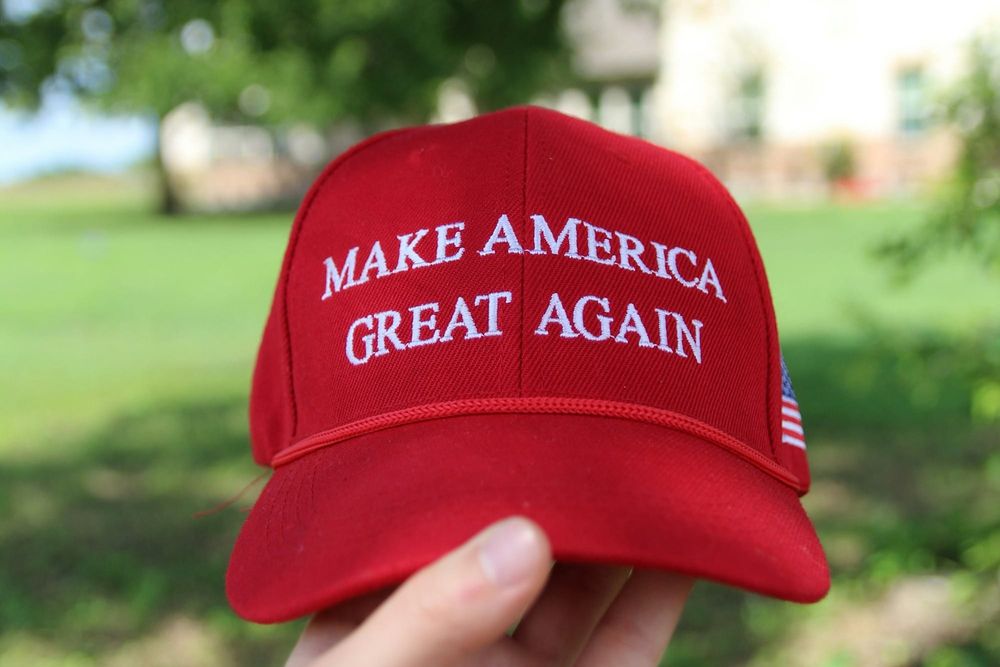
Have you ever driven a tractor-trailer diesel truck or seen one try to turn in a corner on a street? Well, its incredibly difficult and often scary to watch. The recent election in Hungary signals a turn in the tide for global nationalist politics. Victor Orban, a Trump supporter, vice versa, lost to his opposition party in a strong rebuke of his government’s alliance with Russia and nationalist policies. The jubilant crowds cheering his defeat exhibited hope and belief that, as difficult as it may be to turn a corner in global politics, there is promise for US Politics, as the once-populist Trump MAGA movement shows signs of cracking under broken promises and a strained economy.
The midterm election cycle is not that far away. There is palpable tension this year in the election run-up based on inflation, the economy, gas prices, and healthcare concerns that may drive voters to respond in kind to a growing sentiment of unrest despite the racial division and fear stoked by the right-wing and their foreign allies.
It is generally the case that an individual who identifies as a MAGA supporter would not consider entities affiliated with China or Russia to be allies; however, a closer examination of the financial backing for right-wing social media platforms, the advertising expenditures, and the financial support provided to networks of automated accounts reveals that these foreign entities are indeed counted among their associates.
The question of who supports the MAGA movement doesn’t have a single, tidy answer. It’s a coalition built from overlapping frustrations, identities, and economic realities that cut across traditional political lines. While only about 24% of all voters identify as MAGA supporters, that minority punches well above its weight in shaping American politics, culture, and media. To really get this group, you gotta look beyond what the news shows and check out the real numbers on how much money they make, how educated they are, where they live, their race, and what makes them tick. What emerges is a picture that’s more complex than either side of the political aisle typically admits, and one that carries real implications for the mental health and social fabric of communities across the country.
A look at the socioeconomic status of those who support Trump.
Economic Displacement and the Working Class Populist Movement
Think of the American economy like a river that changed course. For decades, manufacturing towns along the Rust Belt and across the rural South sat right along the banks of that river: jobs were plentiful, wages were decent, and a high school diploma could unlock a middle-class life. Then globalization, automation, and trade agreements shifted the current. Entire communities found themselves miles from the water, economically speaking.
This is where the working-class populist movement really started. MAGA’s support comes largely from workers who were left behind financially as coastal cities prospered. Many of these voters do not face poverty in the traditional sense; there was an enormous gap between what the economy was doing officially and how people felt, and that really made folks resentful.
The psychological toll of economic displacement is real and measurable. Research from the National Institute of Mental Health links financial instability to increased rates of anxiety, depression, and substance use disorders. When people feel left behind by an economy that rewards credentials and connections they don’t have, the emotional weight can be crushing. For this kind of thing, journaling, chatting, and budget-friendly therapy are good starts, but larger issues require more substantial interventions.
The Educational Divide in MAGA Political Alignment
One of the most consistent predictors of MAGA support is educational attainment, specifically whether someone holds a four-year college degree. The Republican Party has seen an enormous boost in voters who don’t have a bachelor’s degree, and that trend got stronger when Trump was in charge. Interpret this how you wish.
The thing is, saying “uneducated people support Trump” totally misses what’s going on. These voters, often skilled tradespeople, small business owners, and seasoned workers, sense that the college-educated professional crowd dismisses them. The cultural issues driving conservative political alignment often begin right here, at the intersection of class and perceived respect. When politicians and media figures talk about “low-information voters,” people hear it. And it stings.
Where people learn affects the information they see. People with college degrees usually check out the latest news, hang out in different spots, and have different friends than those without college degrees. These parallel worlds reinforce different values, priorities, and even different accepted facts, making cross-group understanding increasingly difficult.
Social Issues Fueling the Conservative Shift
The Reaction to Stigma, Whataboutism, and Perceived Social Change
Being skeptical, bringing up other issues, or shaming people aren’t just ways to argue; many MAGA supporters perceive rapid cultural changes in gender, race, and religion as direct threats to their identity and way of life. The truth of those perceptions is a secondary issue, politically; the real deal is the genuine emotion that influences how people vote.
It matters how quickly society shifts. When old cultural rules that have been in place for ages suddenly have to contend with rapid shifts in expectations around language, representation, and social pecking order, it often sparks a negative reaction. It’s not something that only happens to one type of person. Here in America, it’s become so much a part of people’s political identity that compromise feels like a defeat.
The mental health dimension of this cultural friction deserves attention. People on all sides of these debates report increased stress, strained family relationships, and a sense of grief over “losing” the country they thought they knew.
Professionals dedicated to mental well-being advocate that individuals experiencing political anxiety seek support through avenues such as psychotherapy, peer support networks, or open dialogue with friends they confide in.
Geographic Clusters: Rural vs. Urban Power Dynamics
Geography is destiny in American politics, and MAGA support concentrates heavily in rural and exurban areas. These aren’t just red dots on a map; they’re communities with distinct economic structures, social norms, and relationships to government institutions.
Farmers in rural areas most frequently encounter the federal government through regulations, such as environmental rules affecting agriculture, zoning laws limiting land use, and healthcare requirements that seem out of touch with the reality of living 50 miles from the nearest hospital. Urban voters are more likely to consider the government a provider of services. Profound political outcomes stem from the fundamental ways individuals encounter and understand government power.
The rural-urban divide also creates a representation gap. Rural voters feel culturally invisible in mainstream media, entertainment, and higher education. When 69% of white evangelical Protestants hold favorable views of Donald Trump, that number reflects not just religious alignment but a broader sense that Trump speaks for communities that feel ignored by cultural elites.
Changing Population: Assistance for Minorities and Veterans
Shifting Perspectives Among African American and Hispanic Voters
A major, though often overlooked, development in recent elections is the growing support for the MAGA coalition among minority voters. Although Black and Hispanic voters favor the Democratic Party, the gap has significantly reduced, especially for young men.
Hispanic voters in South Texas border communities, for example, shifted sharply toward Trump between 2016 and 2024. Many of these voters are culturally conservative, economically aspirational, and skeptical of progressive messaging on immigration that they view as out of touch with their lived experiences.
The socioeconomic profile of Trump’s supporters in these areas commonly aligns with that of his larger following, generally consisting of individuals from working-class backgrounds who prioritize family and harbor a sense of disillusionment towards institutions perceived as unresponsive to their concerns.
However, among African American voters, the change observed is less substantial in magnitude but carries considerable symbolic weight. The existing research concerning mental health, specifically within the African American community, effectively illuminates a complex interplay of factors, including deeply entrenched systemic barriers, pervasive societal stigma associated with seeking professional help, and a historical legacy of mistrust towards established institutions, all of which contribute to the unique pressures experienced by this demographic.
The African American Mental Health Alliance, among other organizations, dedicates itself to closing existing disparities in mental health support, acknowledging the profound strength that community unity and shared life journeys offer in the recovery process. These same dynamics of belonging and mutual support sometimes draw individuals toward political movements that promise recognition and respect.
The Veteran Connection: Patriotism and Institutional Skepticism
Veterans represent a disproportionately large segment of MAGA supporters, and the reasons go deeper than patriotic branding. Military service often instills a particular worldview: hierarchical, mission-oriented, and skeptical of bureaucratic inefficiency. When veterans return to civilian life and encounter a VA system riddled with delays or a job market that doesn’t value their skills, the frustration is personal.
Many veterans also struggle with PTSD and mental health challenges that the system fails to adequately address. Advocates who have served, like those who draw from their own experiences with PTSD to support fellow veterans, understand that institutional skepticism isn’t abstract for this population: it’s rooted in being let down by the very institutions that promised to care for them. Trump’s blunt, anti-establishment rhetoric resonates with veterans who feel the government broke its promises.
Only 25% of voters aged 18 to 29 approve of Trump, but among young veterans, the numbers skew higher. Military culture creates bonds that transcend age demographics, and those bonds often carry political weight.
Psychological and Community Drivers of MAGA Loyalty
The Power of Belonging and Shared Identity in Political Networks
Here’s something that political analysts often overlook: for many supporters, MAGA isn’t primarily about policy. It’s about belonging. The rallies, the hats, the social media communities, the shared language: these create a sense of tribe that fills a void left by declining church attendance, weakened labor unions, and fractured local institutions.
Trump’s approval rating among self-identified MAGA Republicans hit 100% in a recent survey, a number that reflects not just political agreement but something closer to identity fusion. When your political movement becomes your community, criticizing the leader feels like betraying your friends and neighbors.
This dynamic has real mental health implications. The sense of belonging and shared purpose can be genuinely therapeutic: humans are social creatures who thrive in groups with clear identities and common goals. But it can also create an echo chamber where dissent feels dangerous and where personal identity becomes so entangled with political identity that any electoral loss triggers genuine grief and anxiety.
Ashley Koning, a researcher from Rutgers University, observed that the MAGA movement “certainly has the backing of most of the Republican base,” a sentiment that holds true even in states with diverse political affiliations, such as New Jersey. Yet the percentage of Republicans strongly identifying with the movement dipped from 57% to 50% between April and December 2025, suggesting that even within the base, identification intensity fluctuates. Trita Parsi of the Quincy Institute observed that while “Trump voters by and large stand behind Trump, they overwhelmingly want him to declare an end to the war,” revealing that loyalty doesn’t always mean agreement on every issue.
You can’t just simplify who backs MAGA; they’re people who are worried about money and proud of their culture, who care about their communities but don’t trust the system, and whose complaints are real but can also be fueled by misinformation. It doesn’t help anyone or solve anything to stereotype them. I don’t but i will debate them to keep the facts on point.
To effectively navigate the considerable stress of living in these currently divided times, each of us must engage in genuine discussions about difficult subjects, remain receptive to a variety of perspectives, and ensure access to robust mental health support systems. I’m far from support of MAGA but I strive to understand.