
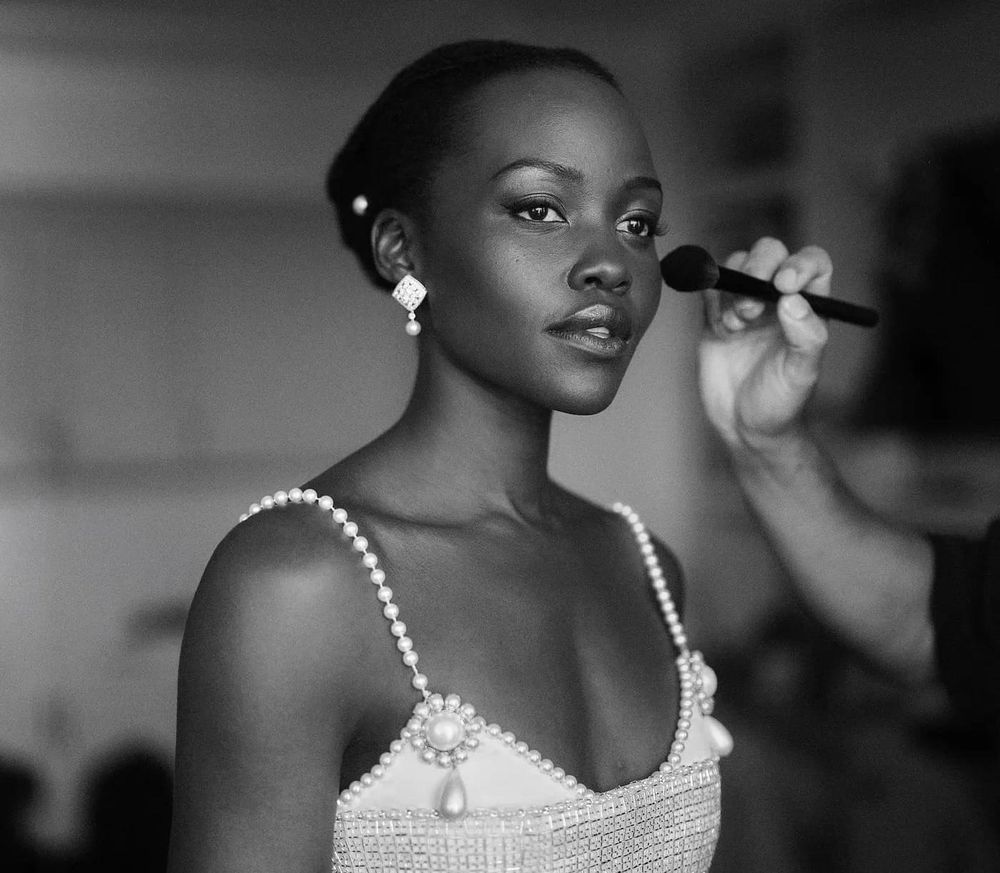
Public discourse on casting decisions often reveals racial biases as people debate who is worthy of the limelight. A recent example is the backlash against the casting of Lupita Nyong’o, a Black actress, as Helen of Troy in the upcoming Christopher Nolan film, The Odyssey. The narrative follows the life of Odysseus, a hero who survived the Trojan War and endured challenges during his ten-year journey across the Mediterranean Sea. Legend has it that Helen was considered the most beautiful woman in the world. After Paris, a visiting prince of Troy, took her during a diplomatic mission, despite her being married to Menelaus, the King of Sparta, they claimed she had “a face that launched a thousand ships.” It’s a story with many twists and turns that has captivated audiences for generations. Yet some openly disapproved of the upcoming project because Helen will be played by a Black actress.
South African billionaire Elon Musk claimed Christopher Nolan “has lost his integrity” for casting Lupita Nyong’o as Helen of Troy, since the character is traditionally portrayed as a fair-skinned blonde woman. This is reminiscent of the public outrage some expressed after learning that Halle Bailey, a Black actress, would play Ariel, the lead role in Disney’s The Little Mermaid, as some believed only a White woman with red hair could bring this character to life. Similarly, Francesca Amewudah-Rivers, a Black actress who played the leading role in a London West End production of Romeo and Juliet, faced racial harassment. Together, these examples point to a broader pattern of resistance to diversity in the film industry and highlight how some see Black people as perpetual outsiders, regardless of their skills and experience. Pinelli argued that in the 1990s, “as films confronted racial injustices more explicitly,” resistance grew.
Black actors and actresses often face bullying and ridicule for playing roles traditionally played by white actors and actresses. But Elon Musk’s commentary has added another layer to the fold by claiming, “Chris Nolan desecrated The Odyssey so that he would be eligible for an Academy Award.” While he characterized the decision to include a Black woman in this film as a desperate ploy to win the hearts of film critics and thus, win awards, this is misleading, given the racial discrimination Black people endure within the film industry. Only one Black woman, Halle Berry, won Best Actress at the Academy Awards. Ten Black women won supporting roles, including Lupita for her role in 12 Years a Slave. “Black women have won roughly 0.6% of all competitive Academy Awards,” fewer nominations than Meryl Streep throughout her career, Clayton Davis noted in Variety.
Racial disparities persist within the film industry, so that Black women accounted for only 6.1% of all characters and 5.7% of leading roles according to McTaggart. Also, according to National Partnership research, Black actresses earn about 64 cents for every dollar white, non-Hispanic actors earn (Williams, 2024). In light of these facts, it’s disingenuous to claim the industry grants them preferential treatment. It’s as if they never considered the possibility that Lupita Nyong’o was cast to play Helen of Troy and her sister, Clytemnestra, because she’s talented, that she earned her role just as other actresses do, by auditioning and demonstrating her skills in other projects. Black women remain underrepresented in the film industry, which contradicts the notion that diversity awards undeserving members of marginalized groups with opportunities. Lupita’s ascension as a runway model and award-winning actress was not preordained. Only through hard work and dedication to her craft did she reach this level in her career. The criticism surrounding the announcement that she would be playing the role of Helen of Troy condemns her performance sight unseen.
In 2014, Lupita Nyong’o gave a memorable speech after winning the Best Breakthrough Performance Award at a Black Women in Hollywood Luncheon. She shared her experience with self-doubt due to white-centered beauty standards. “I put on the TV,” she noted, “and only saw pale skin. I got teased and taunted about my night-shaded skin. And when I was a teenager, my self-hate grew worse, as you can imagine happens with adolescence.” Her “complexion had always been an obstacle to overcome,” and while her mother did her part to reassure her, she credited Oprah for calling her beautiful “as a fact,” an empowering experience that helped to elevate her throughout the industry. Given that Black women are underrepresented, casting Lupita to play Helen of Troy, a character who has become a quintessential beauty icon, challenges preconceived notions about who should be in the limelight.
In Greek society, the setting for The Odyssey, Black people endured prejudice because they were foreign-born, but not because of their race. As Maya Aziz wrote in Leeds African Studies Bulletin №83, “it must be understood that the Greeks did not consider themselves as white.” And their mythology included dark-skinned people. For instance, while Andromeda is often played by a white actress in films, the text describes her as an Ethiopian princess who is rescued by Perseus. According to Retrospect Journal, “the erasure of her beauty as a black woman, alongside many others, has impacted our Western beauty standards to the modern day, where Eurocentrism forms the foundation of what is seen as beautiful (North Castell, 2024).” Queen Cassiopea and King Cepheus, Andromeda’s parents, were Ethiopian royalty and were treated with respect. Greek mythology suggests her father was a direct descendant of the Greek gods. And Memnon, King of Ethiopia after the Trojan War, was brave and skilled, rivaling Achilles.
Sadly, in our modern-day Western society, racism impacts Black people, and the film industry is no exception. In response to learning that Lupita Nyong’o would play Helen of Troy, Matt Walsch, a conservative political pundit, suggested, “not one person on the planet actually thinks that Lupita Nyong’o is the ‘most beautiful woman in the world,” a claim many fiercely rebutted. “Each mind perceives a different beauty,” David Hume, a Scottish philosopher, suggested. As a result, one could argue that a Black woman playing the role of Helen of Troy, challenges the notion that only a white woman could be considered the “most beautiful.” Since “beauty is in the eye of the beholder,” some are blinded by prejudice. And while critics framed their opposition as concern for traditionalism, this perspective seeks to justify racial exclusion.