
Christopher Nolan (born 1970) is a British‑American film director, screenwriter, and producer. He’s known for large‑scale, concept‑driven films that blend spectacle with philosophical themes — time (Tenant), memory (Momento), identity, morality (Oppenheimer), and the limits of perception (Inception).
Nolan’s new film, The Odyssey, is his upcoming epic IMAX adaptation of Homer’s ancient Greek poem — a mythic action‑fantasy film about Odysseus’s long, dangerous journey home after the Trojan War.
Nolan’s film is a mythic action epic that adapts the full sweep of Homer’s poem: Odysseus’s 10‑year voyage home after the fall of Troy; encounters with Polyphemus the Cyclops, sirens, giants, and sea monsters; conflicts with gods like Poseidon and guidance from Athena; and the witch Circe and the nymph Calypso.
Nolan is reportedly emphasizing both the mythic scale and the family drama — especially the emotional stakes of a father trying to return home.
If Odysseus had been a real Bronze Age Greek war leader around 1200 BCE, then yes, he absolutely could have encountered people of African or Iberian (proto‑Spanish) descent, because the Mediterranean of that era was a high‑traffic, multi‑ethnic crossroads, not an isolated Greek lake.
By 1200 BCE, the Mediterranean world included Mycenaean Greeks (Odysseus’s culture), Egyptians, Libyans, Nubians, Phoenicians (Lebanon), Cypriots, Anatolians (Turkey), Sicilians & Sardinians, and Iberians (Spain & Portugal).
These groups traded, fought, intermarried, and exchanged technology.
So the idea that a Greek sailor could encounter Africans or Iberians is not only plausible — it’s historically normal. When I see a cast that includes Lupita Nyong’o, Zendaya, John Leguizamo, and Himesh Patel, I think it’s great that the film reflects the people who actually lived in the Mediterranean during that era and not made the cast all-white like the 1954 Ulysses starring Kirk Douglas, the 1956 Helen of Troy, and the 1997 Odyssey NBC Miniseries.
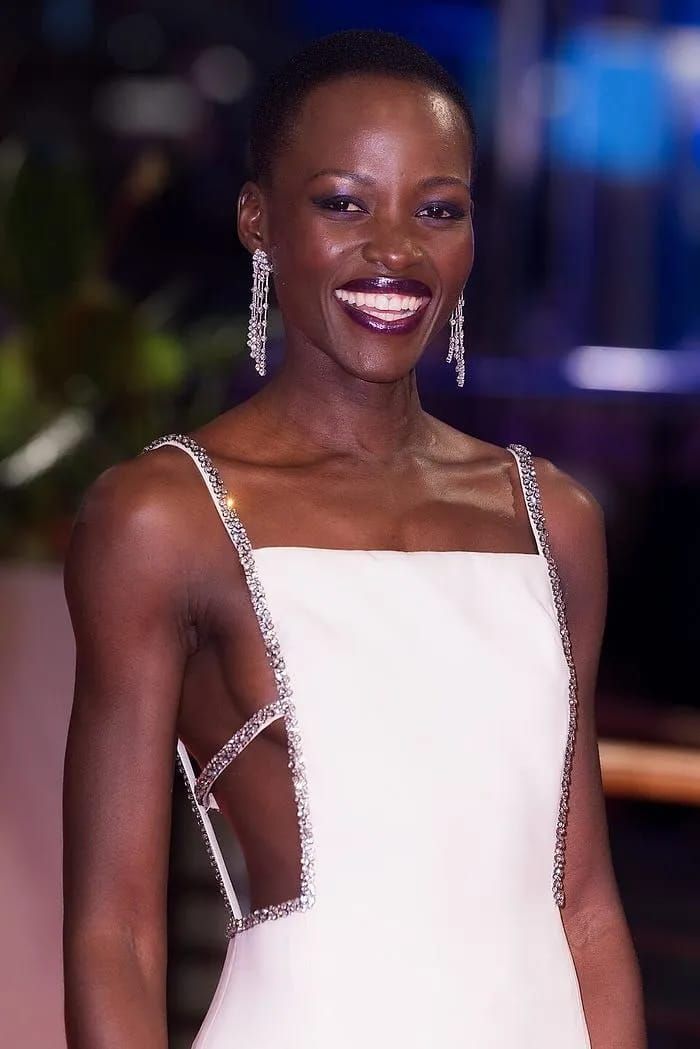
It was the casting of Lupita Nyong’o in the dual role of Helen of Troy and her sister, Clytemnestra, that set Elon Musk off. Helen of Troy, a fictional character, is often described as the most beautiful woman in the world. Hers was the face that launched 1,000 ships.
Casting the dark-skinned Nyong’o as Helen set off a number of people. Matt Walsh opined on her selection, and Musk publicly agreed on social media.
“Not one person on the planet actually thinks that Lupita Nyong’o is the most beautiful woman in the world,” said Walsh. "But Christopher Nolan knows that he would be called a racist if he gave “the most beautiful woman” role to a white woman. Nolan is technically talented but a coward.”
In addition to agreeing with Walsh’s assessment, in February 2026, Musk claimed in a post on X that the two-time Oscar-winning director “lost his integrity” because he cast Nyong’o. Elon has shared multiple posts by others, critical of Nolan’s choice. He boosted posts arguing that Helen of Troy must be “fair-skinned” or “blonde.” Musk also criticized the casting of the very white, trans actor Eliot Page, who is in the film.
In reference to the Walsh comment that nobody on the planet thinks of Lupita Nyong’o as the most beautiful woman in the world, I’m certain he’s wrong. Not one person on the planet objected to her as the lover of King T’Challa in Black Panther. I got my wife’s permission to describe Nyongo’s beauty, but I’ll pass. I’ll only say she was just as qualified as Diane Kruger and Rossana Podesta, whom Musk never objected to.
When Musk makes comments like these, he’s appealing to other white men to join him in berating Black women and promoting white women as the ultimate standard of beauty. If I started down that road, I could mention Nyong’o’s flawless skin and shapely figure, but even though I have permission, I sense a set-up, so I’ll pass.
The outrage over Lupita Nyong’o as Helen of Troy says far less about myth than it does about the people clutching it. Helen has never been a historical woman with a passport photo; she’s a literary device, a projection screen, a centuries‑old metaphor for desire, danger, and the wars men are willing to start in her name. The only thing “authentic” about her is how often she’s been rewritten to suit the anxieties of the age.
So when Lupita Nyong’o steps into the role, the backlash isn’t about Homer. It’s about who is allowed to embody beauty, power, and consequence in the modern imagination. It’s about who gets to stand at the center of a story that was always myth, always fluid, always reshaped by the culture retelling it.
And maybe that’s the real discomfort: not that a Black woman is playing Helen, but that her presence exposes how narrow the old gatekeeping was. Nyong’o’s casting doesn’t distort the myth — it reveals it. It reminds us that the “most beautiful woman in the world” was never a fixed face, only a reflection of who society believed deserved to be seen.
If the moral arc bends toward justice, it does so because someone pulls. In this case, it bends because a new Helen walks onto the screen, unbothered by the panic she provokes, and claims a place that was never anyone’s to guard in the first place. I’ve seen pictures of the four mothers of Elon Musk’s 14 children, and I’d choose Lupita Nyong’o every time.