
When I was a junior in college at Fisk University, I was brought to a Black church in South Nashville for an evening concert featuring a musician named Bobby Jones, who was then barely known, along with a full gospel choir. On the organ was a Fiskite from our Black Mass choir, who, if memory serves, was Donald Watkins, but I knew him as Tubby. He showed me freedom and a flair I hadn’t noticed previously.
I can’t say I was impressed with Bobby Jones’s voice, but he sure knew how to put on a show. The final song of the evening was “When Jesus Comes.” The closest version I could find of his version was on YouTube, performed by former members of the Black Mass Choir.
If you watch the video, imagine a choir three times this size, and the song stretching from almost four minutes to closer to thirty. About midway through the song, a cross was brought out with a phosphorescent-covered Jesus, rotating and glowing in the dark. Members of the choir and audience were falling out, and a line formed, passing people over their heads to the rear doors, where they would presumably recover. There were shouts, tears flowing, and snot running throughout. No one in the crowd would have been shocked had Jesus himself come down from heaven and walked amongst the congregation.
When the choir stopped singing and Tubby stopped playing, the crowd didn’t leave immediately, not wanting it to be over. I imagine that’s what it was like when the 50th Congress convened in 1887 with no Black members of the House of Representatives or the Senate. Congress had become white again.
The Congressional Record barely existed during early Reconstruction. It began in 1873, and even then, coverage was incomplete and inconsistent. White supremacist “Redemption” politics discouraged open acknowledgment. By the time Black members were pushed out (mid‑1880s), Congress was dominated by men who did not want to discuss the disappearance of Black representation publicly. The erasure was intentional.
As the House’s own historical publication notes, when the 50th Congress convened in 1887, a journalist observed:
“All the men who stood up…had white faces. The negro is not only out of Congress, he is practically out of politics.”
While members of Congress were generally silent about having rid themselves of the Black menace, some noticed.
- The New York Times (1887) reported that the 50th Congress convened with “no colored members,” noting the “end of Reconstruction’s brief representation.”
- The Chicago Tribune (1888) observed that “the colored Congressman has disappeared from Washington.”
- The Boston Globe (1887) commented that Congress was “again composed entirely of white men.”
- The Baltimore Sun (1889) noted that the “last of the colored Representatives has been unseated.”
5. The Atlanta Constitution (1890) declared that “the Negro Congressman is a relic of Reconstruction, now gone.”
6. The St. Louis Post‑Dispatch (1888) wrote that Congress had “returned to its natural complexion,” a racist but revealing acknowledgment.
7. The Richmond Dispatch (1887) celebrated that “no Negroes sit in Congress,” reflecting Redemption ideology.
8. Louisville Courier‑Journal (1889) Reported that “the colored member is no more,” marking the end of Black representation.
The Louisville Courier was almost right about no more “coloured” members, but for the Voting Rights Act of 1965. Between 1887 and 1929, there was no Black representation in Congress. From 1929 to 1965, there were four Black members. Only the creation of districts that represent the populace made a true representation of Black Americans possible. That representation is being purposefully eroded, with the Supreme Court’s blessing, in its decades-long, successful effort to dismantle the Voting Rights Act.
The song “When Jesus Comes” made it clear that if you aren’t ready when Jesus comes, you will be “left behind.” The states that rid themselves of Black representation after the Compromise of 1887 were ready and willing for the time when federal troops were removed from the South. With them left the protections for Black politicians and voters and opened the door for Jim Crow 1.0. The Compromise of 1887 and Posse Comitatus, passed the following year, were not Jim Crow in and of themselves. They opened the door for what came after. Jim Crow was not a single law but a coordinated legal system: voting restrictions, segregation mandates, labor controls, criminalization statutes, housing barriers, and social‑order rules, all designed to maintain white supremacy by regulating every aspect of Black life.
The Supreme Court decisions since 2013, including Shelby v. Holder and Louisiana v. Callais, are not Jim Crow 2.0, but they have opened the door for states to repeat the behavior of the 1870s. The same states that initialized Jim Crow 1.0 were lying in wait for the Supreme Court to complete its appointed task and destroy voting rights.
Alabama was ready. Alabama openly resisted the Allen v. Milligan ruling (2023) and signaled it would revisit maps once Section 2 was weakened.
Georgia was ready. It had already prepared a revised congressional map eliminating a newly created Black‑opportunity district. They had local maps in several counties,s reducing Black voting strength.
Texas was prepared. It had a congressional map that created zero new minority districts despite population growth. Texas prepared local redistricting plans in Harris, Galveston, and Tarrant counties, along with bills tightening voter‑ID and mail‑ballot rules. Texas had multiple Section 2 cases pending and drafted fallback maps, expecting the Court to narrow the standard.
Florida was ready. Ron DeSantis prepared a congressional map that eliminated the Black‑performing FL‑5 district. A legal strategy explicitly arguing that race‑conscious districts were unconstitutional. Florida’s state constitution has a voter-passed amendment that makes partisan gerrymandering illegal, but Florida Republicans didn’t care, passing a new map and securing the governor’s signature. A lawsuit is pending.
South Carolina was ready. South Carolina’s legislature drafted maps using race‑correlated partisan data, anticipating the Court would bless the method — which it did.
Louisiana was ready. Louisiana’s legislature openly stated it was waiting for the Court to “clarify” Section 2, meaning weaken it.
Mississippi was ready. They prepared local redistricting plans that reduced Black representation in majority‑Black counties, and bills that tightened absentee‑ballot rules. Mississippi had been sued repeatedly under Section 2 and drafted new maps, expecting the standard to shift.
North Carolina was ready. They prepared a congressional map eliminating Black‑influence districts. It already had a state supreme court reversal that green‑lit partisan gerrymandering. North Carolina’s legislature explicitly said it was waiting for federal courts to “resolve” Section 2 standards.
Arkansas was ready. They prepared a congressional map splitting the Little Rock Black community (“the Fayetteville Finger”). They argued that private plaintiffs cannot sue under Section 2. Arkansas passed its map, expecting the Court to weaken enforcement, and a federal judge temporarily agreed.
Four other states were waiting on the Supreme Court to take action, and now they have.
- Tennessee — draft maps reducing Black representation in Memphis.
- Oklahoma — draft bills tightening absentee voting.
- Kansas — draft maps weakening minority districts in Wyandotte County.
- Arizona — draft ID and mail‑ballot restrictions.
There is little question that states were ready to minimize minority representation in Congress. After the 2026 midterms, the Republican Party may well have no Black representatives in the House and one member of the Senate. The Republicans’ new goal is to lessen the number of Black representatives in the Democratic Party. It was when Black representatives were removed from Congress in the 1880s that Jim Crow 1.0 was introduced and spread. There was no deterrent in the states with the troops gone, and Congress, both Democrats and Republicans, collectively turned a blind eye.
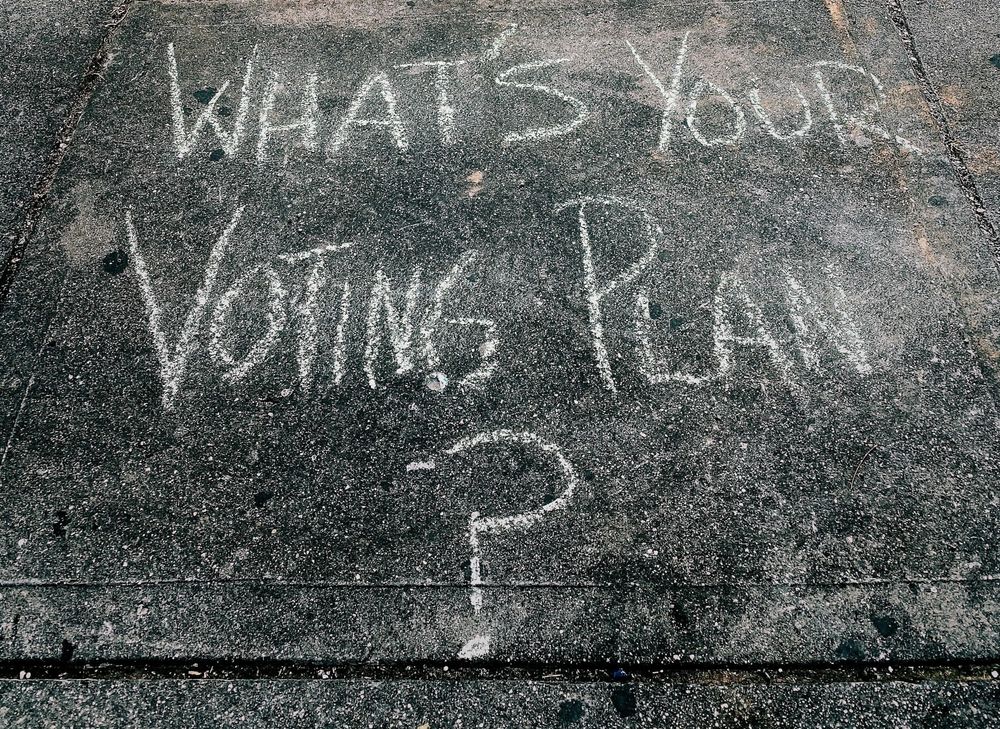
The question is whether Black people and their purported allies are ready to resume the battle once thought over. Do we remember what it took to win voting rights in the first place?
Beatings, arrests, and jailings of Black citizens attempting to register to vote. Economic retaliation, including firings, evictions, and credit cutoffs. Sheriff‑led intimidation in courthouses and registrar’s offices.cKKK and White Citizens’ Council violence: arson, bombings, lynchings.cState-sanctioned obstruction: police blocking registration lines, destroying applications.
In 1964, there was the Mississippi Freedom Summer (1964) with the murders of Civil Rights Workers James Chaney, Andrew Goodman, and Michael Schwerner, abducted and murdered by Klan members with the sheriff’s department’s involvement.
There was widespread violence against volunteers, beatings of Black residents who housed organizers. Church burnings (over 30 Black churches targeted). Bombings of Freedom Schools and community centers, and armed white mobs attacking voter‑registration drives. Local police arrest volunteers, then release them to waiting mobs. Registrars refusing applications under threat of violence.
Selma became the national symbol of the brutality required to secure voting rights. Sheriff Jim Clark’s deputies clubbed, punched, and cattle‑prodded Black residents attempting to register. Amelia Boynton Robinson was beaten unconscious on courthouse steps. Alabama teenagers and children were held in filthy, overcrowded jails. Jimmie Lee Jackson was shot by Alabama state trooper James Fowler while protecting his mother and grandfather during a peaceful protest. His death directly triggered the Selma‑to‑Montgomery march. “Bloody Sunday” (March 7, 1965) was the single most galvanizing act of state violence. Alabama state troopers and possemen attacked 600 peaceful marchers with billy clubs, bullwhips, tear gas, and horse‑mounted charges.
Over 50 marchers were hospitalized. John Lewis suffered a fractured skull. What made change possible was that national TV broadcast the violence into American living rooms.
If there’s one lesson the last century keeps trying to teach us, it’s this: redistricting is never neutral, and silence is never protection. The people who benefit from erasing communities don’t wait for permission — they prepare years in advance, maps drafted, lawsuits queued, narratives rehearsed. The only question is whether we will be just as ready when the lines shift again.
Because if we treat redistricting as something that happens to us instead of something we must respond to, we will be exactly where the architects of disenfranchisement want us: unprepared, unorganized, and left behind. The map is always being drawn. The only way not to disappear from it is to show up before the ink dries.
I listened to the song, Will You Be Ready” a few times while preparing this story. It shouldn’t be necessary to fight these same battles over voting rights as were fought in the 1870s during Reconstruction, yet here we are. I’m ready to fight once again; hopefully, I’m not alone.